RismadarVoice Reporters
September 3, 2026
Global energy companies, including the United States’ Chevron and Italy’s Eni, have signed multibillion-dollar agreements to expand oil production projects in Venezuela as part of efforts to increase investment in the country’s energy sector.
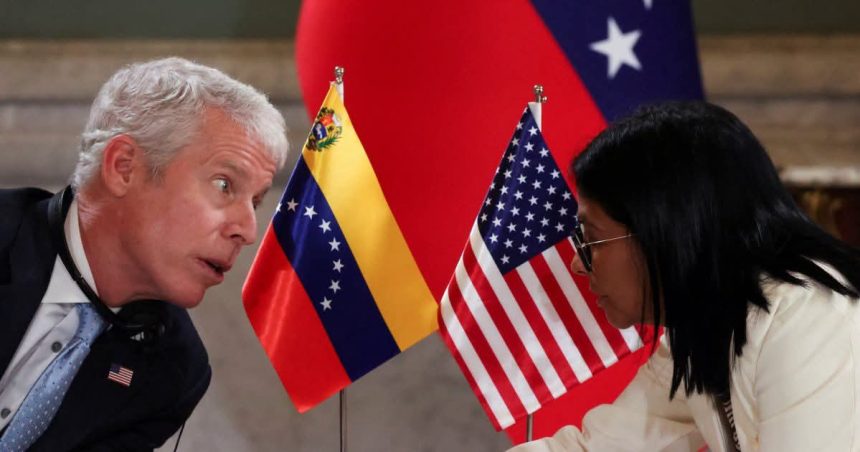
The agreements were signed during a ceremony in Caracas attended by Venezuela’s acting President Delcy Rodriguez and U.S. Energy Secretary Chris Wright. The deals are separate from a recently announced Caracas-Washington arrangement that grants the United States access to 17 Venezuelan oil fields, representing about one-fifth of the country’s oil reserves.
The new contracts involve project expansions that have been under negotiation with Venezuela’s Oil Ministry and state-owned oil company PDVSA following sweeping oil reforms introduced earlier this year.

Wright said the agreements with Chevron, Eni and U.S. energy company GE Vernova were aimed at boosting economic recovery and increasing opportunities in Venezuela.
“We are trying to work at what I call Trump-speed,” Wright said, adding that U.S. President Donald Trump wanted to see rapid transformation in Venezuela’s energy sector.
Chevron, the second-largest U.S. oil company and the leading private oil producer in Venezuela, said its agreement to develop two additional oil fields in the Orinoco Belt is valued at about $7 billion. The project is expected to more than double its production output within five years.
Italy’s Eni secured exclusive exploration rights for the Junin 5 oil field, while GE Vernova will assist in repairing Venezuela’s struggling electricity infrastructure.
The agreements have sparked debate over Venezuela’s sovereignty, with critics questioning the terms of increased foreign involvement in the country’s oil industry.
The wider Caracas-Washington agreement includes 100-year concessions for a U.S.-led company to operate in 17 Venezuelan oil fields. Critics in both countries have accused the Trump administration of exerting excessive influence over Venezuela’s natural resources.
Wright rejected claims that the United States was taking control of Venezuelan oil, saying the agreements were designed to develop unused resources through investment and technology.
He projected that Venezuela’s oil production could rise to two million barrels per day by the end of the decade, compared with the current output of about 1.25 million barrels per day. However, the figure would remain below the country’s peak production levels of more than three million barrels per day recorded in the late 1990s.

Rodriguez defended the agreements, saying increased oil production would help create jobs, improve public services and attract investment into Venezuela’s economy. She estimated that the deals could generate about $209 billion in profits for the country over 25 years.
The agreements mark a significant shift from the policies of former Venezuelan President Hugo Chavez, who nationalised the country’s oil industry two decades ago as part of an anti-imperialist economic agenda.
The developments have also renewed discussions about Venezuela’s political future, with calls from some lawmakers for elections following Maduro’s removal from power. U.S. President Donald Trump said Venezuela was not yet ready for immediate elections, while Rodriguez said an electoral process would take place when the country was prepared.