RismadarVoice Reporters
September 3, 2026
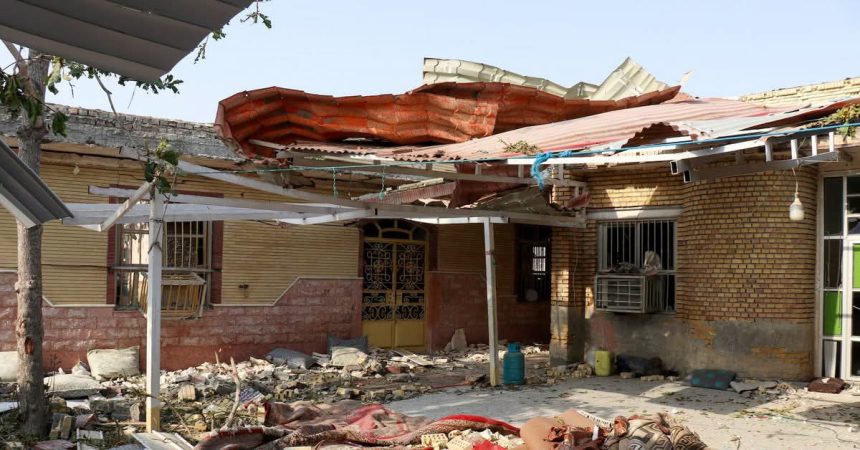
Renewed military escalation in the Iran war has increased international concern over civilian casualties after Iranian authorities reported that 18 people were killed and more than 100 others wounded in recent United States strikes.
Iran’s Health Ministry said the casualties were recorded during Tuesday night’s attacks across the country, while the Iranian Red Crescent reported that four people were killed and 67 others wounded during a wedding ceremony near the Strait of Hormuz.
The latest strikes have heightened tensions across the Middle East, with Iran responding by launching missile and drone attacks against what it described as U.S. military assets in Bahrain, Jordan, Kuwait and Iraq. Kuwait’s military later said additional missile and drone attacks were intercepted by its air defence systems.

The United Nations has expressed concern over reports of civilian deaths, including the reported strike near the wedding ceremony. UN Secretary-General Antonio Guterres called for an immediate halt to military actions and urged all parties to respect international humanitarian law.
“The Secretary-General condemns all attacks against civilians,” his spokesperson Stephane Dujarric said, stressing the need for compliance with principles of distinction, proportionality and precaution during armed conflicts.
The United States military has denied targeting civilians, saying its operations are directed at military objectives. U.S. Central Command spokesperson Captain Tim Hawkins said reports of civilian casualties originated from Iranian state media and maintained that the U.S. military does not target civilians.
The U.S. has reported 18 military personnel killed and more than 750 wounded during the conflict.
The latest civilian deaths add to thousands of casualties recorded since the start of hostilities. The Human Rights Activists News Agency (HRANA), an independent Iranian rights organisation, said 3,636 people had been documented killed in Iran as of April 7, including 1,701 civilians.
The renewed fighting follows a period of reduced military activity after previous exchanges in July, although diplomatic efforts failed to achieve progress. U.S. President Donald Trump has threatened further military action despite domestic opposition to the conflict and concerns over rising fuel prices.

Iran has continued to reject pressure from Washington despite suffering military and economic losses. The country has also threatened restrictions on oil tankers travelling through the Strait of Hormuz, a key global energy route that previously handled about 20 per cent of the world’s oil supply.
The United States has said its objectives include limiting Iran’s nuclear programme and reducing support for allied armed groups in the region, while Tehran has accused Washington of seeking regime change and control of its resources.
The conflict’s growing humanitarian impact has prompted further calls from international organisations and governments for renewed diplomatic efforts to prevent additional civilian casualties.