


RismadarVoice Reporters, August 28, 2026
The death toll from devastating floods triggered by a glacial collapse along the Nepal-China border has risen above 470, as rescue teams continue efforts to locate survivors and missing persons amid fears of further flooding.
Nepal’s prime minister’s office said on Friday that 469 people had been confirmed dead and 977 remained missing. Chinese authorities reported three deaths and 558 people missing in Tibet, bringing the confirmed death toll across the affected areas to at least 472.
Authorities in Nepal said 644 of those reported missing were foreigners, while about 1,550 people had been rescued.


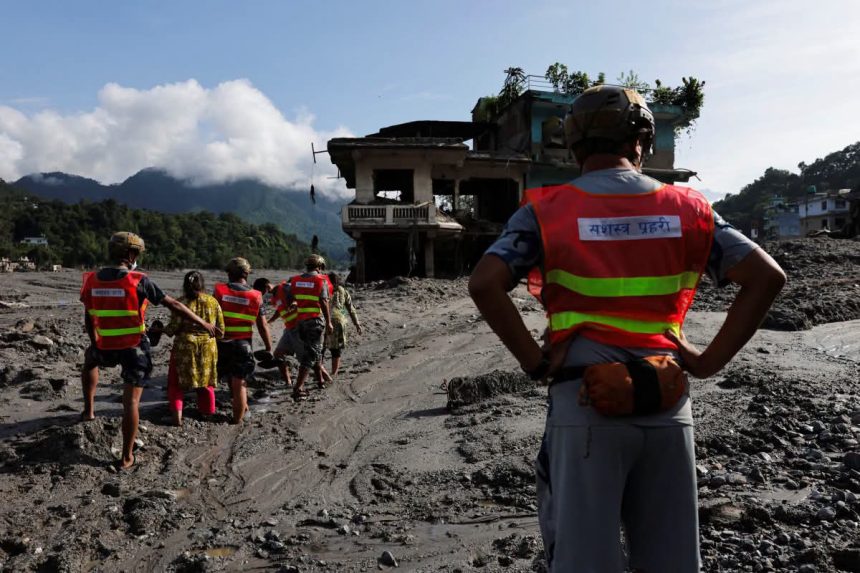
The disaster began on Wednesday after a glacier collapse sent a massive surge of ice, water, rock and mud through Himalayan river valleys, destroying roads, bridges and hydropower infrastructure and burying communities.
Bishal Nath Upreti, president of the Nepal Centre for Disaster Management, said rescue operations were facing severe difficulties because large sections of roads had been destroyed.
He said about 42 kilometres of road had been wiped out, leaving helicopters as the main means of reaching some affected areas. About 800 people had reportedly been rescued by helicopter and another 700 by land, while aid was being airlifted to stranded survivors.

Rescue operations have also been complicated by the formation of a barrier lake along the Nepal-China border, which authorities fear could burst and trigger another major flood.
Chinese authorities estimated that the lake contained about two million cubic metres of water and could receive another three million cubic metres over the following three days.
Rescue and military teams attempting to reach the border port of Gyirong were ordered to suspend operations because of the risk of additional mudslides. Buildings in the area have reportedly been buried under about 1.5 metres of mud.
Nepal has deployed about 30,000 security personnel to search remote valleys, while China has mobilised about 500 military and paramilitary personnel and sent Premier Li Qiang to oversee rescue operations.
Nepal’s Foreign Ministry said the country did not currently require international assistance for search-and-rescue operations, although officials indicated that other forms of assistance, including financial support, could be useful as recovery efforts continue.

The situation remains uncertain as rescue teams race against time to reach people who may still be trapped while monitoring the unstable barrier lake and the possibility of additional flooding.
The number of missing people could also rise as authorities gain access to isolated communities and continue assessing the full scale of the disaster.