RismadarVoice Reporters
September 6, 2026
Iran has warned that further attacks on its interests will trigger a faster and more severe response, as tensions with the United States escalate following a series of military exchanges involving oil tankers and naval vessels in the Strait of Hormuz region.
Iranian Parliament Speaker Mohammad Baqer Qalibaf said the country’s response to future attacks would be “faster, heavier and more painful”, adding that the situation has changed and warning Washington to reconsider its approach.
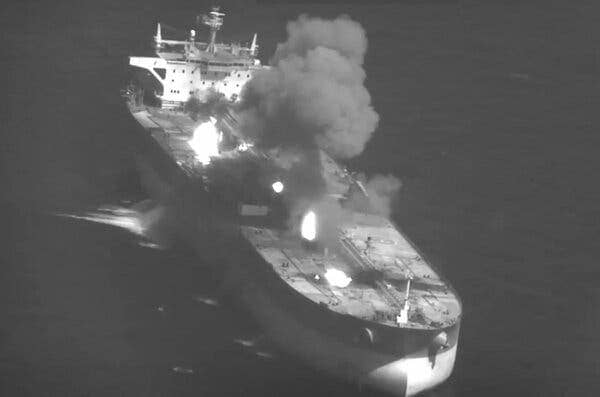
The warning came after the United States said its forces had struck three Iranian oil tankers following missile launches by Iran’s Islamic Revolutionary Guard Corps (IRGC) targeting two US Navy ships operating in regional waters. US Central Command said no American personnel were injured during the incident.

According to US officials, the strikes targeted vessels near Kharg Island, Iran’s major crude export hub, as well as locations near Jask and the Gulf of Oman. The US military said the vessels were linked to a network allegedly supporting the IRGC and its regional activities.
The IRGC has disputed the US actions and said it responded by targeting several vessels, including three oil tankers and US-linked ships, while warning ships operating in what it described as unauthorised routes around the Strait of Hormuz.
The latest confrontation marks a renewed escalation after months of hostilities between Washington and Tehran. A preliminary ceasefire reached earlier in the year collapsed, with diplomatic efforts failing to restore stability.
ECONOMIC PRESSURE MOUNTS ON IRAN
Beyond military exchanges, Iran is facing growing economic challenges linked to US sanctions and restrictions on its oil exports.
Iran’s Economy Minister Ali Madanizadeh said the government would focus on economic reforms and managing domestic challenges, including inflation, currency instability and unemployment. He rejected the idea that external pressure would force Iran to change its policies.
Iranian officials said the government had established an “Economic War Headquarters” to address economic difficulties caused by the conflict and sanctions.

Kharg Island, which previously handled a significant portion of Iran’s crude exports, has become a key focus of the confrontation. Iranian officials said the facility had continued operating despite repeated attacks during the conflict.
GLOBAL ENERGY CONCERNS
The renewed military exchanges have raised concerns over global oil supplies because of the strategic importance of the Strait of Hormuz, a major route for international energy shipments.
Oil markets have reacted to the uncertainty, with concerns that further disruption in the region could affect global fuel supplies and prices.
Analysts say the ongoing confrontation carries risks of further escalation, particularly if either side miscalculates during military operations in the region.
Both Washington and Tehran have maintained firm positions, with neither side indicating a willingness to back down as the conflict continues to affect security, trade and energy markets across the Middle East and beyond.