RismadarVoice Reporters
September 15, 2026
FIFA and the Confederation of African Football have commenced an assessment of the legal, governance, administrative and electoral issues surrounding the leadership crisis in the Nigeria Football Federation, following the mass resignation of key members of the federation’s executive board.
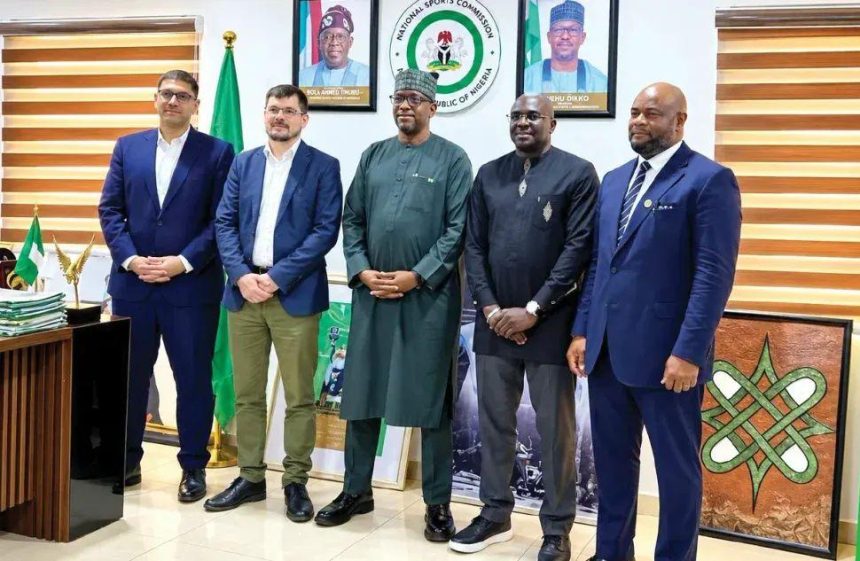
The FIFA and CAF delegation began its engagements in Abuja on Monday, meeting with the Chairman of the National Sports Commission, Shehu Dikko, and representatives of the various federating units within the NFF.
The meeting, held at the Abuja Continental Hotel, comes less than three weeks after NFF President Ibrahim Gusau, General Secretary Mohammed Sanusi and several other board members resigned from their positions on August 27.

The resignations occurred amid growing concerns over the administration and performance of Nigerian football, including the failure of the country’s senior men’s and women’s national teams to qualify for their respective World Cups.
The visiting delegation comprises FIFA Member Association Governance Services team lead Ahmed Harraz; FIFA Head of Member Association Governance Rolf Tanner; FIFA Regional Office for West Africa lead El Hadj Wack Diop; and CAF Legal Manager Nnaemeka Olu.
Dikko initially held discussions with the FIFA and CAF officials, during which he briefed the delegation on the Federal Government’s proposed reforms for the country’s sports sector.
Other members of the NFF Congress sat in on the engagement as discussions shifted to the federation’s internal governance, electoral framework, and the circumstances surrounding the recent leadership changes.
A major focus of the assessment is expected to be the circumstances that led to the mass resignation of the NFF board and the steps required to restore a fully functioning governing structure.

The delegation is also expected to examine the NFF statutes, the composition of the federation’s Congress, the electoral process, plans for a new elective congress and the extent of government involvement in the affairs of the football federation.
The NFF statutes have become a major point of contention among stakeholders who have called for reforms aimed at making the federation more inclusive and representative.
Questions surrounding the composition of the NFF Congress and the credibility and inclusiveness of its electoral process are also expected to feature prominently during the assessment.
FIFA and CAF are expected to consult a broad range of stakeholders in an effort to establish a lawful and acceptable pathway towards restoring a functional NFF Congress and resolving the leadership vacuum.
The process is expected to determine how the federation can return to administrative stability while ensuring that any reforms or electoral arrangements comply with the applicable regulations of FIFA, CAF and the NFF.
FIFA had last week clarified that it had not reached any decision on the Nigerian situation despite receiving several communications from stakeholders.

In a letter to the NFF, the world football governing body said the assessment mission would enable FIFA and CAF to establish a clearer understanding of the circumstances surrounding the recent developments, the positions of stakeholders and issues requiring consideration under the relevant football regulations.
FIFA said any recommendations or proposals would only be considered after the assessment had been completed and submitted to the appropriate decision-making bodies in line with its statutes and regulations.
The organisation also cautioned stakeholders against assuming what action FIFA or CAF might eventually take, stressing that the outcome of the assessment remained open.
The intervention by FIFA and CAF is therefore expected to provide a clearer direction on the future leadership of the NFF, proposed governance reforms and the timetable for the federation’s next elective process.

The outcome could also have significant implications for the administration of Nigeria’s national teams and the broader structure of football governance in the country, as stakeholders seek a durable resolution to a crisis that has repeatedly resurfaced around NFF elections and leadership transitions.