
RismadarVoice Reporters, June 18, 2026
The Federal Government of Nigeria, security agencies and media stakeholders have called for closer collaboration between journalists and security institutions to strengthen national security and tackle emerging threats across the country.
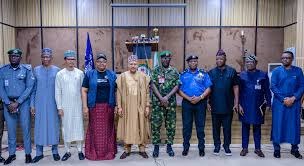
The call was made on Thursday at the National Security Summit organised by the Nigeria Union of Journalists (NUJ) in partnership with the Department of State Services (DSS) in Abuja. The summit was themed, “Media and Security Agencies as Partners in Nation Building.”
Participants stressed that addressing terrorism, banditry, kidnapping, cybercrime, misinformation and other security challenges requires not only military action but also effective communication, responsible journalism and public trust.

Speaking at the event, NUJ National President, Alhassan Yahaya Abdullahi, said national security should not be viewed solely as the responsibility of security agencies, noting that journalists and other stakeholders have important roles to play in protecting the nation.
He said the summit was part of efforts to strengthen cooperation between the media and institutions responsible for governance and security.
“The media and security institutions occupy strategic positions in every democratic society. While security agencies protect lives and property, the media informs citizens, shapes public opinion and promotes accountability,” Abdullahi said.
He commended the DSS for supporting the initiative and promoting constructive engagement with journalists.
Declaring the summit open, Minister of Information and National Orientation, Mohammed Idris, described the gathering as timely amid evolving security threats such as terrorism, violent extremism, cybercrime, organised crime, separatist agitations and disinformation campaigns.

According to him, effective collaboration between the media and security agencies must be built on professionalism, trust and mutual respect.
“The relationship between the media and security agencies must be founded on mutual respect, professionalism, trust and an appreciation of their complementary roles,” Idris said.
The minister noted that President Bola Tinubu’s administration continues to prioritise security through military operations, intelligence gathering, technological innovation and community engagement.
He highlighted recent achievements by security agencies, including the rescue of kidnapped victims, dismantling of criminal hideouts and increased investment in military equipment and surveillance infrastructure.
Idris also urged journalists to maintain ethical standards in reporting security-related issues, warning that misinformation and unverified reports could undermine national security efforts.
Minister of Defence, Mohammed Badaru, represented by his Special Adviser, Rear Admiral Olusanya Bankole (retd.), described the media as a critical partner in national security operations.
He said journalism plays a key role in shaping public confidence and promoting national unity, adding that modern security operations now extend beyond traditional battlefields to the information space.
According to him, the Defence Ministry is considering arrangements that would allow journalists to be embedded with military units during certain operations to improve understanding and accuracy in security reporting.
He also emphasised the importance of non-military approaches to addressing insecurity, including information management, public trust and community engagement.
Representing the National Security Adviser, Nuhu Ribadu, Special Adviser on Strategic Communication and Civil Society, Chido Onumah, said security agencies and journalists must work together to balance public access to information with national security concerns.
He acknowledged the challenges journalists face in obtaining timely information and called for greater transparency and improved communication from security institutions.
Onumah disclosed that the Office of the National Security Adviser is developing a National Security Strategic Communication Framework to strengthen information sharing, verification and collaboration between security agencies and media organisations.
He said the framework would help journalists access credible information while reducing the risk of reports that could inadvertently aid criminal or terrorist activities.
The summit also featured a keynote address by Professor Okey Okechukwu, who highlighted the role of strategic communication in modern security operations and conflict management.
Participants, including security officials, policymakers, academics, media executives and civil society representatives, agreed that stronger cooperation between the media and security institutions would improve crisis communication, enhance public trust, combat misinformation and contribute to national peace and development.