RismadarVoice Reporters
August 2, 2026
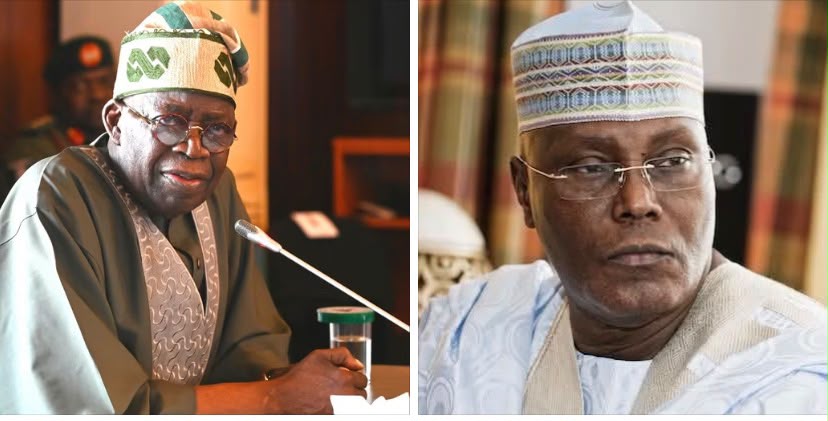
The Presidency has defended the economic policies of President Bola Tinubu’s administration, rejecting former Vice President Atiku Abubakar’s criticism of the government’s borrowing, fuel subsidy removal, tax reforms and management of oil revenues.
In a statement on Sunday titled, “Facts, Not Fear: A Point-by-Point Response to Atiku Abubakar on Nigeria’s Reform Journey,” Special Adviser to the President on Information and Strategy, Bayo Onanuga, argued that assessments of the administration’s economic performance should take into account developments since the difficult adjustment period of 2023 and 2024.
Onanuga said Atiku’s criticism was largely anchored on 2024 fiscal data and therefore failed to reflect what he described as subsequent improvements in the economy.
He said Nigeria’s dollar-denominated Gross Domestic Product, which fell to about $253 billion following the exchange-rate adjustment, had since recovered to approximately $377 billion, representing an increase of about 49 per cent from the post-adjustment level.
The presidential aide also claimed that nominal naira GDP had increased from about N314 trillion in 2024 to approximately N530 trillion.
He, however, acknowledged that economic performance should also be assessed against real GDP growth, inflation and household welfare.

On government borrowing, Onanuga rejected the argument that Nigeria was over-borrowed, saying debt sustainability should be assessed alongside the size of the economy, revenue-generating capacity, debt-servicing costs and the purposes for which borrowed funds are deployed.
He put Nigeria’s debt-to-GDP ratio at about 40 per cent and claimed that the debt-service-to-revenue ratio had fallen from nearly 100 per cent in December 2022 to below 60 per cent.
According to him, government borrowing has been directed towards productive, long-term infrastructure and investment projects, rather than recurrent expenditure.
The Presidency also defended the removal of petrol subsidy, arguing that the policy had increased revenues available to state and local governments through the Federation Account.
Onanuga said higher statutory allocations had expanded the fiscal space of subnational governments, allowing them to increase spending on infrastructure, salaries, healthcare, education and social programmes.
He argued that the subsidy regime had for decades placed a significant burden on public finances and accused previous administrations, including the government in which Atiku served as vice president, of failing to resolve the issue.
On tax reforms, the Presidency rejected claims that the administration was simply increasing the tax burden on Nigerians.
Onanuga said the reforms were designed to protect low-income earners and small businesses while improving compliance among higher-income individuals and profitable companies.
He said the reforms would exempt people earning N1 million or less annually and businesses with turnover of N100 million or less, while requiring those with greater capacity to contribute more.
The presidential aide also highlighted what he described as achievements in the health and education sectors.
According to him, more than 3,000 primary healthcare centres had been revitalised, upgraded or refurbished as of April 2026, while more than 78,000 frontline health workers had undergone retraining.
He further said more than 100 public health facilities were providing free caesarean sections to eligible indigent women and claimed that three cancer treatment centres were operational in Kubwa, Enugu and Katsina.
On education, Onanuga said more than 11,000 projects had been undertaken through the Universal Basic Education Commission, while the Nigerian Education Loan Fund had provided financial support to more than 1.64 million students.
He said NELFUND had disbursed more than N303 billion through 300 higher institutions.
The Presidency also pointed to ongoing investments in roads, bridges, rail, power infrastructure, airports, housing, gas infrastructure and digital connectivity as evidence of increased public investment.
On the alleged N7.98 trillion oil windfall cited by Atiku, Onanuga dismissed the figure as inaccurate.
He said although the average Brent crude price in the first half of 2026 was about $90 per barrel, compared with a benchmark of $64.85, Nigeria’s average crude production of about 1.6 million barrels per day fell short of the projected 1.84 million barrels per day.

He argued that the production shortfall, production costs, oil companies’ share of crude, forward contracts and other obligations meant that higher international oil prices could not simply be converted into equivalent government revenue.
Onanuga challenged Atiku to provide the calculations supporting his claim of a N7.98 trillion oil windfall.
The Presidency also pointed to recent social intervention programmes, including NG-CARES, HOPE and SOLID, which it said were designed to support primary healthcare, basic education and vulnerable communities.
It further cited cash transfers to 15 million vulnerable households as part of measures aimed at cushioning the impact of the economic reforms.
While acknowledging that Nigeria’s economy was “not yet where it aspires to be,” Onanuga maintained that the country was moving away from longstanding structural distortions.
He argued that the Tinubu administration had chosen to implement reforms that previous governments had acknowledged but deferred.
The statement nevertheless acknowledged that the reforms had imposed high costs on Nigerians and that questions remained over implementation, inflation and social protection.
Onanuga said the administration remained focused on improving living standards, strengthening institutions and expanding economic opportunities, while dismissing criticisms of the reforms as politically motivated.