


RismadarVoice Reporters
October 10, 2026
The United Nations Children’s Fund (UNICEF) and key stakeholders in Bauchi and Gombe states have called for intensified efforts to eliminate child marriage, safeguard girls’ rights and promote equal access to quality education, particularly for girls living with disabilities.
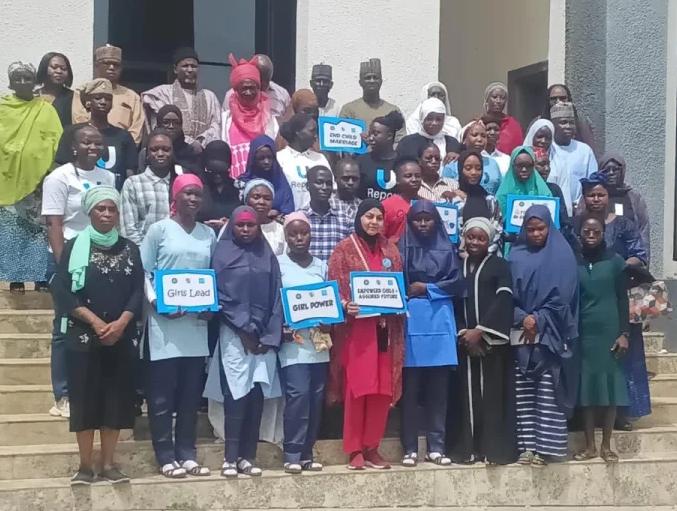
The appeal was made during a one-day stakeholders’ engagement organised by UNICEF’s Bauchi Field Office in collaboration with the Bauchi Radio Corporation in Gombe State, ahead of the International Day of the Girl Child, observed annually on October 11.
The engagement, themed “End Child Marriage and Invest in Girls’ Rights,” brought together traditional rulers, women’s organisations, development partners, media professionals and young girls to examine the cultural, economic and social factors contributing to child marriage and gender inequality.
Speaking at the event, UNICEF Child Protection Specialist at the Bauchi Field Office, Ladi Alabi, emphasised the need for a coordinated and comprehensive response to harmful practices that threaten the health, education and development of girls.
Alabi warned that child marriage often exposes young girls to early pregnancy, maternal health complications and interrupted education, limiting their opportunities for personal development and economic independence.

She identified vesicovaginal fistula (VVF) as one of the serious health complications that could arise from obstructed childbirth, particularly among young mothers without adequate maternal healthcare.
According to her, investing in girls’ education and empowerment remains essential to breaking cycles of poverty, discrimination and harmful traditional practices.
She urged community leaders, parents and other stakeholders to challenge cultural beliefs that deny girls the opportunity to make informed decisions about their education, health and future.
Also speaking, the Chief of UNICEF’s Bauchi Field Office, Dr Nuzhat Rafique, stressed that eliminating child marriage requires sustained collaboration among government institutions, communities and development organisations.
Rafique explained that child protection initiatives must be supported by effective interventions in education, healthcare, nutrition and social protection to achieve meaningful and lasting results.
She warned that continued child marriage could deprive millions of girls of opportunities to develop their talents, pursue their ambitions and contribute to national development.
“If child marriage will not end, girls will not get the right opportunity to grow to their best potential,” she stated.
The UNICEF official described education as one of the most important investments society could make in the future of girls, stressing that disability, gender or family background should never determine a child’s access to learning.
“Education is the greatest investment in girls,” Rafique said.
She called on governments and communities to strengthen inclusive education policies, improve learning facilities and remove barriers preventing vulnerable children, particularly girls with disabilities, from attending school.
Participants at the engagement also advocated expanded public awareness campaigns, mentorship initiatives and community-based support programmes to encourage girls to remain in school.
They identified poverty, harmful social norms and limited economic opportunities as major factors contributing to child marriage, urging authorities to provide targeted assistance to vulnerable households.
Some girls who participated in the discussions appealed for greater support for those whose education had been disrupted by economic hardship, discrimination or family circumstances.
They emphasised the importance of mentorship, encouragement and practical opportunities that would enable girls to regain confidence, continue their education and pursue their aspirations.

The stakeholders further urged traditional and religious leaders to play more active roles in changing attitudes towards child marriage and promoting the rights and welfare of girls within their communities.
They maintained that eliminating child marriage would require consistent cooperation among government agencies, civil society organisations, development partners, community leaders and the media.
The engagement concluded with renewed calls for sustained investment in girls’ education, stronger child protection systems and coordinated interventions to ensure that every girl, regardless of her background or physical ability, has the opportunity to grow, learn and achieve her full potential.