RismadarVoice Reporters
October 17, 2026
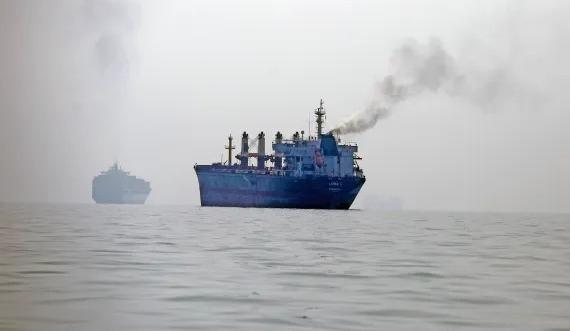
Tensions across the Middle East have intensified following reports of attacks on commercial oil tankers near the Strait of Hormuz and the interception of drones over Saudi Arabia, raising concerns about maritime security, regional stability and the movement of global energy supplies.
Four tankers have reportedly been hit since Friday, October 16, amid warnings attributed to Iran’s Islamic Revolutionary Guard Corps (IRGC) that the strategically important Strait of Hormuz has been closed.
The reported incidents have heightened fears of disruptions to international shipping, particularly oil and gas shipments passing through one of the world’s most important maritime routes.
Meanwhile, Saudi authorities reported the interception and destruction of four drones over different parts of the kingdom, including Riyadh and the Eastern and Southern provinces.
The developments come against the backdrop of escalating regional hostilities and renewed diplomatic efforts to prevent further instability.
FOUR TANKERS REPORTEDLY HIT AS MARITIME SECURITY DETERIORATES
According to reports dated October 17, four commercial tankers were struck in separate incidents beginning on Friday.
The United Kingdom Maritime Trade Operations (UKMTO), which monitors maritime security threats, reported that one vessel was struck by a rocket-propelled grenade fired from a small boat.
The agency also reported a separate incident involving gunmen who opened fire on a fifth tanker off the coast of Al Mukalla in Yemen.
The reports have raised concerns about the vulnerability of commercial shipping to attacks involving small boats, armed personnel and other threats.
Details about the identities of the affected vessels, the extent of damage, possible casualties and the status of their crews were not established in the supplied accounts.

The precise locations of all four reported tanker strikes were also not specified.
IRANIAN REVOLUTIONARY GUARDS REPORTEDLY WARN STRAIT OF HORMUZ IS CLOSED
Iran’s Islamic Revolutionary Guard Corps has reportedly warned that the Strait of Hormuz is closed amid the escalating conflict.
The reported warning has intensified uncertainty over commercial shipping movements through the waterway.
The Strait of Hormuz connects the Persian Gulf with the Gulf of Oman and the Arabian Sea, making it a critical passage for energy exports from major Gulf producers.
Any prolonged disruption to commercial navigation could affect oil shipments, tanker insurance costs and international energy markets.
However, a declaration that the strait is closed does not, by itself, establish that all shipping movements have stopped or that a complete maritime blockade is in force.
The actual extent of any restrictions, vessel movements and enforcement measures requires confirmation from maritime authorities and shipping operators.
SAUDI FORCES REPORT INTERCEPTION OF FOUR DRONES
In a separate development, a Saudi-led coalition announced that four drones had been intercepted and destroyed over Saudi Arabia.
The reported interceptions occurred over Riyadh, the Eastern Province and the Southern Province.
The coalition did not provide detailed information in the supplied account about the drones’ origins, intended targets or launch locations.
There was also no confirmed information about casualties or property damage.
The incidents have raised concerns about the potential expansion of aerial threats across the region.
Saudi Arabia’s strategic energy facilities, transport networks and population centres make regional airspace security an important concern during periods of heightened military tension.
ATTACKS RAISE CONCERNS ABOUT GLOBAL ENERGY SUPPLIES
The reported maritime incidents have renewed attention to the importance of the Strait of Hormuz to international energy markets.
The waterway serves as a major export route for crude oil, petroleum products and liquefied natural gas produced in the Gulf region.
Security threats along the route can create uncertainty for shipping companies, energy traders and governments dependent on imported fuel.
Attacks on commercial vessels may also lead to increased maritime insurance premiums, higher transportation costs and changes to shipping schedules.
The economic consequences would depend on the scale and duration of any disruption, the availability of alternative routes and the response of regional authorities.
The reported attacks have not, on their own, established the scale of any resulting interruption to global oil shipments.
EUROPEAN DELEGATION REPORTEDLY ATTACKED IN WEST BANK
Elsewhere in the region, suspected Israeli settlers reportedly attacked a visiting European delegation in Taybeh, a Palestinian village in the occupied West Bank.
The delegation included a French mayor who had travelled to the area during the annual olive harvest.
The incident drew renewed attention to the security of Palestinian communities and international visitors in the occupied territory.
The village’s mayor was reported to have provided an account of the confrontation.
The incident is separate from the reported maritime attacks and drone interceptions, and no direct operational connection between them has been established.
LEBANON, ISRAEL AND UNITED STATES PLAN TRILATERAL MEETING
Amid the regional tensions, Lebanese President Joseph Aoun announced that a Lebanese military delegation would participate in a trilateral meeting involving Lebanon, Israel and the United States.

The meeting is scheduled to take place in Florida on Tuesday, October 20.
The planned engagement comes as diplomatic efforts continue to address security concerns involving Lebanon and Israel.
Further details about the meeting’s agenda, participating officials and expected outcomes were not provided in the supplied account.
The talks nevertheless represent a potential opportunity for communication between parties involved in longstanding regional security disputes.
REGIONAL SECURITY CONCERNS CONTINUE TO MOUNT
The reported attacks on tankers, drone interceptions over Saudi Arabia and diplomatic developments involving Lebanon reflect the complex security environment across the Middle East.
Maritime threats around the Strait of Hormuz are particularly significant because of the waterway’s importance to international trade and energy supplies.
The reported drone incidents have also increased attention on the protection of civilian areas and strategic infrastructure across Gulf states.
As regional governments assess the latest developments, attention is expected to focus on the safety of commercial shipping, the effectiveness of air defence systems and opportunities for diplomatic engagement.
The identities of those responsible for the reported tanker attacks and drone launches have not been established in the available information.
Further confirmation from maritime agencies, national authorities and independent observers will be important in determining the full extent of the incidents and their implications for regional security.