RismadarVoice Reporters
September 27, 2026
Fresh legal disputes could emerge over political party nominations ahead of the 2027 general elections following the Supreme Court’s restoration of key provisions of the Electoral Act 2026 governing party membership registers and candidate selection.
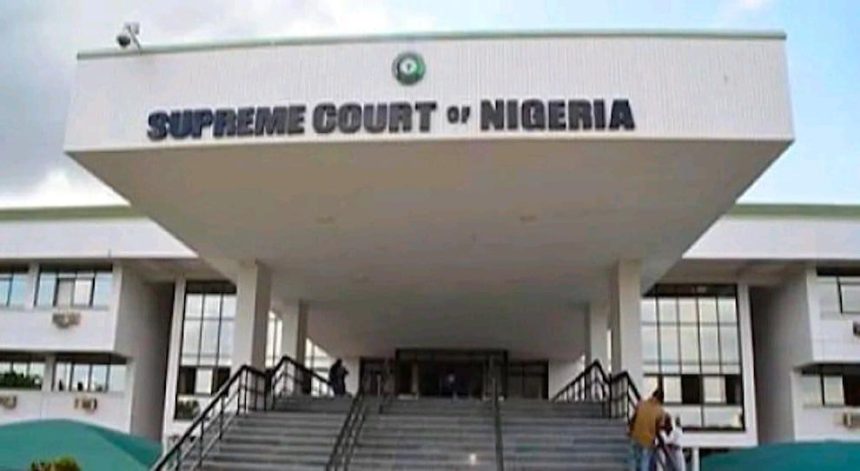
The Supreme Court, in a unanimous judgment delivered by a seven-member panel led by Justice Adamu Jauro, upheld an appeal filed by the Independent National Electoral Commission and overturned an earlier Court of Appeal judgment that had invalidated Sections 77(5), 77(6), 77(7) and 84(2) of the Electoral Act 2026.
The apex court held that the provisions were not inconsistent with the 1999 Constitution.
The restored provisions deal principally with political party membership registers and procedures governing the nomination of candidates for elective offices.

Their restoration has prompted debate over how the judgment could affect candidates whose membership, defection dates or nomination processes are challenged ahead of the 2027 elections.
Questions have consequently been raised in political and legal circles over the nominations of some candidates, including former Inspector-General of Police Mohammed Adamu, Kingsley Chinda and Senator Saliu Mustapha.
However, the Supreme Court judgment did not itself disqualify any of those candidates.
Legal practitioners have cautioned that restoring the provisions of the Electoral Act is different from determining whether an individual candidate complied with them.
Any challenge to a particular candidate would therefore have to be considered on its specific facts, including relevant party membership records, the timing of their submission to INEC and the procedure followed during the primary election.
The ruling could nevertheless trigger further pre-election litigation as political parties and rival candidates test whether particular nominations complied with the restored provisions.
The development comes as separate disputes over party primaries are already being determined by the courts.
In Gombe State, a Federal High Court nullified the Peoples Democratic Party governorship primary that produced former Minister of Communications and Digital Economy, Prof Isa Ali Pantami, as the party’s candidate.

The court ordered the PDP to conduct a fresh governorship primary, which the party has scheduled for September 29.
Pantami, Khamisu Ahmed Mailantarki and Usman Aliyu Garry have been cleared to participate in the fresh exercise.
The Gombe case arose from a separate challenge to the process through which Pantami emerged and should not be interpreted as an automatic consequence of the Supreme Court judgment.
Meanwhile, candidates whose nominations have become subjects of political speculation have continued to reject claims that they have automatically been disqualified.
Legal practitioners have similarly stressed that the Supreme Court judgment principally resolved the constitutional validity of the disputed provisions rather than the eligibility of individual candidates.
The practical implications are therefore expected to become clearer as INEC applies the restored provisions and courts determine any candidate-specific disputes brought before them.

With political parties preparing for the 2027 general elections, the judgment could place greater attention on membership registers, defection timelines and compliance with statutory procedures during candidate nominations.
The ruling does not automatically remove candidates from the ballot, but it could provide grounds for fresh legal challenges where opponents allege that nomination procedures failed to comply with the Electoral Act.