RismadarVoice Reporters
September 25, 2026
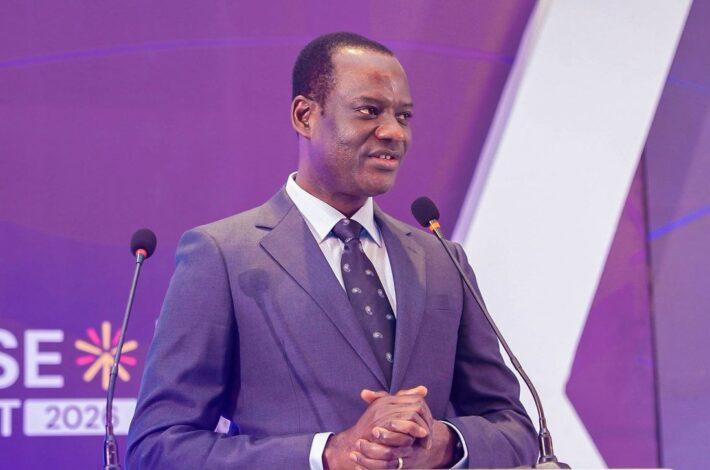
Nigeria’s Minister of Finance and Coordinating Minister of the Economy, Taiwo Oyedele, has called for cheaper, long-term financing for Africa, warning that high borrowing costs and currency risks are constraining investment in critical infrastructure and energy projects.
Oyedele made the call at the United Nations Dialogue on Solutions to Climate Finance on the sidelines of the 81st United Nations General Assembly in New York.
According to a statement by the Head of Information and Public Relations at the Ministry of Finance, Efe Ovuakporie, the minister argued that Africa’s development ambitions were being undermined by inadequate access to affordable, long-term capital.
He said the challenge was particularly pronounced in the energy sector, where significant investment is required to close the continent’s electricity and energy-access deficit.
Oyedele maintained that African countries faced additional financing disadvantages despite contributing relatively little to global carbon emissions.
He described some of the costs associated with raising capital on the continent as a “prejudice premium” and “narrative cost,” while also highlighting currency risks and what he termed a “stereotype tax.”

Against that backdrop, the minister called for changes to international climate-finance mechanisms to better reflect the economic circumstances of developing countries and simplify their access to affordable funding.
He also advocated increased investment in natural gas and other transition energy sources, arguing that Africa needs reliable and affordable energy to tackle poverty and support economic growth.
According to Oyedele, increased investment in Africa’s energy sector could simultaneously address the continent’s energy deficit and diversify global energy supplies at a time of heightened geopolitical uncertainty.
He stressed that Africa’s transition towards cleaner energy must take account of its development needs and existing infrastructure deficit.
The minister consequently called for greater investment in electricity generation, transmission and related infrastructure alongside practical efforts to transition towards cleaner energy.
Turning to Nigeria, Oyedele said the government’s immediate priorities included reducing poverty, expanding economic opportunities and ensuring that economic prosperity was more broadly shared.

He said achieving those objectives would require stronger international cooperation and a financing system that enables developing economies to mobilise sufficient capital for infrastructure and improvements in living standards.
Oyedele maintained that affordable, long-term financing would remain critical to Africa’s efforts to close its infrastructure gap and achieve sustainable economic development.