


RismadarVoice Reporters
25 September 2026
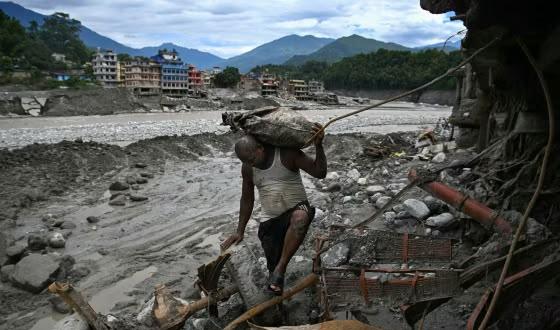
Nepal’s Prime Minister, Balendra Shah, has warned world leaders that the catastrophic floods that killed at least 1,400 people in his country should serve as a global wake-up call on the escalating consequences of climate change.
Addressing the 81st United Nations General Assembly in New York on Thursday, Shah said countries that contribute the least to global greenhouse gas emissions were increasingly bearing some of the highest costs of the climate crisis.
The Prime Minister described the August flooding as more than a national tragedy, saying it demonstrated the increasingly severe consequences of a warming planet.
Shah said Nepal contributes less than 0.1 per cent of global greenhouse gas emissions but continues to experience retreating glaciers, unstable mountain slopes and increasingly unpredictable rivers.
“We did not create this crisis, yet we are paying a colossal price for it,” he said.
According to Shah, major climate disasters were also threatening years of development and placing increasing pressure on communities and critical infrastructure.

He noted that about 99 per cent of Nepal’s electricity comes from hydropower, but said the country’s relatively low-carbon electricity system had not protected it from the consequences of climate change.
“Climate change does not recognise borders. Glaciers and floods do not travel with stamps and passports,” Shah said.
The Prime Minister also criticised the international climate-finance system, arguing that vulnerable countries should not have to navigate lengthy bureaucratic processes before receiving assistance following climate disasters.
He called for faster access to climate funding, particularly through mechanisms designed to help developing countries address climate-related loss and damage.
“Climate finance must not become another bureaucratic maze through which vulnerable countries spend years seeking assistance, he said.
Shah urged the international community to move beyond relief, rehabilitation and reconstruction towards greater responsibility, reparation and resilience.

Nepal’s Foreign Minister, Shisir Khanal, said preliminary estimates put losses from the disaster at more than $5 billion, equivalent to nearly 15 per cent of the country’s gross domestic product and about one-third of its annual budget.
Khanal said the scale of the destruction had turned the flooding into not only a humanitarian emergency but also a major development and climate challenge.
Shah urged world leaders to treat Nepal’s experience as a warning of the risks confronting vulnerable countries and accelerate efforts to reduce emissions, strengthen disaster resilience and improve access to climate finance.