RismadarVoice Reporters
October 5, 2026
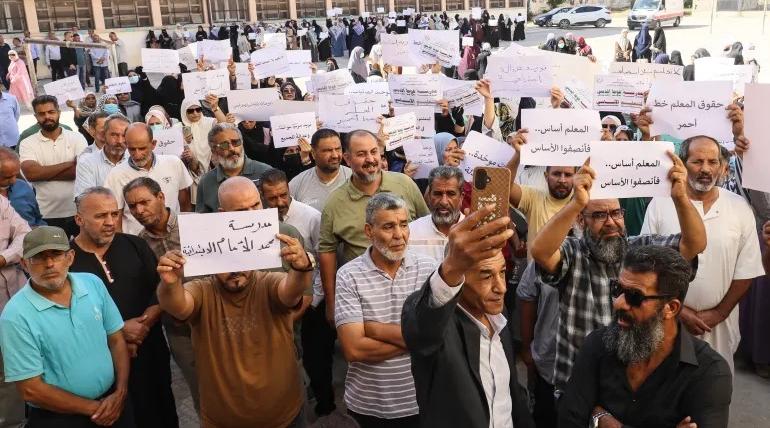
Teachers across Libya are continuing an open-ended nationwide strike over salaries, unpaid financial entitlements and working conditions, disrupting public education weeks after the new academic year was scheduled to begin.
The industrial action grew out of protests and sit-ins that began on September 13, when teachers gathered outside schools and government offices to press for improved pay and other employment benefits.
The protests subsequently expanded into a nationwide strike affecting schools across Libya’s politically divided regions.

Teachers are demanding a unified and improved salary structure, payment of outstanding financial entitlements, health insurance and stronger protections for education workers.
The unions say rising living costs and the weakening purchasing power of salaries have placed increasing pressure on teachers, while disparities in public-sector pay have strengthened demands for a unified national salary system.
Teachers have also raised concerns about conditions in schools, including shortages of essential equipment and deteriorating infrastructure. Some educators and parents have reportedly contributed personal funds to provide basic materials needed in schools.
Other labour groups have backed calls for a revised salary structure that takes account of changes in the cost of living and fluctuations in the Libyan dinar.
Retirees have similarly demanded implementation of outstanding agreements relating to pensions and financial entitlements.
The unions have also called for protection of workers and union representatives from what they describe as punitive measures connected with legitimate labour activities.
The dispute has highlighted wider funding challenges within Libya’s education system.

An education budget assessment prepared by Libya’s National Council for Economic and Social Development in collaboration with UNICEF found that about 91 per cent of the sector’s budget goes to salaries, leaving a significantly smaller share for infrastructure, equipment and other education needs.
The sector employed about 560,000 people in 2024, including approximately 270,000 teachers in basic and secondary education.
Under Law No. 4 of 2018, provisions were introduced covering salaries, allowances and benefits for education workers, as well as health and social care and protection against occupational risks.
Salary increases were subsequently ordered in 2021, but disputes over outstanding financial entitlements persisted.
The latest escalation followed disagreements between teachers’ representatives and education authorities over how quickly their demands would be implemented.
Teachers’ representatives have maintained that the strike will continue until authorities take concrete steps rather than relying on assurances and further negotiations.
The government has acknowledged the legitimacy of teachers’ concerns while stressing that the educational rights of students must also be protected.
Parents have expressed concern over the continued disruption, with some supporting teachers’ demands while appealing for a resolution that would allow students to return fully to classrooms.

Prime Minister Abdul Hamid Dbeibah has held discussions with senior officials on proposals for a unified salary system covering workers across government sectors and state institutions.
Any major restructuring of public-sector salaries, however, would require further government, legislative and financial processes.
As of Monday, the teachers’ union remained firm on its principal demands, including a unified salary structure and payment of outstanding financial entitlements, leaving the dispute unresolved and schools facing continued disruption.