RismadarVoice Reporters
September 24, 2026
Nigeria’s electricity subsidy obligation could remain close to ₦2 trillion in 2026 if current tariff and market conditions persist, following the Federal Government’s decision not to immediately increase electricity tariffs.
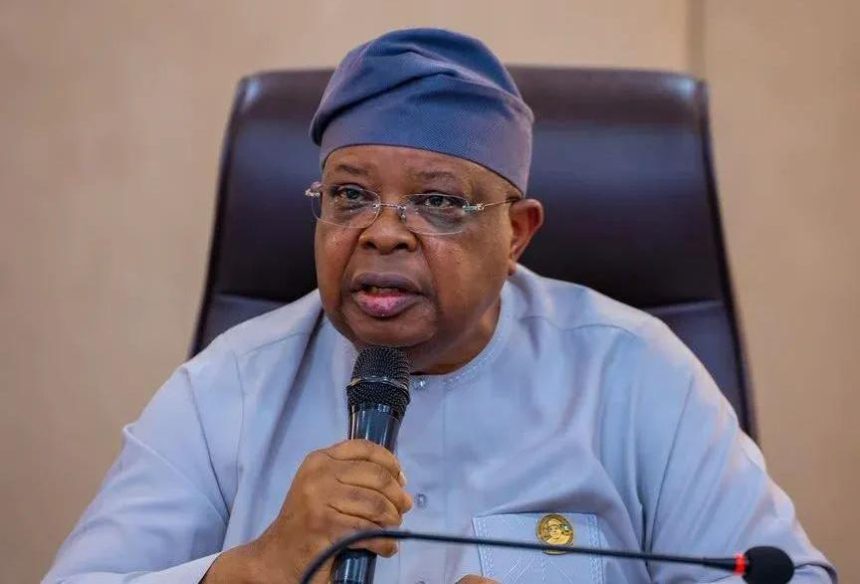
Minister of Power Joseph Tegbe said at a media briefing in Abuja marking his first 100 days in office that the government had no immediate plans to raise tariffs.
“There are no immediate plans to increase electricity tariffs. Our goal is to build a commercially viable power sector while protecting vulnerable consumers,” Tegbe said.
The projected subsidy level is not an announced 2026 government expenditure figure. It is based on the scale of the subsidy obligation recorded in 2025 and the continuation of tariffs below cost-reflective levels for several categories of electricity consumers.
According to the Nigerian Electricity Regulatory Commission’s 2025 Annual Report, the Federal Government incurred a ₦1.93 trillion electricity subsidy obligation last year.

NERC said the amount represented 57.44 per cent of the total Nigerian Bulk Electricity Trading invoice and averaged about ₦160.69 billion monthly.
The regulator explained that the obligation arose because approved tariffs remained below the cost of supplying electricity, requiring the government to cover the difference.
“In the absence of cost-reflective tariffs, the government undertakes to cover the resultant gap (between the cost-reflective and allowed tariff) in the form of tariff subsidies,” NERC said.
The commission added that the absence of cost-reflective tariffs across electricity distribution companies resulted in the ₦1.93 trillion subsidy obligation recorded in 2025.
With no immediate tariff adjustment announced, the financial gap between electricity supply costs and the amounts recovered from consumers could remain substantial in 2026.
The actual subsidy obligation for the year will, however, depend on factors including electricity generation costs, exchange rates, gas prices, tariff levels and revenue collections.
Concerns have also persisted over debts across the electricity market.
The Association of Power Generation Companies has warned that liabilities could continue accumulating despite the Federal Government’s ₦4 trillion Presidential Power Sector Debt Reduction Programme.
APGC Chief Executive Joy Ogaji said electricity distribution companies and the Nigerian Bulk Electricity Trading Plc were still not meeting their full payment obligations.
“Every month, the DisCos are not paying 100 per cent. NBET is not paying 100 per cent. The N4tn legacy debt is until December 2024. So, how about the accumulation for 2025? And what is already accumulated for 2026?” Ogaji said.
She called for a clearly defined and funded subsidy arrangement, arguing that the government should determine the level of support it can sustainably provide and make corresponding budgetary provisions.
Tegbe, meanwhile, said his first 100 days in office had focused on identifying constraints across the electricity value chain and improving market discipline.
According to the minister, gas supply constraints, ageing generating equipment, delayed maintenance, infrastructure deficiencies and poor payment performance continue to affect the sector.

He said an assessment undertaken after he assumed office showed generation companies were receiving only about 27 per cent of their bills, limiting their ability to maintain power plants and meet obligations to gas suppliers.
Transmission infrastructure was also being affected by vandalised towers and lines, overstretched equipment and system disturbances, Tegbe said.
NERC said the existing subsidy framework requires the government to cover the difference between cost-reflective tariffs and the tariffs consumers are permitted to pay.
The regulator said the portion of generation costs not recovered from electricity distribution companies is subsequently invoiced to the Federal Ministry of Finance for settlement.
The ₦1.93 trillion obligation recorded in 2025 therefore provides an indication of the potential scale of government support required in 2026 if tariffs, supply costs and other market conditions remain broadly unchanged.