RismadarVoice Reporters
October 3, 2026
The Federal Government of Nigeria has commenced a six-month technical and vocational skills programme for 2,549 youths in the Federal Capital Territory and Niger State as part of efforts to improve employability and entrepreneurship.
The programme is being implemented through 21 Training Service Providers under the Innovation, Development and Effectiveness in the Acquisition of Skills Technical and Vocational Education and Training project.
Implemented by the Federal Ministry of Education in partnership with the World Bank, the IDEAS-TVET initiative is designed to strengthen technical and vocational education by modernising technical colleges, upgrading workshops, improving instructor capacity and providing young Nigerians with market-driven vocational, technical and digital skills.


The Federal Government plans to expand the programme to between 70,000 and 80,000 young Nigerians across different states through approved training providers.
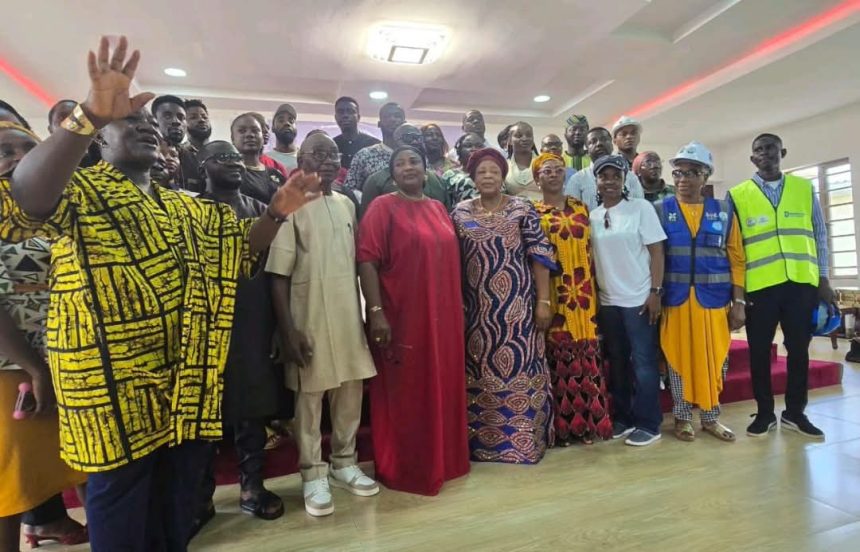
Speaking at the joint flag-off ceremony in Abuja, National Project Coordinator of IDEAS-TVET, Mrs Blessing Ehi Ogwu, urged beneficiaries to focus on acquiring practical skills rather than the stipends attached to the programme.
“The essence is for you to acquire a skill. So, at the end of this training, you don’t need to go about begging,” Ogwu said.
She said beneficiaries who develop practical skills could create employment opportunities for themselves rather than depend solely on salaried jobs.
Ogwu also disclosed that participants must attain at least 65 per cent attendance to qualify for their stipends.
“We have a policy that you must meet your 65 per cent for you to qualify for your stipend,” she said.
Managing Director of Komtek Engineering Services and Consultancy Limited, Engr Ejoga O. Inalegwu, described the programme as an intervention aimed at skills development, economic empowerment and poverty reduction.


Inalegwu said his organisation was training 200 beneficiaries in poultry production, fishery and aquaculture, as well as crop production and processing.
Of the participants, 118 are undergoing poultry training, 48 are studying fishery and aquaculture, while 34 are receiving training in crop production and processing. All 200 participants are also undergoing entrepreneurship training.
He said the training was taking place in Kuchiko Ijah, Niger State, with 157 female and 43 male participants.
According to him, beneficiaries were drawn from the FCT, Niger and neighbouring states, including Kaduna, Kogi and Nasarawa, alongside participants from other parts of the country.
Speaking on behalf of the joint flag-off committee, Ebenezer Azah Chris said vocational and technical skills had become increasingly important because government could not absorb all graduates into public-sector employment.
Chris said the six-month programme comprises three months of technical training followed by three months of internship.
She expressed optimism that participants would use the knowledge and practical experience gained from the programme to establish businesses or secure employment.
One beneficiary, Hossana Gbako Apkhere, who is undergoing poultry farming training with Komtek Engineering Services and Consultancy Limited, said the programme had strengthened her ambition to become an entrepreneur.
“I expect to become an entrepreneur. The training has given us knowledge and taught us how to stand on our own,” she said.

Another participant, Ogaba Emmanuel, a Bachelor of Engineering graduate undergoing compressed natural gas conversion training with Lanre Shittu Motors, said the programme had expanded his understanding of opportunities within Nigeria’s growing CNG sector.
He said increased adoption of CNG could create employment opportunities while supporting greater economic utilisation of Nigeria’s gas resources.
The Federal Government expects the broader IDEAS-TVET programme to equip thousands of young Nigerians with practical skills that can support employment, entrepreneurship and participation in emerging sectors of the economy.