


RismadarVoice Reporters
June 20, 2026
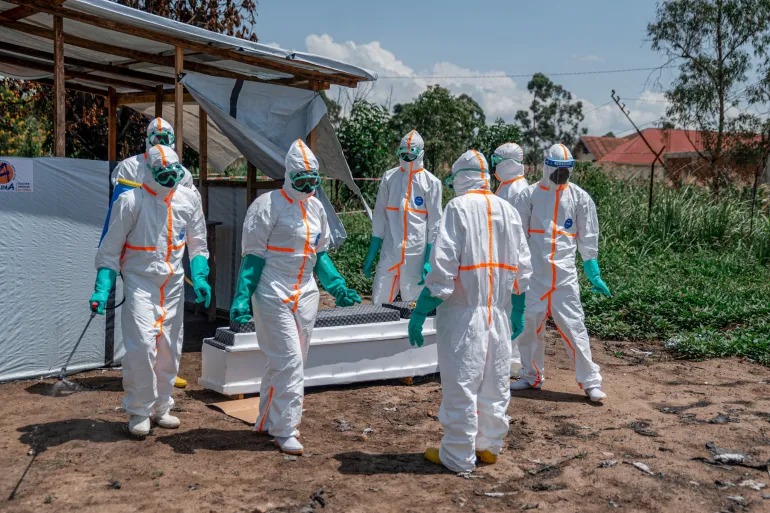
An Ebola outbreak in eastern Democratic Republic of Congo is spreading rapidly, with more than 70 healthcare workers infected and concerns mounting that the virus is moving through overcrowded displacement camps with limited sanitation and medical support.
The World Health Organisation (WHO) confirmed on Friday that at least 75 medical personnel have contracted the virus since the outbreak was declared on May 15, underscoring the strain on an already fragile health system.
Health officials also reported that 17 medics have died as part of an outbreak that has now killed more than 200 people, with infections continuing to rise across multiple health zones.
WHO emergency director Marie Roseline Belizaire described the situation as highly unstable, warning that the outbreak is “evolving so fast” and placing enormous pressure on frontline healthcare systems.
She said the crisis has been worsened by a severe shortage of medical personnel and protective equipment, noting that many facilities lack basic supplies such as gloves and masks needed to prevent infection.

“It is a really high price that the healthcare system is paying,” she said, adding that fear among health workers is increasing as more colleagues become infected.
Authorities believe the Ebola strain involved in Bundibugyo may have been circulating undetected for months before the outbreak was officially confirmed, increasing exposure among medical staff and local communities.
International support is being mobilised, with China and Uganda deploying medical teams to assist Congolese authorities in containing the outbreak.
The WHO has also begun providing psychological support to healthcare workers dealing with repeated exposure to fatalities and infection risk.
According to official figures, the outbreak has so far recorded hundreds of cases across dozens of health zones, with eastern regions of the country most severely affected.
Humanitarian agencies have raised additional alarm over conditions in displacement camps, where overcrowding, poor hygiene and limited access to clean water are creating conditions that could accelerate transmission.
One of the worst-affected sites, the Kigonze camp in Bunia, has reported dozens of deaths in recent weeks. Local officials described the mortality rate as unprecedented, though many cases remain unconfirmed due to resistance from residents to testing and medical screening.
Aid workers say mistrust and fear have complicated efforts to trace infections and contain the spread of the virus, particularly among displaced populations who are already vulnerable due to ongoing conflict in the region.
Health experts warn that Ebola transmission occurs through direct contact with bodily fluids, making inadequate sanitation facilities in crowded camps a major risk factor.
The crisis has also been compounded by declining international funding for water, sanitation and hygiene programmes. According to UN data, financial support for such services in the DRC has dropped significantly over the past year, limiting the ability to install or maintain basic infection-control infrastructure.

Humanitarian officials say the outbreak has not yet peaked and caution that further spread is possible if containment measures are not strengthened quickly.
The African Union has pledged nearly $1bn to support response efforts across the DRC and neighbouring countries, including Uganda, where additional cases and deaths have been recorded.
As emergency teams continue to respond, officials stress that urgent action is needed to prevent further transmission, particularly in densely populated displacement camps where the virus can spread rapidly and undetected.