RismadarVoice Reporters, May 21, 2026
The World Health Organisation (WHO) has stated that the ongoing Ebola outbreak affecting the Democratic Republic of the Congo (DRC) and Uganda poses a high risk at both national and regional levels but does not currently constitute a global pandemic emergency.
WHO Director-General, Tedros Adhanom Ghebreyesus disclosed this while speaking to journalists during the 79th World Health Assembly in Geneva, where health ministers and diplomats are meeting to discuss global health issues.
Providing an update on the outbreak in eastern DRC, Ghebreyesus said health authorities have confirmed several dozen Ebola infections, while nearly 600 additional suspected cases and 139 suspected deaths are under investigation.

He also disclosed that Uganda has recorded two confirmed Ebola cases in Kampala, the country’s capital.
According to WHO officials, the outbreak involves the rare Ebola Bundibugyo strain, which was last detected in 2007. The organisation noted that no approved vaccines or specific treatments currently exist for this particular strain.
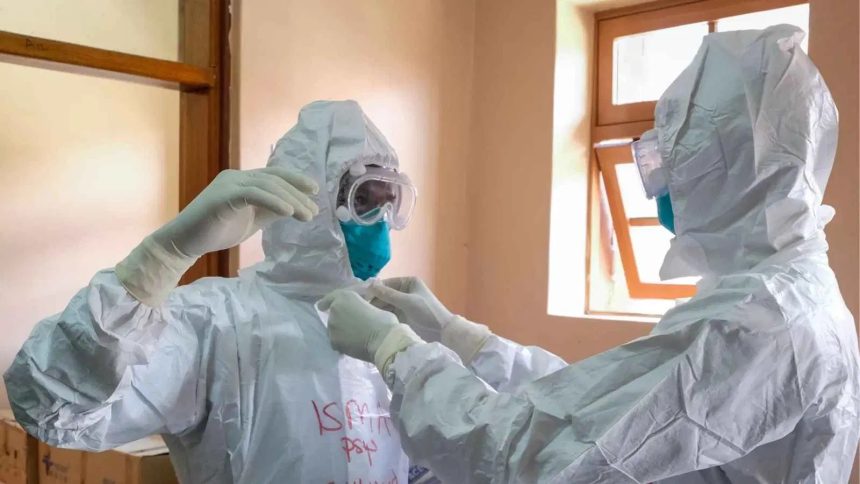
WHO said its teams are already working closely with community leaders in affected areas, especially in Ituri province, to strengthen preventive measures and reduce the risk of wider transmission.
Health officials highlighted the long-standing humanitarian and security challenges in eastern DRC, noting that decades of violence and instability have weakened healthcare systems and increased vulnerabilities among local populations.
WHO Regional Emergency Director (ad interim), Dr Marie Roseline Belizaire, said the organisation has maintained a continuous presence in the region despite security concerns and would continue supporting affected communities during the outbreak.
Officials explained that identifying and tracking infections in remote and conflict-affected areas remains difficult due to disruptions in health services and limitations in surveillance systems.
WHO Regional Director for Africa, Dr Mohamed Janabi, stated that samples used to confirm the Ebola Bundibugyo virus had to be transported approximately 1,700 kilometres to Kinshasa before laboratory confirmation could be achieved.
Health experts also noted that investigations are still ongoing to determine the exact origin and timeline of the outbreak, with indications suggesting that transmission may have started several months earlier.
Following a meeting of the WHO Emergency Committee in Geneva, the outbreak was classified as a public health emergency of international concern, though experts stopped short of categorising it as a pandemic emergency.

Chair of the emergency panel, Professor Lucille Blumberg, stressed that Ebola spreads through direct contact with blood and bodily fluids of infected individuals rather than through airborne transmission.
She explained that this distinction remains important when considering public health responses, including international travel measures.
Blumberg also pointed to humanitarian pressures, population movement, security concerns, and cross-border activities as major challenges that could complicate containment efforts.
She called for increased resources, additional personnel, strengthened surveillance systems, and further research efforts to support outbreak response activities.
WHO said its immediate priority remains interrupting transmission chains and preventing further spread of the disease in affected communities.