By RismadarVoice Reporters
January 5, 2026
China has strongly rejected the arrest of Venezuela’s President Nicolas Maduro by the United States, declaring that no country has the right to act as the world’s judge or police.
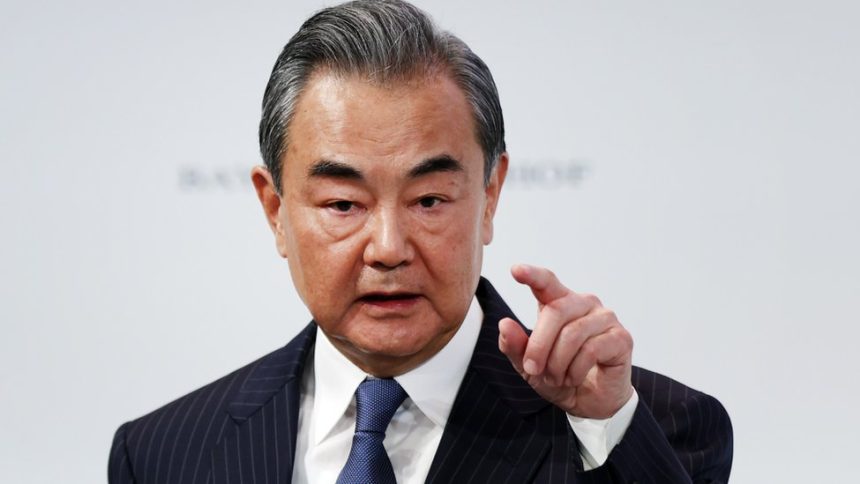
Speaking in Beijing on Sunday, Chinese Foreign Minister, Wang Yi said the sovereignty and security of all nations must be fully protected under international law.
He made the remarks during a meeting with Pakistan’s Foreign Minister Ishaq Dar while addressing the sudden developments surrounding Venezuela.
Wang stated that China has never accepted the idea that any nation can unilaterally enforce global authority, stressing that international disputes must be handled through lawful, multilateral frameworks.
His comments followed the capture of the 63-year-old Venezuelan leader, who was publicly shown blindfolded and handcuffed before being transferred to a detention centre in New York.
Maduro is expected to appear in a U.S. court on Monday to face drug-related charges.
The development has sent shockwaves through Venezuela, raised serious questions about respect for national sovereignty and international law.
The incident represents a major setback to the strategic partnership between Beijing and Caracas.
China and Venezuela formalized an all-weather comprehensive strategic partnership in 2023, strengthening nearly five decades of diplomatic relations.
China has played a central role in supporting Venezuela’s economy, particularly after sanctions imposed by the United States and its allies intensified in 2017.
Beijing remains one of Caracas’ most important economic partners, purchasing large volumes of Venezuelan goods, with crude oil accounting for a significant share.
Chinese state-owned oil companies have also made substantial investments in Venezuela’s energy sector.
The arrest of Maduro now places that partnership under severe strain, challenges China’s broader push to assert itself as a decisive diplomatic force in global affairs, while defending the principle of national sovereignty.