RismadarVoice Reporters
September 21, 2026
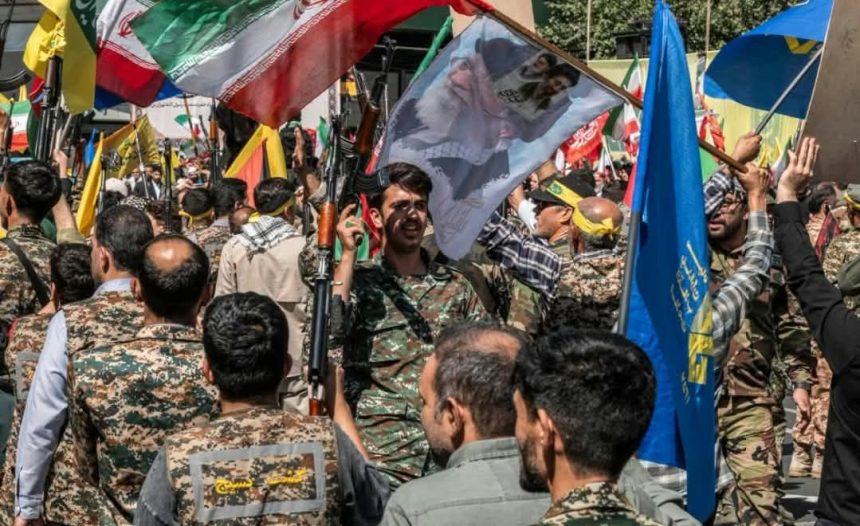
Iran’s military has claimed that the United States is preparing to resume strikes against the country, warning that any renewed military action would trigger retaliation against American bases and interests in the Middle East as diplomatic efforts intensify ahead of the United Nations General Assembly.
The warning was issued by Iran’s Khatam al-Anbiya Central Headquarters, which oversees the country’s armed forces, amid heightened uncertainty over the next phase of the conflict.
Iranian authorities did not publicly provide evidence establishing that Washington had made a final decision to launch renewed strikes.
The warning comes as US President Donald Trump weighs Washington’s next steps in the conflict and has indicated that his options include further military action, increased economic pressure or reaching an agreement with Tehran.

Trump has also expressed willingness to meet Iranian President Masoud Pezeshkian on the sidelines of the United Nations General Assembly in New York.
IRAN WARNS REGIONAL COUNTRIES
Iran’s military warned that countries providing territory or facilities in support of any renewed US military operation could be regarded by Tehran as participants in the conflict.
It also threatened retaliation against American military interests in the region if fresh attacks were launched.
The escalating rhetoric comes as both Washington and Tehran continue to signal that diplomacy remains possible despite their military confrontation.
Iranian Foreign Minister Abbas Araghchi left Tehran on Sunday for New York, with a stop in Doha for consultations on regional developments before attending the UN General Assembly.
Qatar has been involved in mediation efforts aimed at reopening negotiations between Washington and Tehran.
TEHRAN SETS CONDITIONS FOR TALKS
Iran has communicated conditions through mediators for renewed negotiations, including an end to attacks, the release of frozen Iranian funds and the lifting of the US blockade on Iranian ports.
Iranian Parliament Speaker Mohammad Bagher Ghalibaf has maintained that the Strait of Hormuz will remain restricted until Washington meets commitments Tehran says were contained in an earlier agreement.
Qatar, meanwhile, has continued diplomatic contacts aimed at narrowing differences between the two sides.
The Gulf state has previously held discussions with Iranian officials over de-escalation, freedom of navigation and proposals concerning the Strait of Hormuz.
HORMUZ SHIPPING DISRUPTED
The confrontation has significantly disrupted commercial traffic through the Strait of Hormuz, one of the world’s most important energy shipping routes.

Shipping data showed that only 12 commodity vessels crossed the waterway over the weekend, compared with 35 during the previous weekend.
The conflict began in late February following joint US-Israeli strikes on Iran, prompting Iranian retaliation and major disruptions to regional shipping.
A 60-day framework reached in June reduced the intensity of direct fighting but subsequently broke down amid unresolved disagreements.
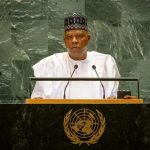
With world leaders gathering in New York for the UN General Assembly, diplomatic contacts are expected to continue alongside military preparations and increasingly forceful warnings from both Washington and Tehran.
Whether those engagements produce renewed negotiations or another escalation remains unresolved.