


RismadarVoice Reporters
September 13, 2026
A fresh report of an attack on a vessel in the Strait of Hormuz has heightened concerns over the security of global energy supplies, coming a day after Saudi Arabia temporarily shut its strategic East-West oil pipeline following a drone strike.
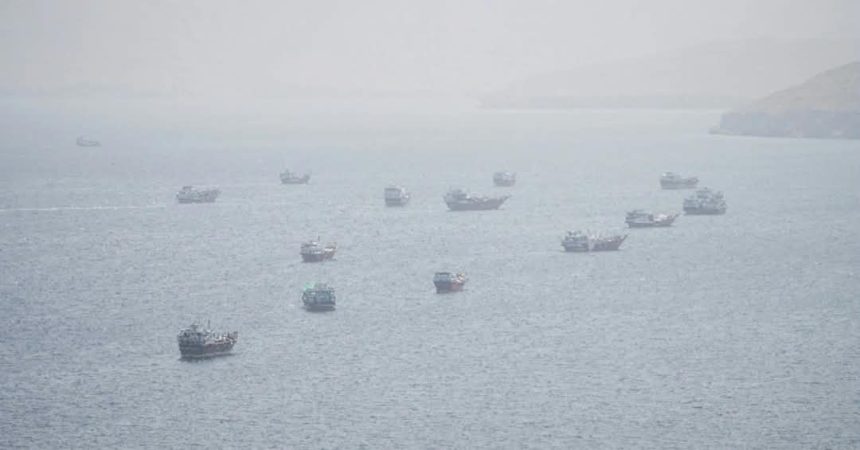
The British navy-affiliated United Kingdom Maritime Trade Operations (UKMTO) said on Sunday that it had received a report that a projectile struck a vessel while it was transiting the Strait of Hormuz. The extent of the damage and the condition of the crew were not immediately known.
The incident adds to growing maritime and energy-security concerns as the wider Middle East conflict continues to disrupt major oil and shipping routes.

The Strait of Hormuz, one of the world’s most important energy chokepoints, has been largely closed to normal commercial traffic since the conflict intensified. The disruption has already placed pressure on global oil markets, with Brent crude rising above $100 a barrel during the past week.
Saudi Arabia’s 1,200-kilometre East-West pipeline has served as a crucial alternative route for transporting oil to export terminals on the Red Sea. Before its temporary shutdown, the pipeline was carrying an estimated 4 million to 5 million barrels of crude per day, equivalent to roughly 4% to 5% of global oil supply.
Saudi authorities said the pipeline was shut as a precaution after a drone attack that both Riyadh and Baghdad said originated from Iraqi territory. Satellite imagery showed black smoke rising from an area south of Medina, while the Saudi Foreign Ministry said the attack caused injuries and damage that were still being assessed.
No group has claimed responsibility for the pipeline attack. US President Donald Trump said Iran was probably responsible, although no evidence supporting the allegation was immediately made public.
The latest maritime incident was reported alongside other attacks across the region. Iranian state media said an Iranian commercial vessel was struck off the country’s southern coast early Sunday, killing one person and injuring three others.

Saudi Civil Defence also reported that a projectile fired by Yemen’s Houthi movement injured two people in the Jazan region and damaged several buildings, including a mosque.
The widening disruptions have increased concerns that continued attacks on energy infrastructure and shipping could further restrict crude supplies and drive prices higher.
SAUDI SEEKS US SUPPORT AGAINST HOUTHIS
Saudi Arabia is also facing increasing pressure from the rapid advance of Houthi forces in Yemen, which has created another threat to regional oil and shipping routes.
Three sources told Reuters that Saudi Crown Prince Mohammed bin Salman spoke with Trump on Thursday and requested US military assistance in confronting the Houthis. The sources said Washington declined to intervene directly for now but offered intelligence support.
Trump confirmed that he had spoken with the Saudi leader and said the Houthis had also contacted his administration, asking the United States not to become directly involved in the conflict.
Four Yemeni government sources said the Houthis seized the strategic island of Perim, also known as Mayun, on Friday. The island lies in the Bab el-Mandeb Strait, a major maritime passage linking the Red Sea with the Gulf of Aden.

The development potentially gives the Houthis greater leverage over another major route used by international shipping and energy carriers.
The group has been attacking Saudi-linked shipping in the area since declaring a blockade in July and has also targeted Saudi energy infrastructure.
HORMUZ TALKS OFFER LIMITED PROSPECT FOR BREAKTHROUGH
Meanwhile, Iran is preparing to attend a meeting with Gulf Arab states in Oman on Monday to discuss the future of the Strait of Hormuz and arrangements for maritime passage.
However, a senior Iranian official told Reuters that the meeting, initiated by Oman, was unlikely to produce a signed agreement. The official said the talks would provide an opportunity to discuss the strait and related issues rather than immediately resolve the dispute.
Iran has sought recognition of its control over the Strait of Hormuz and has proposed collecting fees from vessels using the waterway, a position rejected by Washington.
Oman, which controls the opposite side of the strait, has said it is negotiating with the agreement of other regional states.
According to Iranian media, an agreement concerning shipping routes through the strait could be presented during Monday’s meeting, although the waterway would not fully reopen unless conditions communicated by Iran to the United States were met.
Before the war, vessels enjoyed free and open passage through the Strait of Hormuz.

The combination of disruptions in Hormuz, the shutdown of Saudi Arabia’s alternative oil pipeline and the Houthi advance around the Red Sea has raised the risk of further pressure on global energy markets.
With several major Gulf exporters dependent on secure maritime routes to reach international markets, prolonged disruption could reduce available supplies, increase transportation and insurance costs and place additional upward pressure on crude prices.
The developments also present a growing strategic challenge for Washington, which must weigh the need to protect global energy flows and its regional allies against the risk that deeper military involvement could widen the conflict.