

RismadarVoice Reporters, July 30, 2026
The National Urban League has released its annual State of Black America report, warning that recent policy changes under the administration of President Donald Trump have weakened the economic and political prospects of Black Americans and placed the American Dream further out of reach.
The report, published on Thursday, argues that the challenges confronting Black communities should be viewed as broader warning signs for the future prosperity of all Americans, not just one demographic.
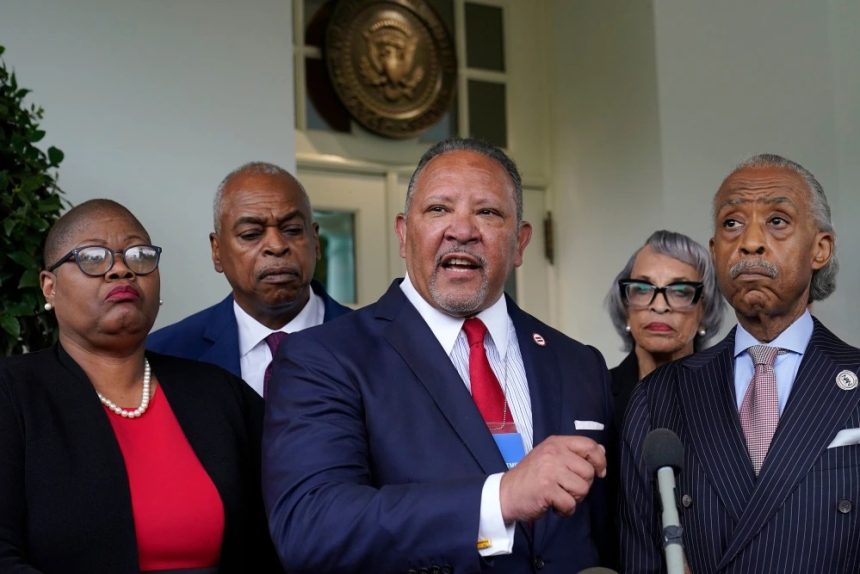
Marc Morial, President and Chief Executive Officer of the National Urban League, said the issues highlighted in the report extend beyond race.

“While the focus may be on Black Americans, the impact will be felt by working Americans, low-income families and aspiring middle-class citizens across the country,” Morial said.
The report traces the historical struggle of Black Americans from slavery through the Civil Rights Movement, describing decades of progress toward equality as now being threatened by recent policy shifts.
According to the Urban League, actions taken by the Trump administration, including changes to the U.S. Department of Justice’s Civil Rights Division, the Equal Employment Opportunity Commission (EEOC), and proposed voting reforms such as the Safeguard American Voter Eligibility Act, represent setbacks to long-standing civil rights protections.
The organisation called on civil rights groups to strengthen legal advocacy and develop long-term economic strategies that are not dependent on any particular administration.
“The civil rights community must consolidate its legal resistance and transform courtroom victories into lasting public policy,” the report stated, adding that sustainable economic institutions are needed to safeguard progress.
The 50th edition of the report features contributions from lawmakers, policy experts and public officials, including U.S. Senators Angela Alsobrooks, Lisa Blunt Rochester and Raphael Warnock.

Maryland Governor Wes Moore, widely regarded as a potential Democratic presidential contender in 2028, also contributed an essay focusing on the racial wealth gap and economic opportunity.
Moore reflected on his family’s experience of upward mobility while stressing that individual determination alone is not enough to overcome systemic barriers.
He described closing the racial wealth gap as “a matter of moral clarity,” while noting that achieving meaningful progress would require collaboration between government, the private sector and civil society.
The Urban League also criticised efforts to scale back diversity, equity and inclusion (DEI) initiatives in both government and the private sector.
The report argues that some companies have retreated from diversity commitments under political pressure, describing the trend as harmful to economic inclusion and equal opportunity.
Morial said while some organisations had reduced their diversity programmes, others had continued to uphold their commitments despite mounting pressure.
The report contrasted the current administration’s policies with those of former President Joe Biden, praising the previous administration for measures including the COVID-19 economic relief package, infrastructure investments and programmes supporting minority-owned businesses.
According to the Urban League, those initiatives represented some of the most significant federal investments benefiting Black Americans in decades.
Despite its concerns, the report maintains that Black Americans have overcome similar challenges throughout history and expressed optimism that progress remains possible through sustained civic participation.
The Urban League noted that its first State of Black America report, published in 1976, documented deep racial disparities in employment, education, housing and economic opportunity while recommending policy reforms that later influenced national programmes.
Marking the report’s 50th anniversary, Morial urged Americans committed to civil rights and economic progress to remain actively engaged in the democratic process.
“We cannot afford to become discouraged or cynical,” he said. “We must continue to act to ensure that the values and opportunities associated with the American Dream remain accessible to everyone.”