RismadarVoice Reporters, May 19, 2026
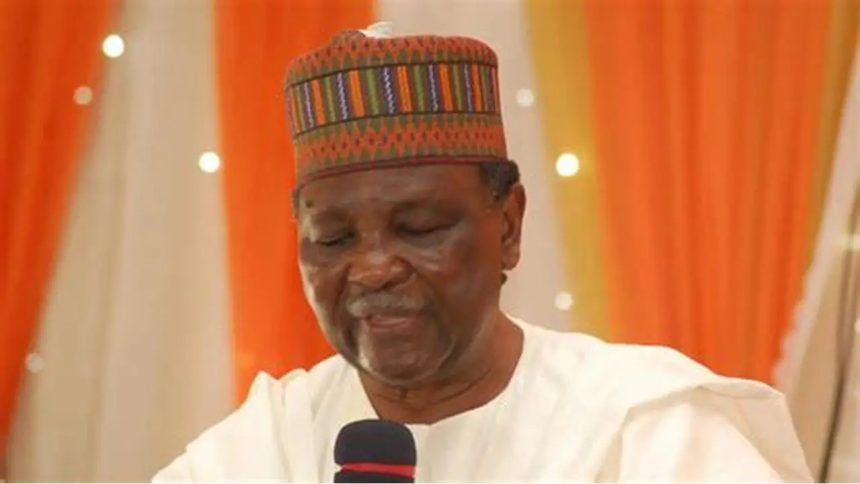
Former Head of State, General Yakubu Gowon (retd.), has revealed that the refusal of the United States and Britain to provide military support to Nigeria during the civil war forced his government to seek assistance from the Soviet Union and a Lebanese businessman operating within the black market.
Gowon stated that the unexpected support from both sources ultimately played a decisive role in changing the course of the conflict, which lasted from July 1967 to January 1970.
The former military leader made the revelations in Chapter Fifteen of his newly launched 859-page autobiography, My Life of Duty and Allegiance, unveiled in Abuja on Tuesday during an event attended by top dignitaries, including Vice President Kashim Shettima, who represented President Bola Tinubu.
The chapter, titled “If The Devil’s Ready To Help,” details Gowon’s efforts to secure weapons as Nigeria’s ammunition reserves dwindled significantly by late 1968, leaving the military with only about half a million rounds.
According to him, the shortage became critical as international restrictions prevented Nigeria from purchasing military equipment from traditional Western partners.
“As the weeks of fighting wore on, our stock of ammunition was steadily depleted and we could not replenish it because international sales restrictions prevented suppliers from selling military hardware to Nigeria,” Gowon wrote.
He explained that the shortage forced him to halt further military advancement after federal troops captured Enugu, saying he could not risk sending soldiers into battle without sufficient ammunition.
Gowon expressed disappointment with the stance of Britain and the United States, noting the contrast between their refusal to support Nigeria and their active military engagements in countries such as Vietnam and Cambodia at the time.

He recalled a meeting with British and American ambassadors, describing it as one of the most significant encounters during the war.
“If I say I’m not disappointed, it will be an understatement,” he said, adding that he informed the diplomats of his determination to preserve Nigeria’s unity and security.
According to Gowon, he warned them that if support failed to come, he would seek help from any available source to protect the nation.
Following the unsuccessful meeting, Gowon said he instructed his Principal Secretary, Hamza Ahmadu, to establish contact with Soviet Ambassador Aleksandr Romanov.
A Nigerian delegation, led by former Commissioner of Information Anthony Enahoro alongside other senior officials, subsequently travelled to Moscow, where the Soviet Union agreed to provide military aircraft, including MiG-15 trainers and MiG-17 bombers.
Gowon said the development marked the beginning of stronger relations between Nigeria and the Soviet Union after the war.
He also revealed that a Lebanese businessman, Ali Jamal, stepped in during the crisis and personally financed the procurement of military equipment and ammunition, despite being informed that the government lacked immediate funds.
According to him, Jamal supplied the needed support with the understanding that he would later be reimbursed without interest.
However, Gowon disclosed that the arrangement faced resistance at the Federal Executive Council, where then Finance Commissioner Chief Obafemi Awolowo reportedly objected to approving the payments on procedural grounds.
The former Head of State said he eventually invoked his authority to ensure the payment was made, insisting that the survival of the country and its military personnel remained his top priority.
The autobiography spans 36 chapters and chronicles Gowon’s life, military career, role during the civil war, his removal from office in 1975, and his years in exile and academic pursuits.