


RismadarVoice Reporters, August 17, 2026
Two sisters in Fort Worth, Texas, spent nearly a year apart from their parents after their mother and father were detained by U.S. Immigration and Customs Enforcement and subsequently deported to Honduras.
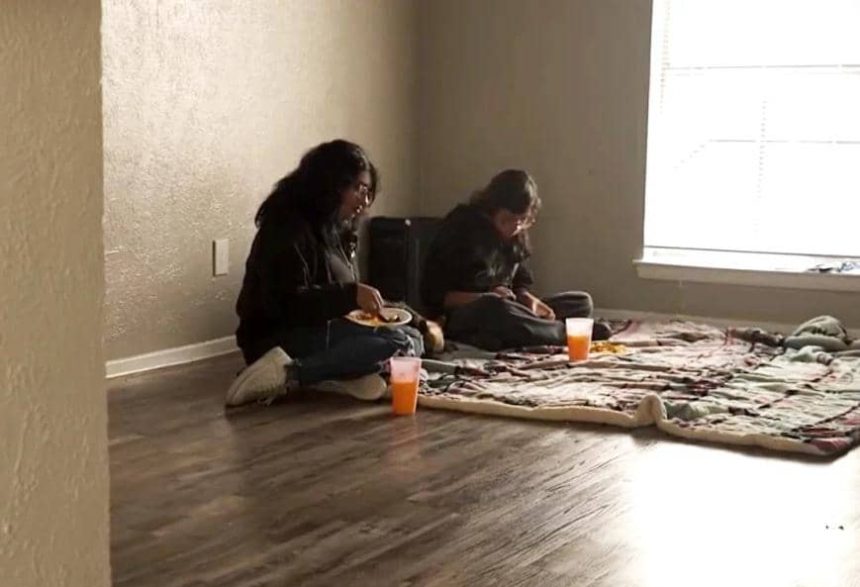
Dulce Zepeda, 19, has been caring for her 13-year-old sister, Maria, since their parents were taken into custody in August 2025.
The teenagers are both U.S. citizens and have the legal right to remain in the country. But their experience has drawn attention to concerns from immigration advocates about the impact of deportations on American-born children whose parents are removed from the United States.

When reporters first met the sisters in April, Dulce was balancing school and work while taking care of Maria. She prepared meals, drove her younger sister to school, worked at a McDonald’s restaurant and sold some of their mother’s jewellery to help cover household expenses.
“You never know when the last hug that you’re going to have from your parents is,” Dulce said, describing the emotional strain of living without her parents.
The family’s ordeal began during a back-to-school shopping trip at a Walmart store in Burleson, Texas, in August 2025.
According to ICE, Burleson police arrested the girls’ mother, Daysi Munoz, on suspicion of shoplifting. Police released only portions of the report, saying the case remained under investigation. Items listed in the report included a mop, toilet paper and crab meat.
Munoz disputed the circumstances surrounding the arrest, saying she and her husband had accidentally left some items at the bottom of their shopping cart before attempting to pay for them.
The incident eventually resulted in both parents being taken into ICE custody.
Dulce recalled saying goodbye to her parents in the store’s parking lot.
She said her mother hugged her and asked her to take care of Maria, telling her that she loved her.
Dulce said her parents were deported after spending about 40 days in custody, leaving her responsible for her younger sister.
Munoz told reporters that she repeatedly asked immigration officials to allow her to return to Honduras with her daughters. She said she was informed that doing so would require her to remain in detention for another four or five months.
Munoz, who said she suffers from high blood pressure, feared that remaining in detention for an extended period could worsen her health.
For months, the sisters struggled with the separation. Their family eventually began raising money to purchase a plane ticket so Maria could travel to Honduras to see her parents.
Maria said her main wish was to visit her mother and father.
Immigration advocates say the sisters’ experience reflects a wider problem affecting U.S. citizen children whose parents are detained or deported.
Zain Lakhani, director of migrant rights and justice at the Women’s Refugee Commission, said children can be left in uncertain and vulnerable circumstances when their parents are removed without adequate arrangements for their care.
Data analysed by NBC 5 Investigates, based on government records obtained through a Freedom of Information Act lawsuit by researchers at the University of Washington, indicated that at least 8,889 parents of U.S. citizen children were detained by ICE during the first seven months of the Trump administration.
The records did not establish the exact number of children affected, but the analysis estimated that between 12,000 and 15,000 U.S. citizen children may have been impacted during that period.
Lakhani said the figures amounted to about 50 U.S. citizen children being affected each day by the arrest, detention or possible deportation of a parent.
She also criticised changes to an ICE directive concerning detained parents. According to Lakhani, previous guidance required the agency to help parents make arrangements for their children before deportation, while the updated directive calls for such assistance when it is “operationally feasible.”
She argued that the change could allow deportations to take place before adequate arrangements are made for affected children.
“This is, in my view, very much a new family separation crisis,” Lakhani said.
ICE rejected the characterisation that its policies separate families.

In a statement, the agency said parents are asked whether they want to be removed from the United States with their children or whether they prefer to designate a safe person to care for them.
The agency confirmed that Munoz was arrested in August 2025 and described her as a “criminal alien” in connection with the suspected shoplifting case. ICE did not directly respond to questions about Munoz’s claim that she was not assisted in reuniting with her children without remaining in detention for several additional months.
After almost a year apart, Maria was eventually able to travel to Honduras. The family raised enough money for her airfare and obtained the necessary Honduran visa, allowing her to reunite with her parents in a country she had never previously visited.
As Maria prepared to leave, Dulce said she believed her sister needed to be reunited with their mother after spending so much time apart.
Dulce, however, chose to remain in Fort Worth and begin building her own future in the United States, where she was born and raised.
The Women’s Refugee Commission said cases like that of the Zepeda sisters demonstrate the importance of resolving child custody and guardianship arrangements before a parent is deported.
Advocates warn that when children remain in the United States without a legal guardian, arranging travel, obtaining visas or establishing new guardianship can become complicated and prolong separation from their parents.
Separately, the Deportation Data Project, a nonprofit research organisation, found through its analysis of government records that immigrants under the current administration are more likely to be deported within 60 days than during the previous administration and are less likely to receive release on bond.
The Women’s Refugee Commission also said interviews with deported parents in Honduras showed that some were removed so quickly that they had little or no opportunity to make arrangements for children left behind in the United States.