RismadarVoice Reporters
September 23, 2026
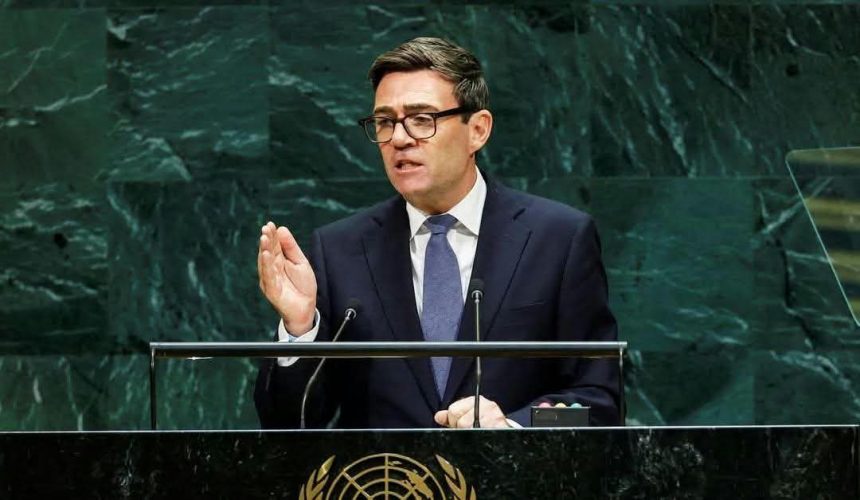
British Prime Minister Andy Burnham has said the United Kingdom is prepared to lead international efforts to establish common standards for artificial intelligence, warning that rapid technological development could outpace existing safeguards.
Burnham made the declaration during his first address to the United Nations General Assembly as prime minister in New York on Tuesday.
He said governments should pursue the economic and social benefits of artificial intelligence while developing safeguards against emerging risks associated with the technology.

According to Burnham, decisions governing AI should ultimately remain with elected governments rather than technology companies.
He said Britain would use its presidency of the G20 in 2027 to push for agreement on global principles and standards governing AI development, transparency and access to advanced systems.
“We will work towards agreeing a single set of global principles and standards to ensure the transparency and access we need to increase our preparedness — and to ensure that AI development is safe,” Burnham said.
The prime minister said Britain was well positioned to act as an “honest broker” in international negotiations, pointing to its relationship with the United States, improving ties with the European Union and relations with China and India.
He also highlighted the work of the UK’s AI Security Institute and its cooperation with the United States and developers of advanced artificial intelligence systems.
Burnham said British authorities expected sufficient access and visibility into new frontier AI models to enable the government to assess potential risks and strengthen national preparedness.
The prime minister also raised concerns about the potential use of emerging technologies for disinformation and foreign interference.

He accused Russian agencies of using bots, fake websites, falsified newspaper articles and forged branding belonging to British organisations to spread disinformation and amplify political narratives.
Russia has rejected allegations of interference.
Burnham announced plans to establish a National Centre for Information Defence, which he said would be tasked with detecting, attributing and disrupting hostile state information operations.
The centre would also work to identify deepfakes considered harmful to British interests and support efforts to protect the country’s democratic institutions.
Burnham said he had directed Britain’s security chiefs to begin work on establishing the centre.
The proposals form part of the British government’s effort to make artificial intelligence governance and information security prominent elements of its international agenda.