RismadarVoice Reporters
September 21, 2026
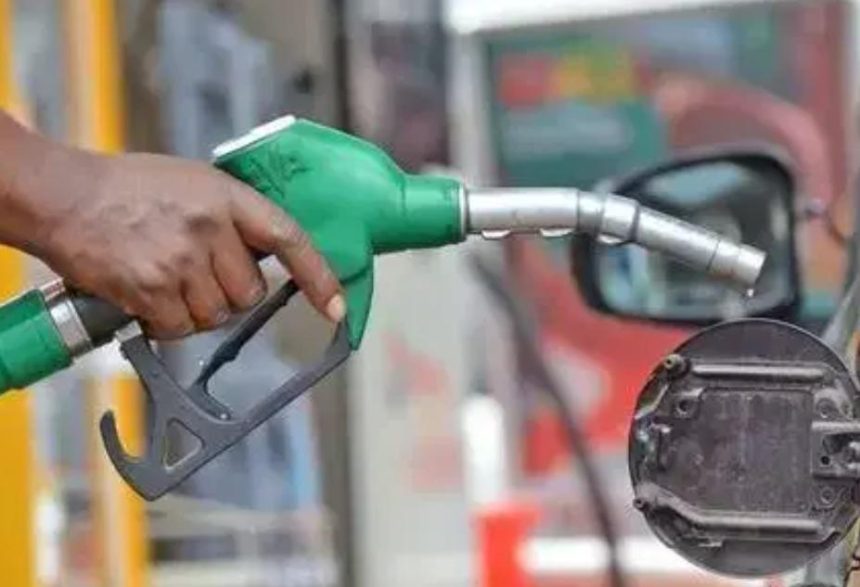
With petrol reportedly selling for about ₦1,430 per litre in parts of Nigeria, workers earning the ₦70,000 national minimum wage are facing mounting pressure from transportation, food and energy costs, prompting fresh calls for measures to protect household purchasing power.
Human rights lawyer, trade unionist and pension advocate Ivo Takor raised the concern on Sunday, warning that the impact of rising petrol prices was spreading beyond filling stations to transport fares, food prices, small businesses and other essential household expenses.
At ₦1,430 per litre, 10 litres of petrol costs ₦14,300, equivalent to more than one-fifth of the monthly national minimum wage.
Takor said the comparison illustrates the financial strain facing low-income workers who must still meet expenses for food, rent, transportation, education, healthcare, electricity and other necessities from the same income.
He argued that the petrol-price debate should therefore extend beyond deregulation, exchange rates and international crude oil prices to the consequences for wages, employment and household welfare.

While workers may continue receiving the same nominal salary, Takor said rising prices effectively reduce their real income because their earnings can purchase fewer goods and services.
TRANSPORT, FOOD AND BUSINESSES FEEL PRESSURE
Higher petrol prices can affect the wider economy through transportation and energy costs.
Commercial transport operators may adjust fares when their operating expenses increase, while farmers, traders and distributors can face higher costs moving goods between production centres and markets.
Businesses dependent on petrol-powered generators may also face increased operating expenses, particularly where electricity supply remains inadequate.
Takor said these additional expenses could eventually be reflected in the prices consumers pay for goods and services.
The pressure is particularly significant for low-income households, which generally have less discretionary spending available to absorb sudden increases in essential expenses.
Takor warned that financially vulnerable households could consequently face increasingly difficult choices involving food, transportation, healthcare, rent and education.
PENSIONERS ALSO UNDER PRESSURE
He called for particular attention to pensioners and elderly Nigerians, many of whom rely on fixed retirement income, savings or financial assistance from relatives.
Unlike workers who may have opportunities to seek additional income, many elderly people have limited capacity to respond to inflation while continuing to face expenses for medication, hospital appointments and other necessities.
Higher transportation costs can also increase the expense of attending medical appointments, while rising distribution costs can contribute to higher prices for medicines and other essential products.
Takor therefore argued that measures intended to cushion the impact of rising energy costs should specifically consider pensioners and other vulnerable groups.
CALL FOR WIDER POLICY RESPONSE
Takor acknowledged that the government faces legitimate challenges involving fiscal sustainability, energy security, domestic refining capacity and the development of efficient markets.
He maintained, however, that economic reforms should also be assessed according to how their costs and benefits are distributed across society.
Nigeria’s large informal sector is particularly exposed because many small businesses depend directly on transportation or privately generated electricity.
Barbers, welders, food vendors, commercial drivers, tailors, retailers and other small-scale operators may respond to higher operating costs by raising prices, reducing operations or shutting down altogether.
Each response carries wider economic implications, ranging from increased consumer prices to reduced employment and loss of livelihoods.
WAGE SUPPORT, MASS TRANSIT AMONG OPTIONS
Takor identified temporary wage awards or other cost-of-living interventions as measures policymakers could examine where workers’ purchasing power has significantly declined.
He also called for consideration of targeted assistance for pensioners, persons with disabilities and the poorest households, with safeguards to ensure that support reaches intended beneficiaries.
Transportation, he argued, requires particular attention.
Expanding reliable mass-transit networks, including high-capacity buses, rail services and alternative-energy public transportation, could reduce the proportion of workers’ incomes spent travelling to and from work.
Takor also advocated continued attention to domestic refining, crude supply arrangements, competition within the downstream petroleum sector and national fuel-storage capacity.
He argued that deregulation should not eliminate effective regulatory oversight, particularly regarding transparency in pump-price formation and protection against anti-competitive practices.
Improved electricity supply, he added, remains important because widespread dependence on petrol and diesel generators increases the impact of petroleum-price movements throughout the economy.
‘ECONOMIC POLICIES MUST ULTIMATELY SERVE NIGERIANS’
Takor called for stronger dialogue among the Federal Government, organised labour, employers and civil society before economic pressures escalate into industrial disputes.

He maintained that Nigeria requires investment, infrastructure, domestic refining, fiscal stability and functioning markets, but said the welfare of citizens should remain central to the implementation of economic reforms.
“A worker who spends an increasing proportion of his salary merely travelling to work cannot indefinitely be told to endure,” Takor said.
“A pensioner choosing between medication and food cannot be treated as an unfortunate statistic.”
He argued that the challenge before the government was to balance market realities with policies capable of protecting vulnerable Nigerians from severe economic hardship.
“For workers, poor and elderly Nigerians, this is not an abstract debate about barrels of crude oil, exchange rates or market indices,” Takor said.
“It is about food on the table, transport to work, medicine in the cupboard and dignity in old age.”
Takor maintained that the continuing petrol-price debate should therefore be considered alongside wages, public transportation, pensions, social protection, domestic energy production, competition and electricity supply.
“Nigeria’s economic policies must ultimately serve Nigerians,” he said.