RismadarVoice Reporters, July 6, 2026
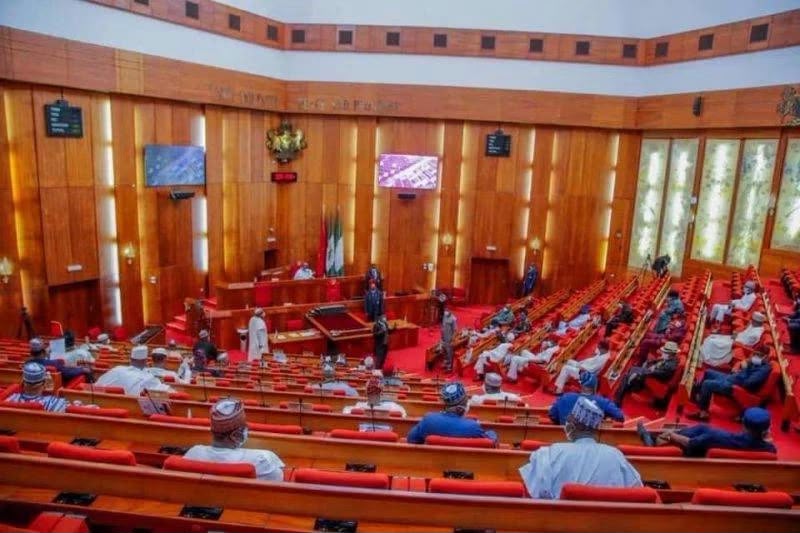
The Senate is expected to address the controversy surrounding the ₦1.3 billion allocation to the controversial Presidential Foreign Intervention Promotion Council (PFIPC) when plenary resumes on Tuesday.
The development follows growing concerns over how a council the Presidency has described as non-existent was included in the 2026 Appropriation Act.
According to reports, the alleged mastermind, Prince Adeniyi Adeyemi Mathew, reportedly secured an office at the Federal Secretariat in Abuja after presenting a forged appointment letter bearing the falsified signature of the President’s Chief of Staff, Femi Gbajabiamila.

The document was allegedly accepted by officials at the Civil Service Headquarters without proper verification, giving the organisation an appearance of legitimacy for more than a year.
Sources within the Presidency and the civil service said the forged appointment letter exploited weaknesses in government verification processes.
Officials explained that appointments to agencies under the Presidency are constitutionally made by the President and conveyed through the Secretary to the Government of the Federation (SGF), not by the Chief of Staff.
Despite this, Adeyemi allegedly presented the forged letter to obtain office accommodation and establish the PFIPC as a functioning government body.
The office reportedly enabled the council to operate with official letterheads, a website and interactions with government institutions and foreign missions before suspicions emerged.
The ₦1.3 billion allocation was reportedly approved without any official of the PFIPC appearing before the Senate Committee on Establishment and Public Service to defend the budget.

A National Assembly source alleged that the provision was inserted alongside other Presidency-related budget items without undergoing normal legislative scrutiny.
Senate leadership is expected to address the issue during Tuesday’s plenary amid allegations of institutional failures.
Presidency sources said officials of the Nigerian Investment Promotion Commission (NIPC) first raised concerns after discovering that the PFIPC was performing functions similar to those of the commission.
The matter was reportedly escalated to Chief of Staff Femi Gbajabiamila, who denied any knowledge of Adeyemi or the organisation and subsequently alerted the Department of State Services (DSS).
Adeyemi was later arrested and arraigned in court but reportedly continued operating outside the Federal Secretariat after the office allocated to him was sealed.
Sources also alleged that he violated his bail conditions and could face fresh legal action.
Several organisations have called for greater transparency over the scandal.
The Socio-Economic Rights and Accountability Project (SERAP) requested certified documents relating to the PFIPC budget allocation, including records of committee proceedings, officials who defended the budget and whether the allocation originated from the executive or was inserted by lawmakers.
The Human and Environmental Development Agenda (HEDA) also demanded a public inquiry to determine how funds were allocated to an agency that allegedly had no legal status.
Former Vice President Atiku Abubakar described the controversy as evidence of deeper governance failures, urging President Bola Tinubu to order an independent investigation.
The Tanimu Turaki-led faction of the Peoples Democratic Party (PDP), the Committee for the Defence of Human Rights (CDHR), and the Kwankwasiyya Movement also demanded investigations into the circumstances surrounding the agency’s recognition and budget allocation.
While the CDHR called on Gbajabiamila to temporarily step aside pending investigations, senior lawyers argued that criminal charges should only be based on credible evidence and not public allegations.
Prince Adeyemi is scheduled to appear before the Federal High Court in Abuja on July 27, 2026, alongside two other suspects identified as Femi and Anu, who remain at large.
The case continues to attract national attention as questions persist over how multiple government institutions allegedly failed to detect the purported fraud.