


RismadarVoice Reporters, May 12, 2026
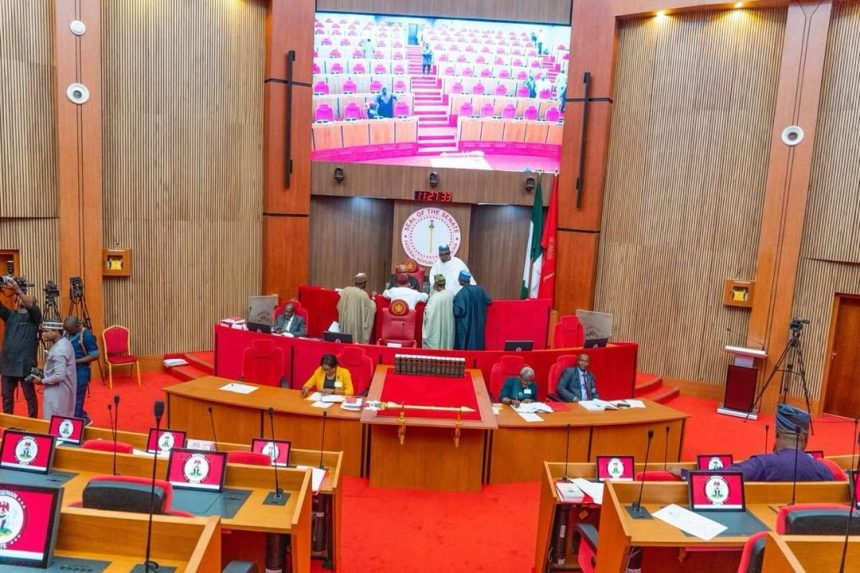
The Nigerian Senate has adopted a new resolution outlining procedures for the swearing-in of senators-elect and the election of presiding and principal officers ahead of the 2027 general elections.
The resolution, passed during plenary on Monday, introduced fresh guidelines on oath-taking, ranking of senators and eligibility criteria for leadership positions within the Red Chamber.
Under the new provisions, any senator-elect who is unable to take the Oath of Allegiance and Oath of Membership during the first sitting of the Senate will still be eligible to be sworn in by the President of the Senate at a later sitting.

However, the Senate stated that where a senator-elect “fails, neglects or is unable” to take the oath within the stipulated period, the chamber may invoke constitutional provisions to declare the seat vacant and notify the Independent National Electoral Commission (INEC) to conduct a fresh election in the affected senatorial district.
The resolution also provides that every senator-elect must present a writ of election alongside evidence of declaration of assets and liabilities before being formally sworn in.
“Each Senator-elect called shall present the writ of election and the receipt for the declaration of assets and liabilities, which shall be laid upon the Table by the Clerk,” the resolution stated.
On the election of presiding officers, the Senate resolved that senators-elect would be permitted to participate in the election of the Senate President and Deputy Senate President even before taking the constitutional oath of office.
The upper legislative chamber also reaffirmed the principle of seniority and ranking in the nomination of presiding officers.
According to the resolution, priority in ranking would first be given to senators based on the number of times they had been re-elected, followed by senators who previously served in the House of Representatives, while first-time senators would rank last.
The Senate further resolved that the composition of committees must reflect the six geopolitical zones of the country to ensure fairness and avoid dominance by a few regions.

On eligibility for leadership positions, the Senate ruled that no senator would be qualified to contest for the office of Senate President or Deputy Senate President unless the individual had served at least two full terms of eight years in the Senate, with one term immediately preceding the election.
Similarly, the resolution stated that no senator would qualify for appointment as a principal officer unless he or she had served at least one term of four years immediately before such appointment.