RismadarVoice Reporters
October 21, 2026
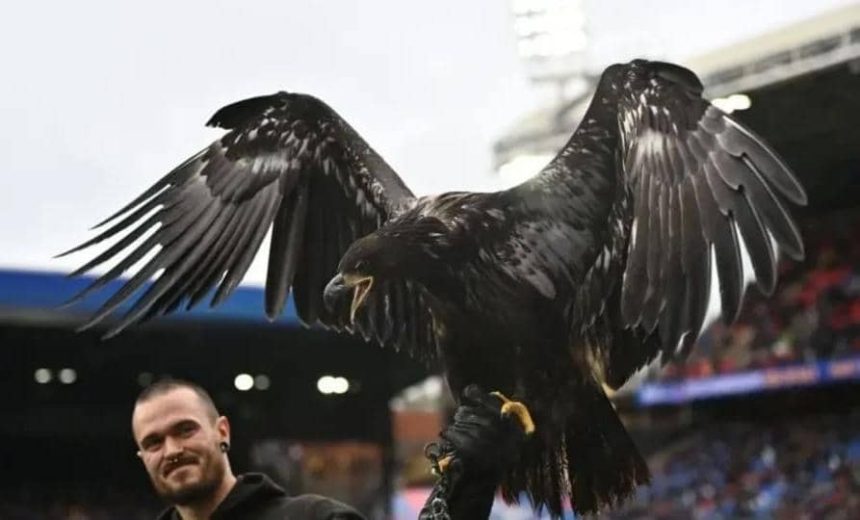
Animal rights organisation People for the Ethical Treatment of Animals (PETA) has called on English Premier League club Crystal Palace to permanently retire its live bald eagle mascot, Phoenix, over concerns about animal welfare and spectator safety.
The organisation appealed in a letter addressed to the club’s Chief Executive Officer, Sharon Lacey, urging Crystal Palace to discontinue the use of live animals during football matches at Selhurst Park.
PETA argued that the atmosphere at football stadiums, characterised by loud noises, bright lights and large crowds, could expose birds of prey to unnecessary stress, fear and disorientation.

According to the organisation, such environments are unsuitable for eagles, which naturally require space and relatively undisturbed surroundings.
Crystal Palace, popularly known as the Eagles since 1973, introduced a live eagle mascot in 2010.
The club’s first live mascot, Kayla, became a familiar attraction at Selhurst Park before she died in 2020.
Phoenix was introduced in August 2024 during a Premier League encounter against West Ham United.
The bird, which is based at Eagle Heights Wildlife Foundation in Kent, was presented to supporters as the club’s new live mascot.
However, PETA maintained that using animals for entertainment could compromise their welfare, regardless of whether they were raised in captivity.
The organisation also cited previous incidents involving live birds at sporting events, including collisions with stadium structures and injuries involving spectators.
It recalled an incident in 2015 when a Charlton Athletic supporter was convicted of attempting to punch Kayla during a League Cup fixture against Crystal Palace.
Speaking on the campaign, PETA’s Senior Corporate Projects Manager, Dr Carys Bennett, said the club could maintain its matchday entertainment without involving a live bird.
She pointed out that Crystal Palace already has a costumed human mascot, Pete the Eagle, who could continue entertaining supporters.

Bennett further argued that bald eagles, widely regarded as symbols of freedom, should not be used merely as attractions at sporting events.
The organisation called on Crystal Palace to end Phoenix’s involvement in matchday activities permanently and adopt alternatives that do not involve live animals.
Although Phoenix has not appeared at every home fixture, the bird’s association with the club has remained a subject of discussion among animal welfare campaigners.
As of the latest reports, Crystal Palace has not publicly announced whether it would accept PETA’s request.
The development has renewed debate over the use of live animal mascots in professional football and the balance between sporting traditions, entertainment and animal welfare.