RismadarVoice Reporters
November 6, 2026
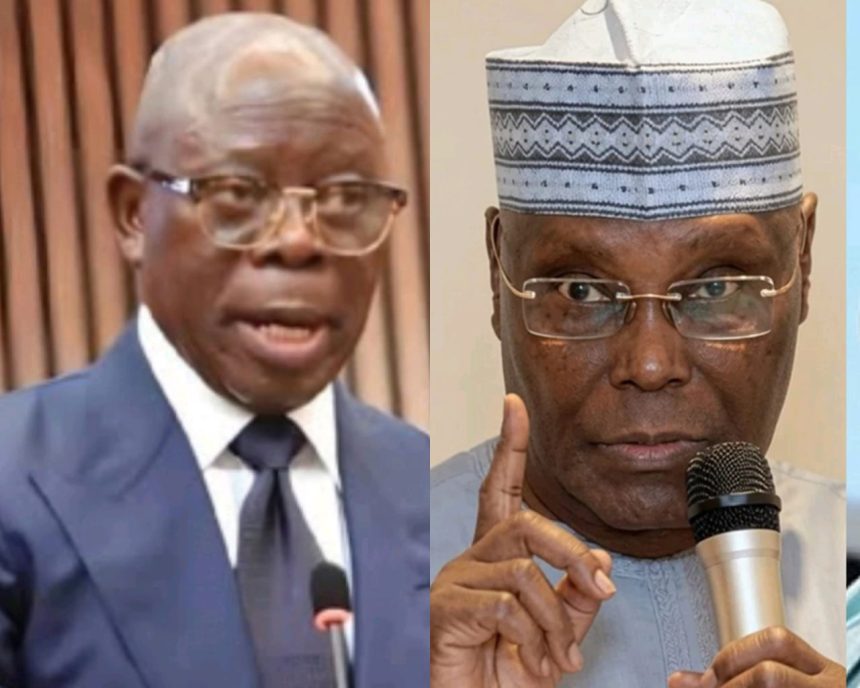
Senator Adams Oshiomhole has criticised former Vice President Atiku Abubakar over his earlier pledge to privatise the Nigerian National Petroleum Corporation (NNPC), recalling that the opposition politician once declared his willingness to pursue the policy even at the risk of his life.
Speaking during a television interview, Oshiomhole questioned Atiku’s position on petroleum sector reforms and fuel subsidy removal, arguing that Nigerians should remember his previous economic policy proposals.
The former Edo State governor said Atiku had publicly supported both the withdrawal of petrol subsidies and the privatisation of the national oil company.

According to Oshiomhole, the former vice president had expressed strong determination to transfer NNPC operations to private investors despite possible opposition.
He questioned why Atiku had suggested that implementing such a policy could expose him to threats, arguing that decisions involving public assets should be subject to lawful scrutiny.
Oshiomhole maintained that political leaders should be held accountable for their previous statements, particularly when presenting alternative economic policies to voters.
Atiku’s position on NNPC privatisation dates back to January 2019, when he addressed members of the business community in Lagos during his presidential campaign.
At the event, Atiku described the National Oil Corporation as an institution requiring fundamental restructuring and pledged to introduce greater private-sector participation.
He said he was committed to privatisation despite possible resistance from interests within the petroleum industry.
However, Atiku also explained at the time that his proposal did not necessarily involve selling the entire corporation. He advocated reducing government ownership to a minority stake while allowing private investors greater operational control.
The former vice president argued that the approach could improve efficiency, encourage investment and strengthen accountability in Nigeria’s petroleum sector.

Oshiomhole has also questioned Atiku’s position on fuel subsidies, particularly amid renewed political discussions about the economic consequences of subsidy removal.
The debate reflects continuing disagreements over the appropriate role of government in managing petroleum assets and regulating fuel prices.
While supporters of privatisation argue that private-sector participation could improve operational efficiency, critics raise concerns about transparency, public ownership and the protection of national economic interests.
The latest criticism places Atiku’s previous economic proposals under renewed scrutiny as political discussions continue ahead of Nigeria’s 2027 general election.