

RismadarVoice Reporters, May 6, 2026
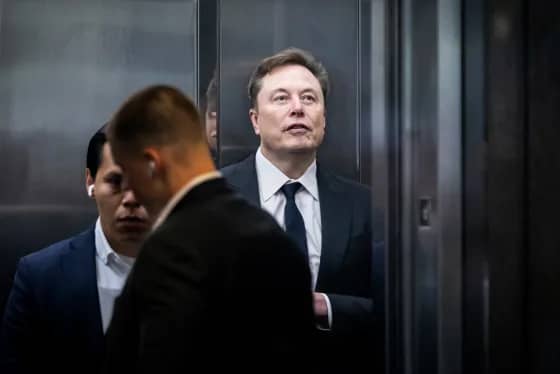
A high-stakes courtroom battle over the origins and control of OpenAI took a dramatic turn this week as co-founder Greg Brockman testified that he once feared fellow co-founder Elon Musk might physically attack him during a tense internal meeting in 2017.
Testifying on the fifth day of the trial in Oakland, California, Brockman told the court that the confrontation occurred during an internal debate over OpenAI’s future structure, as the team grappled with how to secure significantly more funding for advanced artificial intelligence development.
“Truly thought he was going to physically attack me,” Brockman said, describing the moment tensions escalated inside the early leadership circle of the AI research lab that would later create ChatGPT.
The trial centres on a lawsuit brought by Musk against OpenAI executives, including CEO Sam Altman, alleging they violated the organisation’s founding principles as a nonprofit. Musk claims the group abandoned its original charitable mission while benefiting financially from its transformation.
Brockman said the August 2017 meeting began on a cordial note, noting that Musk had arrived with gifts for co-founders, including Tesla vehicles and other memorabilia. Fellow co-founder Ilya Sutskever reportedly reciprocated with a Tesla-themed painting.
However, according to Brockman’s testimony, the tone shifted sharply when discussions turned to equity distribution in a proposed for-profit arm of OpenAI. He said Musk pushed for majority control and rejected equal ownership among founders.
“He said, ‘I decline,’” Brockman recalled, adding that Musk warned he would withhold funding if his conditions were not met. Brockman testified that Musk appeared increasingly agitated, stood up, paced the room, and ultimately left the meeting abruptly.
The court also heard broader testimony about OpenAI’s early culture and internal tensions, including discussions about whether the nonprofit structure was sufficient to support the growing costs of AI research.
Musk, who also leads Tesla, Inc. and SpaceX, later founded rival AI company xAI. In his own testimony earlier in the trial, he accused OpenAI leadership of misleading him about the organisation’s direction as it transitioned toward a hybrid for-profit model.

OpenAI, founded in 2015, later introduced a capped-profit structure in 2019 and has since undergone additional restructuring as it scaled globally. The company maintains that its nonprofit board still oversees its mission, despite evolving financial arrangements.
Brockman also testified that he had once discussed internally whether Musk should be removed from the board during the organisation’s early years, though that step was never taken.
The trial continues to examine whether OpenAI’s leadership remained aligned with its original nonprofit commitments or whether its shift toward large-scale commercial funding represents a breach of that founding agreement.

Judge Yvonne Gonzalez Rogers indicated that proceedings may conclude soon, with jury deliberations expected shortly after final evidence is presented.