RismadarVoice Reporters
October 21, 2026
Nigeria’s improving economic indicators have renewed discussions about the impact of President Bola Tinubu’s reforms, as rising living costs continue to place pressure on households despite evidence of stronger economic growth and government revenues.
The World Bank’s latest Nigeria Development Update shows that the country’s economy expanded by 4.2 per cent in the first half of 2026, compared with 3.9 per cent during the corresponding period in 2025.
The international financial institution also projects average annual growth of 4.4 per cent between 2026 and 2028, provided the government sustains reforms, strengthens public services and creates conditions for increased private investment.
According to the World Bank, improvements in public finances, foreign exchange conditions and government revenues have contributed to greater macroeconomic stability.
However, the institution stressed that stronger economic figures must translate into employment opportunities, poverty reduction and improvements in living standards.
The Tinubu administration has introduced several economic reforms, including petrol subsidy removal, exchange-rate liberalisation, electricity tariff adjustments and tax policy changes.
While the government maintains that these measures are necessary to stabilise public finances and stimulate economic growth, their effects on household expenses remain a major concern.
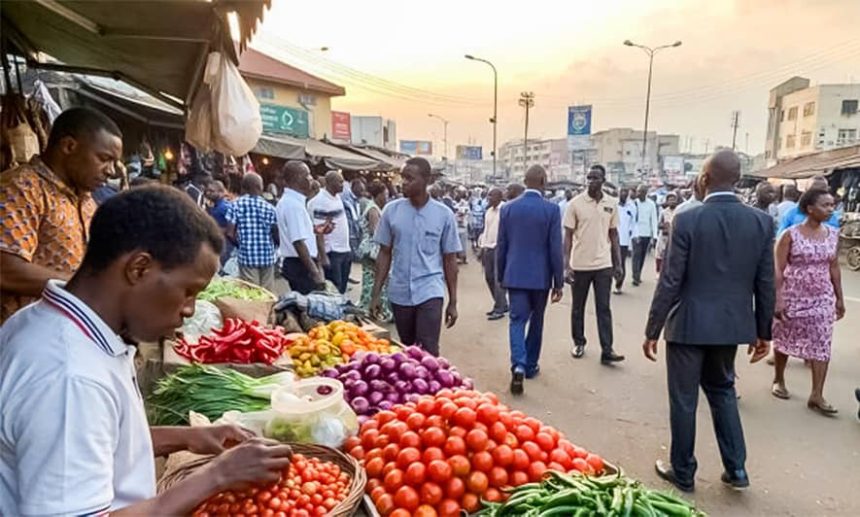
Higher petrol prices have increased transportation and business operating costs, while expensive electricity, food and essential services continue to stretch household budgets.

Figures released by the National Bureau of Statistics showed that headline inflation eased to 14.63 per cent in September 2026 from 15.39 per cent in August.
However, food inflation remained elevated at 19.59 per cent, demonstrating that slower price increases do not necessarily mean goods have become cheaper.
Public spending has also attracted scrutiny as Nigerians question whether the sacrifices demanded by economic reforms are being shared fairly.
In a judgment delivered on May 6, 2026, the Federal High Court in Lagos declared unlawful the National Assembly’s ₦110 billion vehicle procurement and allowance arrangements, comprising ₦40 billion for 465 vehicles and ₦70 billion in support allowances.
The ruling intensified discussions about accountability and the management of public resources during a period of economic hardship.
Meanwhile, the Nigerian National Petroleum Company Limited introduced a temporary petrol discount at its retail outlets in October to cushion the effects of rising global oil prices.
The company clarified that the initiative, scheduled to run until October 31, was a limited customer relief measure rather than a return to the previous petrol subsidy arrangement.
Economic policy discussions have increasingly focused on expanding affordable transportation, improving electricity access, supporting agricultural production and ensuring that government revenues translate into better healthcare, education and infrastructure.

The World Bank has also encouraged state governments to improve spending efficiency and accountability following increases in revenues available to subnational administrations.
While the economic outlook suggests progress in stabilising Nigeria’s finances, the continuing pressure on household incomes highlights the challenge of ensuring that growth benefits ordinary citizens.
The effectiveness of the administration’s reforms will increasingly depend on whether improving economic indicators are accompanied by affordable essential services, sustainable employment and measurable improvements in living conditions.