

RismadarVoice Reporters, May 26, 2026
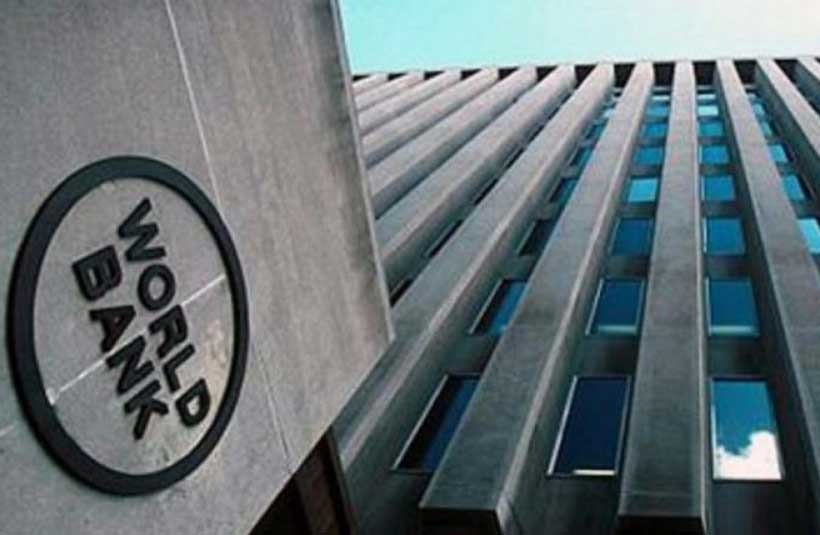
Nigeria has walked away from $717.7 million in unspent World Bank funding meant to revive its battered electricity sector, bringing an abrupt end to a multi-billion-dollar reform programme that struggled to deliver on its promises amid a worsening financial crisis in the power industry.
The cancellation, confirmed through World Bank documents, terminated the remaining balance of a $1.52 billion Power Sector Recovery Performance-Based Operation a joint decision by both the Federal Government and the bank, citing shifting sector conditions and the failure to hit critical reform targets. The programme’s closing date was also moved forward by more than a year, from June 2027 to the end of May 2026.

The original scheme, approved in June 2020 with about $752.5 million in financing, was designed to stabilise Nigeria’s chronically unreliable power supply, restore financial discipline across the electricity value chain, and reduce the sector’s drain on public finances. Early results were encouraging tariff shortfalls fell by 71 per cent between 2019 and 2022, dropping from N581 billion to N166 billion, while regulatory cost recovery climbed from 56 per cent to 94 per cent over the same period.
Buoyed by that progress, the World Bank approved an additional $763.5 million package in June 2023 to deepen the reforms. That decision would prove premature.
The turning point came almost immediately after. Nigeria’s liberalisation of its foreign exchange market in June 2023 sent the naira into a steep decline, dramatically inflating the cost of natural gas the fuel source for more than 70 per cent of the country’s electricity generation, priced in US dollars. Yet electricity tariffs for most consumers remained frozen, except for Band A customers who received an upward adjustment in April 2024.
The result was a financial catastrophe for the sector. Annual tariff shortfalls the gap between what electricity costs to produce and what consumers pay exploded from N140 billion in 2022 to roughly N1.9 trillion in both 2024 and 2025, placing enormous strain on federal finances.
With sector finances in freefall, Nigeria was unable to meet the conditions attached to the additional financing. Key performance indicators went unachieved in 2023, 2024, and 2025. The World Bank noted that authorities failed to produce a credible, fiscally sustainable plan for tackling the tariff deficit a prerequisite for unlocking further funds.
Implementation bottlenecks also played a role, particularly delays involving the Transmission Company of Nigeria. The bank rated overall progress under the additional financing as “Moderately Unsatisfactory.”
The disbursement figures tell the story starkly. Of the $763.5 million additional package, only about nine percent roughly $41 million under the IBRD component alone was ever released. The remaining $407.76 million under that component sat untouched, with a disbursement rate of just 9.18 per cent.
The cancellation comes against a backdrop of growing tension between Abuja and Washington over loan processing timelines. The Accountant-General of the Federation, Dr Shamseldeen Ogunjimi, recently cautioned that Nigeria might begin declining World Bank facilities if approvals continue to drag beyond six months a notable warning from Africa’s largest economy and the bank’s third-largest concessional borrower.

As of March 2026, Nigeria’s exposure to the World Bank’s International Development Association stood at $18.5 billion, trailing only Bangladesh and Pakistan globally.
The collapse of this programme leaves Nigeria’s power sector in a precarious position burdened by structural inefficiencies, mounting debt, and a reform agenda that has yet to translate into reliable electricity for millions of citizens.