RismadarVoice Reporters
October 17, 2026
The Federal Government has disclosed that Nigeria is expecting the delivery of 10 attack helicopters, unmanned aerial vehicles (UAVs) and other military equipment to strengthen the operational capabilities of the Armed Forces in the fight against terrorism, banditry, kidnapping and other security threats.
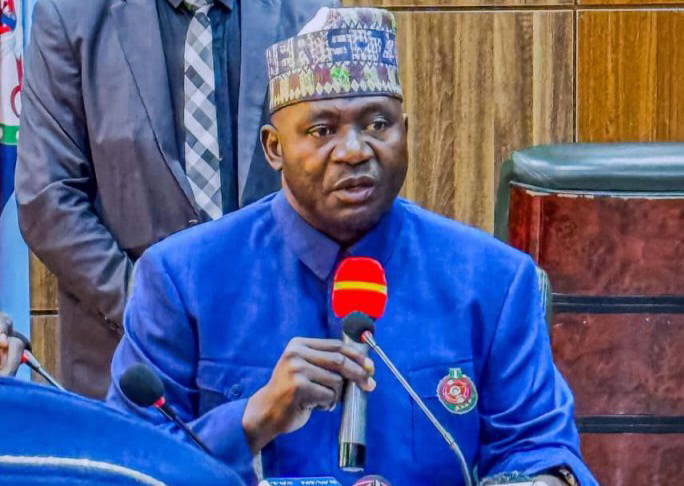
The Minister of Defence, General Christopher Gwabin Musa (retd.), made the disclosure in Abuja during a meeting with the European Union Ambassador to Nigeria and the Economic Community of West African States (ECOWAS), Gautier Mignot, and members of his delegation.
The meeting, held at the Ministry of Defence headquarters, Ship House, focused on expanding defence cooperation between Nigeria and the European Union, strengthening existing security partnerships and discussing a proposed €20 million assistance package for the Nigerian Armed Forces.
According to a statement issued by the minister’s Special Assistant on Media, Leah Katung-Babatunde, both parties reviewed Nigeria’s security challenges and explored opportunities for deeper collaboration in military operations, regional security and defence capacity development.
ATTACK HELICOPTERS AND DRONES TO STRENGTHEN MILITARY CAPABILITIES
Musa disclosed that the anticipated delivery of 10 attack helicopters and other military equipment formed part of efforts to enhance the Armed Forces’ capacity to respond to security threats.

He also identified unmanned aerial vehicles among the equipment expected to support military operations.
Attack helicopters provide aerial fire support during military engagements, while drones can support surveillance, reconnaissance and intelligence gathering. Some UAV systems are also capable of carrying out strikes, depending on their configuration.
The minister’s disclosure comes as Nigerian security forces continue operations against armed groups operating in different parts of the country.
The additional equipment is expected to improve operational flexibility and support efforts to locate and disrupt criminal networks.
However, the minister did not specify the models of the helicopters, their countries of origin, the number or types of drones involved, or the expected delivery dates.
He also did not indicate whether the anticipated aircraft and drones were connected to the proposed European Union assistance package.
EU PROPOSES €20 MILLION SUPPORT FOR NIGERIAN ARMED FORCES
A major focus of the meeting was a proposed €20 million support package under the European Peace Facility.
The initiative is intended to strengthen Nigeria’s defence capabilities and deepen cooperation with European partners.
The European Peace Facility is an EU funding mechanism that supports peace and security initiatives, including assistance to partner countries and regional security operations.
During the discussions, Mignot reaffirmed the European Union’s interest in supporting Nigeria’s security efforts.
The ambassador announced that an EU technical delegation would visit Abuja in November to finalise arrangements for implementing the proposed assistance.
The planned visit is expected to address operational requirements and other details necessary for the programme’s implementation.
The announcement indicates that the assistance package remains under discussion, with implementation arrangements yet to be concluded.
EU AMBASSADOR INVITES DEFENCE MINISTER TO BRUSSELS
Mignot commended Nigeria’s defence leadership and expressed appreciation for the country’s role in regional security cooperation.
He also invited Musa to participate in a meeting of defence ministers scheduled to take place in Brussels later in the year.
The proposed engagement would provide an additional opportunity for discussions on defence partnerships, regional stability and responses to evolving security threats.
Musa welcomed the European Union’s continued cooperation and acknowledged its contributions to peace and security initiatives.
He assured the delegation that President Bola Ahmed Tinubu’s administration remained committed to protecting lives and property while promoting national development.
SHRINKING LAKE CHAD BASIN RAISES SECURITY CONCERNS
The Defence Minister identified the shrinking Lake Chad Basin as a major concern for regional stability.
He noted that more than 50 million people depend on the wider Lake Chad region, making its environmental and security challenges particularly significant.
The basin supports communities across Nigeria, Chad, Niger and Cameroon, where livelihoods are closely linked to agriculture, fishing, livestock production and other economic activities.
Environmental pressures, insecurity and displacement have contributed to difficult conditions for many communities in the region.

Musa stressed that the situation required sustained attention because instability in the basin could have consequences beyond Nigeria’s borders.
He also highlighted the importance of cooperation among countries affected by insecurity around Lake Chad.
MILITARY TARGETS TERRORIST STRONGHOLDS IN LAKE CHAD
Musa identified the prevention of terrorist access to island strongholds in Lake Chad as a major operational priority.
He said the Multinational Joint Task Force (MNJTF) remained central to regional efforts to counter armed groups operating within the basin.
The MNJTF brings together security forces from countries in the Lake Chad region to address cross-border threats, particularly those associated with Boko Haram and Islamic State West Africa Province (ISWAP).
The minister emphasised the need to prevent terrorist groups from exploiting difficult terrain and remote island locations to establish operational bases.
Such locations can complicate surveillance, troop movements and security operations.
He maintained that coordinated regional action was essential to denying armed groups safe havens and reducing their ability to launch attacks against surrounding communities.
MINISTER ACKNOWLEDGES PERSISTENT KIDNAPPING AND RURAL ATTACKS
Despite highlighting improvements in some areas, Musa acknowledged that Nigeria continued to face significant security challenges.
He identified kidnapping along major highways and attacks on remote communities as persistent threats requiring sustained intervention.
The minister said the military and other security agencies were working to address these challenges through ongoing operations.
According to him, security efforts had contributed to the gradual restoration of relative peace in some parts of the country.
However, he acknowledged that further work was necessary to protect vulnerable communities and improve security across affected areas.
The minister’s remarks underscored the continuing challenges facing security agencies despite ongoing military deployments and counterterrorism operations.
DISARMAMENT PROGRAMMES MUST CONSIDER VICTIMS — MUSA
Musa also addressed the importance of Nigeria’s Disarmament, Demobilisation and Reintegration (DDR) initiatives.
He stressed that programmes designed to rehabilitate and reintegrate individuals affected by armed conflict must also recognise the needs of victims.
According to the minister, military personnel affected by the fighting should be included in considerations surrounding recovery and support.
DDR programmes generally seek to reduce the risk of renewed violence by supporting the transition of eligible former combatants away from armed activity and into civilian life.
Musa’s remarks highlighted the importance of ensuring that such initiatives do not overlook individuals and communities who have suffered as a result of insecurity.
He maintained that addressing the consequences of conflict was an important part of efforts to achieve sustainable peace.
EU COMMENDS REGIONAL SECURITY COOPERATION
The European Union ambassador also commended a recent conference involving former and serving commanders of the Multinational Joint Task Force.
Representatives of the African Union and the Lake Chad Basin Commission participated in the meeting.
The engagement provided a platform for reviewing regional security challenges and strengthening cooperation among institutions involved in counterterrorism operations.

Mignot’s remarks reflected the European Union’s continued interest in multilateral approaches to security in the Lake Chad Basin.
Regional cooperation remains particularly important because armed groups can exploit international borders, remote settlements and difficult terrain to evade security operations.
NIGERIA SEEKS STRONGER DEFENCE PARTNERSHIPS
The discussions between the Defence Minister and the European Union delegation highlighted Nigeria’s efforts to strengthen military capabilities through equipment acquisition and international cooperation.
The anticipated arrival of attack helicopters, drones and other defence equipment could provide additional operational support to the Armed Forces.
Meanwhile, the proposed €20 million European assistance package represents a potential avenue for strengthening security cooperation, subject to the completion of its implementation arrangements.
The government has maintained that improving military capabilities, strengthening intelligence coordination and expanding regional partnerships remain important elements of its response to insecurity.
With kidnapping, terrorism and attacks on vulnerable communities continuing to pose challenges, the effectiveness of these measures will depend on how additional resources are deployed and integrated into ongoing security operations.
The planned November visit by the EU technical delegation is expected to provide further clarity on the proposed support package, while details of the anticipated military equipment deliveries remain to be announced.