RismadarVoice Reporters
October 17, 2026
The North Central Development Commission (NCDC) has commenced the implementation of its human capital development and economic empowerment programme in Benue State, distributing motorcycles, agricultural implements and vocational equipment to youths, women and artisans as part of efforts to tackle unemployment, reduce poverty and promote economic self-reliance across the North Central region.
The first phase of the intervention, facilitated by the Chairman of the Senate Committee on the NCDC, Senator Titus Tartenger Zam, targeted beneficiaries from the Gboko/Tarka, Buruku and Gwer East/West federal constituencies.
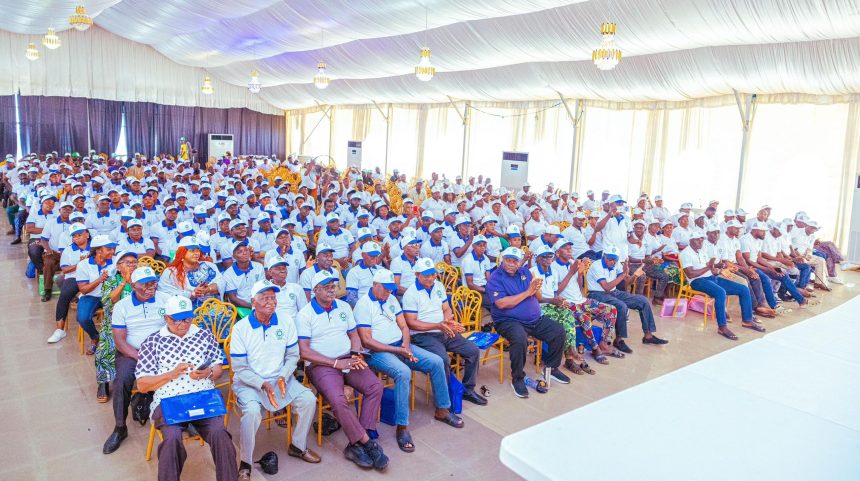
The distribution ceremony, held at the Catholic Pastoral Centre in Makurdi, attracted hundreds of beneficiaries, government officials, community representatives and other stakeholders.
The initiative forms part of the commission’s broader mandate to improve livelihoods, encourage entrepreneurship, strengthen human capital and promote sustainable economic development in the region.
Beneficiaries received equipment intended to support small businesses, vocational activities, transportation services and agricultural production.
NCDC CHAIRMAN SAYS HUMAN CAPITAL DEVELOPMENT REMAINS PRIORITY
Speaking at the event, the Chairman of the NCDC Governing Board, Barrister Cosmas Akighir, said the empowerment initiative reflected the commission’s commitment to addressing poverty, unemployment and other socio-economic challenges confronting communities in the North Central region.
Akighir explained that the commission would pursue infrastructure development alongside programmes designed to improve the economic capacity of residents.

He maintained that meaningful development required deliberate investment in people, particularly young persons, women and artisans whose productivity could contribute significantly to local economic growth.
The board chairman expressed appreciation to President Bola Ahmed Tinubu for supporting the establishment and operations of the commission.
He said the NCDC would continue implementing interventions across different sectors while ensuring that human capital development remained an important component of its activities.
According to Akighir, the commission’s objective is to create opportunities that enable individuals to become productive, financially independent and better equipped to support their families.
PROGRAMME TO BE EXTENDED ACROSS NORTH CENTRAL STATES
The Managing Director and Chief Executive Officer of the commission, Dr Cyril Yiltsen Tsenyil, represented by the Executive Director of Industrial and Commercial, Hajiya Aisha Rufai Ibrahim, disclosed that the empowerment initiative would be extended to other states within the North Central region.
Ibrahim described the Benue intervention as an important step towards fulfilling the commission’s development mandate.
She said the region’s substantial population of young people and women represented an important economic resource that could contribute to growth if provided with adequate skills, tools and opportunities.
According to her, the commission intends to support entrepreneurship, agricultural development and other productive activities capable of improving household incomes and strengthening local economies.
She maintained that economic empowerment programmes should provide practical opportunities for beneficiaries to build sustainable livelihoods rather than depend solely on temporary assistance.
Ibrahim also emphasised the importance of extending development interventions to communities where unemployment and limited economic opportunities remain major concerns.
DEVELOPMENT MUST GO BEYOND ROADS AND BUILDINGS — NCDC
The commission stressed that sustainable development should not be measured exclusively by the construction of physical infrastructure.
Ibrahim explained that although roads, schools, healthcare facilities and electricity were essential to economic and social progress, investments in human capacity were equally important.
She said providing individuals with relevant skills, tools and opportunities would enable them to participate more effectively in economic activities.
According to her, infrastructure development would produce greater benefits when accompanied by initiatives that strengthen entrepreneurship, productivity and household livelihoods.
She maintained that empowering residents to establish or expand businesses could help stimulate economic activity within local communities.
The commission’s approach, she explained, was intended to combine physical development with programmes that directly improve the economic prospects of individuals and families.
COMMISSION BEGINS IMPLEMENTATION OF 2025 CAPITAL BUDGET
The Executive Director of Projects, Princess Atika Ajanah, described the programme as a significant milestone in the commission’s development activities.
She disclosed that the initiative marked the commencement of implementation of the capital component of the NCDC’s 2025 budget.
According to Ajanah, the development represented a transition from the commission’s institutional establishment and planning stages to the practical delivery of projects and interventions.
She explained that the commission was now moving towards implementing programmes designed to produce tangible benefits for communities across the region.
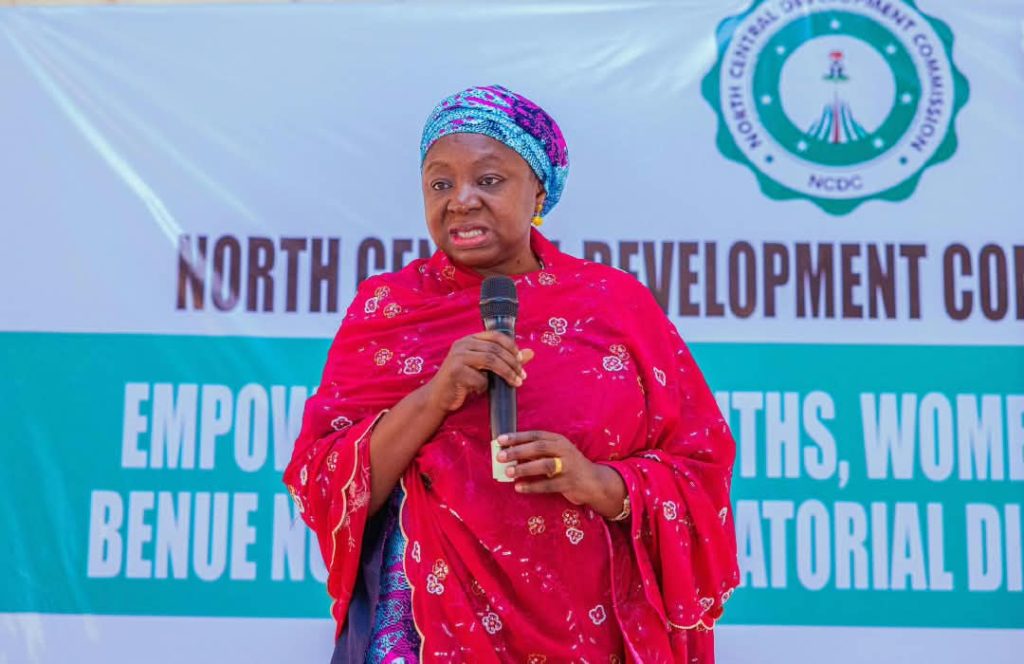
Ajanah commended President Tinubu and members of the National Assembly for supporting the commission’s mandate.
She also expressed hope that additional funding would be made available to enable the NCDC to expand its programmes and deliver more development interventions.
The executive director maintained that adequate financial support would be essential to sustaining the commission’s activities and extending assistance to more communities.
SENATOR ZAM PLEDGES SUPPORT FOR FURTHER DEVELOPMENT PROJECTS
Senator Titus Tartenger Zam, who facilitated the intervention, welcomed the partnership with the NCDC and described the programme as an initial step towards broader development initiatives.
The lawmaker, who chairs the Senate Committee overseeing the commission, said economic empowerment was an important component of regional development.
He maintained that infrastructure projects must be complemented by interventions aimed at improving the socio-economic conditions of residents.
According to Zam, providing youths, women and artisans with productive equipment could help beneficiaries establish businesses, expand existing enterprises and reduce dependence on financial assistance.
He said such interventions would also contribute to job creation and economic activities within beneficiary communities.
The senator pledged to continue advocating the release of funds appropriated by the National Assembly to enable the commission to fulfil its statutory responsibilities.
He linked the intervention to President Tinubu’s Renewed Hope Agenda, expressing confidence that sustained investment in human and infrastructural development would improve living conditions across the region.
EMMANUEL JIME COMMENDS EMPOWERMENT INITIATIVE
The chairman of the occasion, Rt. Hon. Emmanuel Jime, commended the NCDC and Senator Zam for collaborating to address development challenges affecting residents.
Jime described the initiative as a positive intervention capable of supporting efforts to reduce poverty and improve the welfare of beneficiaries.
He emphasised the importance of partnerships between public institutions and political representatives in delivering development programmes.
According to him, initiatives that provide practical support to economically vulnerable groups could strengthen productivity and create opportunities for improved living standards.
He encouraged sustained cooperation to ensure that similar programmes reach more communities.
BENEFICIARIES UNDERGO TRAINING BEFORE EQUIPMENT DISTRIBUTION
Ahead of the distribution ceremony, beneficiaries participated in training sessions at Sese Park and Event Centre in Makurdi.
The sessions were organised to prepare participants for the empowerment intervention and support their ability to make productive use of the equipment provided.
The commission identified skills development and access to productive tools as important components of its human capital development strategy.
The training was intended to complement the distribution of materials by helping beneficiaries understand how to apply the support to their economic activities.
MOTORCYCLES, SEWING MACHINES AND AGRICULTURAL TOOLS DISTRIBUTED
The empowerment materials distributed during the first phase included:
- Motorcycles to support transportation and income-generating activities.
- Grinding machines for small-scale processing businesses.
- Sewing machines to support tailoring and fashion-related enterprises.
- Car-washing machines for automobile cleaning services.
- Agricultural hand-ploughing tools to support farming activities.
The items were selected to support different categories of beneficiaries, including artisans, small-business operators, farmers and individuals seeking to establish income-generating ventures.
The commission said the intervention was intended to provide practical assistance that could improve productivity and expand economic opportunities.
Although hundreds of beneficiaries attended the programme, the precise number of individuals who received equipment and the total monetary value of the items were not specified in the account of the event.

NCDC TARGETS POVERTY REDUCTION AND ECONOMIC SELF-RELIANCE
The launch of the programme comes as communities across the North Central region continue to face development challenges, including unemployment, limited access to productive resources and pressure on household livelihoods.
The NCDC said its interventions would seek to address these challenges through a combination of infrastructure projects, entrepreneurship support, and agriculture-related development and human capital investment.
The commission maintained that strengthening the economic capacity of youths and women would contribute to community development and improve living standards.
It also identified artisans and small-scale entrepreneurs as important contributors to local economic activity.
The Benue intervention represents the beginning of a wider programme that the commission intends to extend across the North Central states.
However, the long-term impact of the initiative will depend on the effective use of the distributed equipment, sustained business activity and the availability of support needed to help beneficiaries maintain their livelihoods.
With the first phase now underway, the commission has reaffirmed its commitment to expanding economic opportunities, reducing poverty and supporting sustainable development across the region.