RismadarVoice Reporters
October 29, 2026
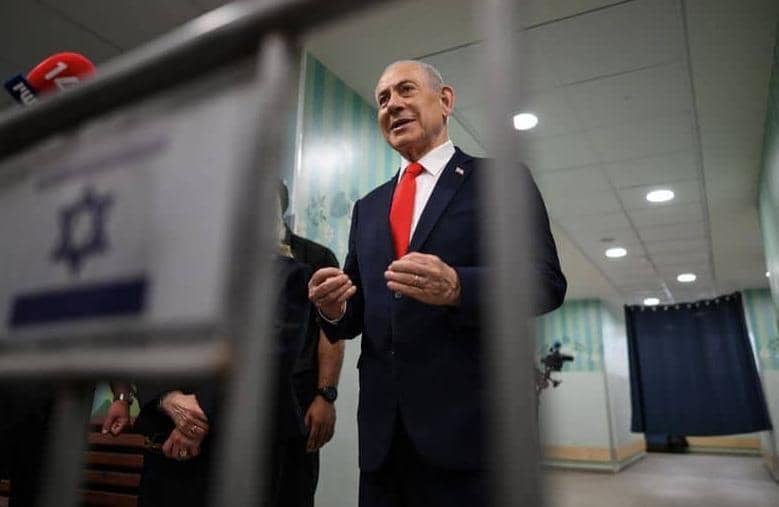
Israeli Prime Minister Benjamin Netanyahu’s Likud party has accused Arab-led political parties of stealing the country’s parliamentary election, following a historic performance that has left both major political blocs without a governing majority.
The allegations emerged after Tuesday’s election, in which Palestinian citizens of Israel turned out in large numbers, helping Arab-led parties secure a combined 19 seats in the 120-member Knesset.
According to the completed vote count released on Thursday, Netanyahu’s governing bloc secured 53 seats, while the main opposition alliance led by former military chief Gadi Eisenkot won 48.
The Joint List and Ra’am secured 19 seats between them, placing the parties in a potentially influential position during negotiations to form a government.
A parliamentary majority requires at least 61 seats.
Netanyahu’s Likud party alleged that electoral irregularities, including intimidation, bribery and manipulation, had influenced voting in Arab communities.
The party said it had submitted evidence to the police, Israel’s domestic security agency and the Central Elections Committee.

However, the allegations have not been substantiated, and election authorities have rejected claims of widespread systematic irregularities.
The accusations have drawn criticism from opposition politicians and Arab political representatives, who described them as an attempt to undermine the legitimacy of Palestinian citizens’ electoral participation.
The strong performance of Arab-led parties has complicated negotiations over Israel’s next government.
Although Eisenkot’s opposition bloc lacks sufficient seats to govern independently, cooperation with Arab-led parties could potentially provide the parliamentary support needed to replace Netanyahu.
However, such an arrangement remains uncertain because of political disagreements among opposition parties over cooperation with Arab representatives.
Joint List leader Yousef Jabareen has indicated that his alliance could support an alternative government from outside a formal governing coalition.
President Isaac Herzog is expected to consult political parties after the official results are certified before selecting a lawmaker to attempt to form a government.

Netanyahu will remain caretaker prime minister while the political process continues.
The election outcome has highlighted divisions within Israeli politics and the growing electoral influence of Palestinian citizens of Israel.
Despite winning the largest parliamentary bloc, Netanyahu has not secured another term in office, while the opposition faces difficult negotiations to assemble a majority.
The certified election results are expected on November 4.