RismadarVoice Reporters, May 6, 2026
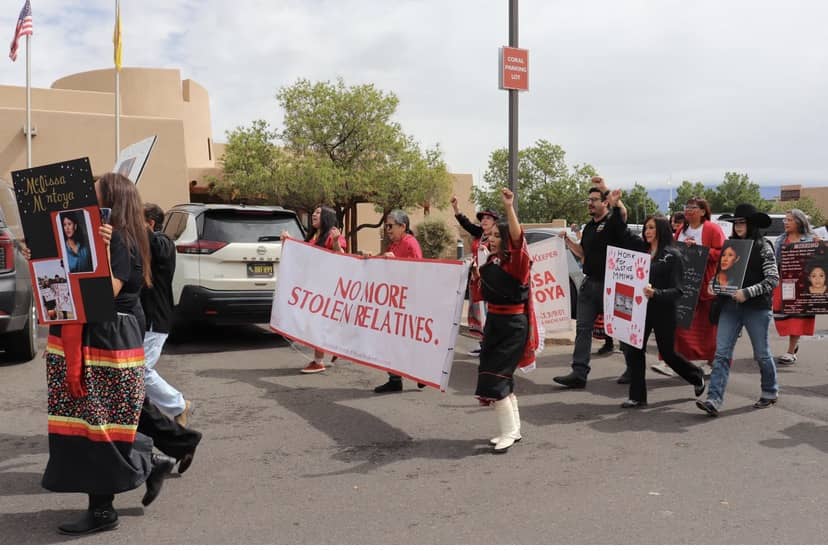
In Albuquerque and across the United States, Indigenous communities are holding marches, vigils and advocacy events this week to honour victims of violence and demand stronger protections, as part of the national awareness campaign for Missing and Murdered Indigenous Peoples.
Observed during the week of May 5, the movement has drawn gatherings in state capitols, tribal lands and major cities, with participants wearing red to symbolise solidarity and remembrance. Activities include prayer walks, rallies, self-defence classes and candlelight vigils.
Advocates say the events highlight a persistent crisis, with Native Americans facing disproportionately high rates of violence. Data from the U.S. Department of Justice shows Native Americans and Alaska Natives are more than twice as likely as the general population to experience violent crime, while Native women face significantly higher homicide risks. As of late 2025, the Federal Bureau of Investigation recorded nearly 1,500 active missing persons cases involving Native Americans, though experts believe the true figure is higher due to data gaps and misclassification.
While federal legislation such as the Savanna’s Act and the Not Invisible Act—signed in 2020 under Donald Trump aimed to improve data collection and law enforcement coordination, implementation has been uneven. A federal commission established later released recommendations in 2023, though some were removed from government platforms in subsequent policy shifts.
Federal authorities say initiatives such as Operation Not Forgotten have led to over 200 arrests and convictions since 2023, while the Interior Department recently announced a new task force to strengthen investigations and prosecutions in Indigenous communities.
However, some tribal leaders argue that increased federal presence is not a complete solution, calling instead for greater investment in tribal law enforcement and community-based responses.
Families of victims continue to play a central role in advocacy. At events in Colorado, Wisconsin, Minnesota and Oklahoma, relatives carried photos of missing or murdered loved ones, sharing stories and calling for justice. Many say navigating overlapping tribal and federal jurisdictions has complicated investigations and delayed accountability.
With no unified national strategy, advocates warn that families are often left to lead search efforts themselves, underscoring the urgency of reforms to address what they describe as a long-standing and underreported crisis.