RismadarVoice Reporters, May 25, 2026
The Lagos State Government says it has demolished or removed 1,544 structures built illegally on drainage channels across the state between 2025 and April 2026 as part of ongoing efforts to address flooding.
According to figures released by the Ministry of the Environment and Water Resources, a total of 2,218 structures were identified in various communities as obstructing drainage alignments.
Out of these, 1,544 were successfully removed, representing a 70 per cent clearance rate, while about 674 structures remain in place.

The ministry disclosed the figures during its annual press briefing held at the Bagauda Kaltho Press Centre in Alausa, Ikeja.
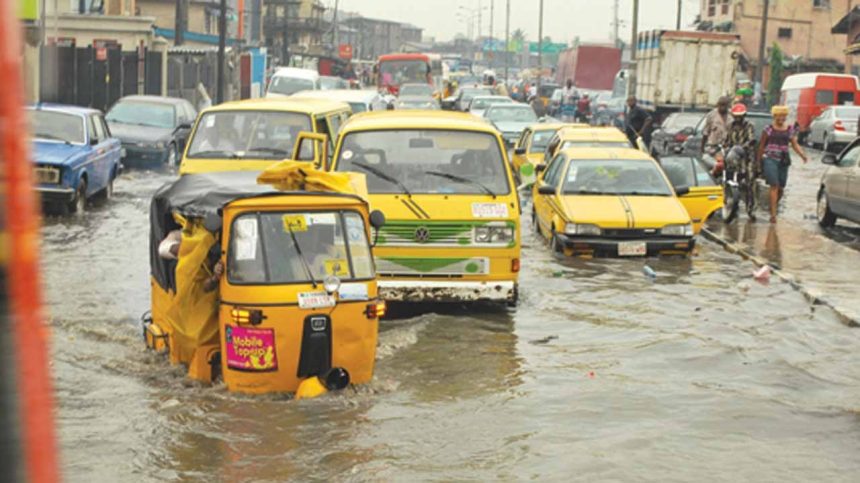
Officials said drainage obstruction remains one of the major causes of persistent flooding in Lagos, a coastal megacity prone to seasonal rainfall and tidal water surges.
They explained that the state’s drainage system comprising primary and secondary channels must remain unobstructed to effectively channel stormwater into the lagoon.
The ministry warned that illegal construction on drainage paths often leads to water backflow, resulting in flooding of surrounding communities, destruction of infrastructure, and loss of property.
In addition to the demolitions, authorities said they restored 12 kilometres of primary drainage channels and cleared 123.5 metres of drainage right-of-way during the period under review.
Rapid response teams also carried out cleaning of about 210 kilometres of secondary and tertiary drains across all 20 local government areas, including emergency interventions during flood incidents.
The government further revealed that nine facilities were sealed for encroaching on wetlands in areas such as Ogombo, Lekki Phase II, Itoikin-Epe, and Majidun in Ikorodu, warning that such activities threaten the city’s natural flood control systems.

Officials noted that informal and unauthorised developments on drainage corridors have remained a recurring challenge in Lagos, often due to weak compliance and delayed enforcement actions.
The ministry added that between April 2025 and April 2026, over 100 kilometres of new secondary drains and 30 kilometres of primary channels were awarded for construction to strengthen the state’s drainage capacity.
Flooding continues to pose a major economic and environmental risk in Lagos, with annual losses running into billions of naira. A recent estimate by the Lagos State Ministry of Finance projected that climate inaction could cost the city nearly $40 billion by 2050.