RismadarVoice Reporters
October 28, 2026
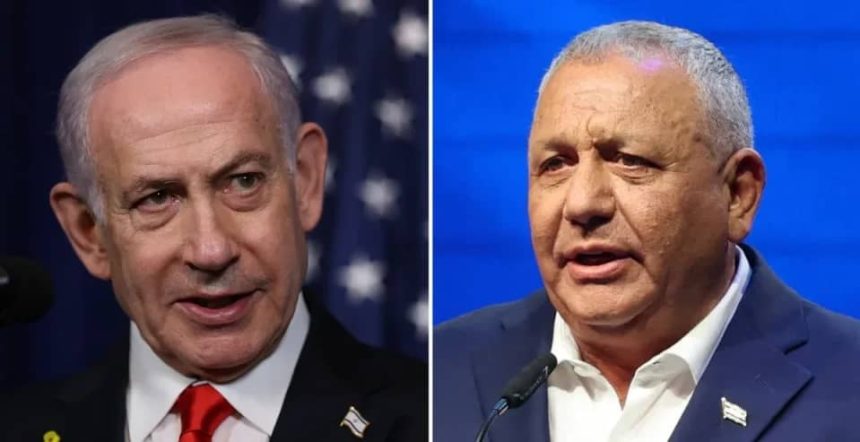
Israel faces political uncertainty following an inconclusive parliamentary election that has left Prime Minister Benjamin Netanyahu and opposition leader Gadi Eisenkot competing to form the country’s next government.
Early results from Tuesday’s election showed neither political bloc securing the 61 seats required for a majority in Israel’s 120-member parliament, the Knesset.
According to reports, projections based on approximately 77.6 per cent of votes counted on Wednesday gave Netanyahu’s alliance of right-wing, far-right and ultra-Orthodox parties 54 seats, compared with 49 for Eisenkot’s opposition bloc.
The figures remain provisional, with the outcome dependent on outstanding ballots and the allocation of parliamentary seats.
Netanyahu, leader of the Likud party, has called for the formation of another right-wing government, arguing that his leadership remains necessary to address Israel’s security challenges.
Eisenkot, a former military chief who leads the centrist Yashar party, has challenged Netanyahu’s continued leadership and called for political change.
However, both leaders face difficulties assembling a governing majority.
Arab political parties could hold significant influence in coalition negotiations, but both major blocs have expressed opposition to relying on them to form a government.
Under Israel’s parliamentary system, voters elect party lists rather than directly choosing a prime minister.

Once the results are finalised, President Isaac Herzog will consult political parties and nominate the candidate considered capable of assembling a governing coalition.
The nominee can receive up to 42 days to form a government.
If the initial attempt fails, other political leaders may be allowed to negotiate a coalition.
Failure to establish a government could eventually trigger another election.
Meanwhile, Netanyahu is expected to remain caretaker prime minister during the negotiations.
The election, which recorded turnout of 77.7 per cent, was Israel’s first since the Hamas-led attacks of October 7, 2023, and the subsequent wars involving Gaza, Lebanon and Iran.

The campaign was dominated by disagreements over national security, the conduct of the wars and Netanyahu’s leadership.
Final vote counting is expected by October 30, while formal publication of the election results is scheduled for November 4.
Until coalition negotiations produce a parliamentary majority, Israel’s next government remains uncertain.