RismadarVoice Reporters
October 28, 2026
Arab-led political parties have emerged as a potentially influential force in Israel’s parliamentary election, with preliminary results showing significant gains as neither of the country’s two main political blocs secured a governing majority.
Figures reported by Israeli media on Wednesday showed that the Joint List and Ra’am were projected to win a combined 19 seats in the 120-member Knesset.
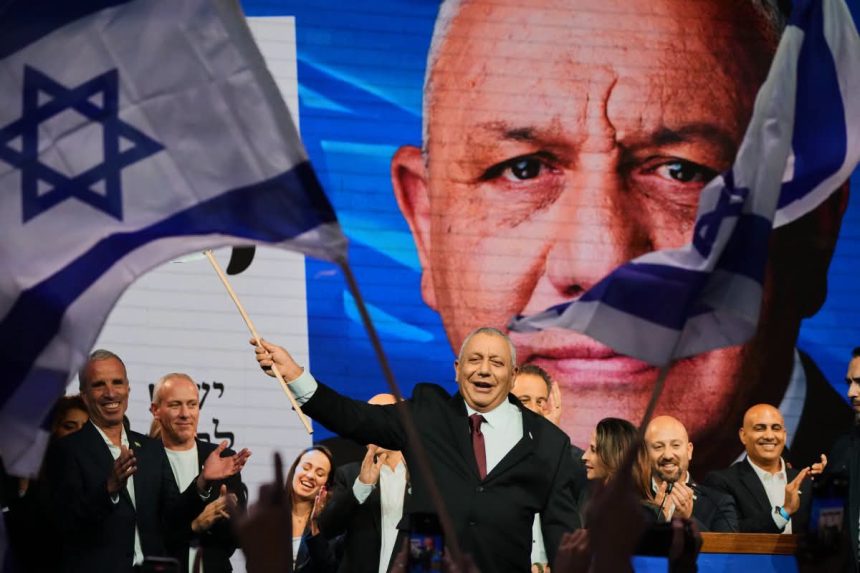
Prime Minister Benjamin Netanyahu’s bloc was projected to secure 53 seats, while the opposition alliance led by former military chief Gadi Eisenkot had 48.
A governing majority requires at least 61 seats, leaving both blocs facing difficult coalition negotiations.
Although the Arab parties could theoretically provide enough parliamentary support for an Eisenkot-led government, political disagreements have complicated that possibility.
Netanyahu has rejected cooperation with Arab-led parties, while Eisenkot has outlined conditions requiring potential coalition partners to recognise Israel as a Jewish and democratic state and accept other national commitments.
Several members of the opposition alliance have also expressed reservations about relying on Arab parties to form a government.

However, Joint List leaders Yousef Jabareen and Ahmad Tibi have indicated a willingness to cooperate with opposition forces seeking to replace Netanyahu.
Ra’am leader Mansour Abbas has similarly signalled openness to political cooperation under certain conditions.
Political analysts interviewed by Al Jazeera argued that longstanding resistance to including Arab-led parties in governing coalitions could limit their influence despite their electoral gains.
Others pointed to the precedent established in 2021, when Ra’am joined the coalition government led by Naftali Bennett and Yair Lapid.
Yair Golan, leader of the Democrats party, has urged opposition figures to reconsider their reluctance to cooperate with Arab representatives.
Possible outcomes of the election include a coalition agreement, a minority government supported by outside parties, a broader unity arrangement or another election if negotiations fail.
The results also reflect increased political participation among Palestinian citizens of Israel, whose parties are positioned to hold a larger share of parliamentary seats.

Nevertheless, electoral influence will depend on negotiations among party leaders and their willingness to reach agreements.
With vote counting continuing, the final distribution of seats remains subject to change before official results are confirmed.
The election has therefore left Israel facing uncertainty over its next government, despite the stronger parliamentary position projected for Arab-led parties.