RismadarVoice Reporters
September 2, 2026
Iran has launched fresh missile and drone attacks against US military interests across the Middle East, vowing severe retaliation after a new wave of American strikes on Iranian territory.
The escalation has widened the six-month conflict, with attacks reported in Jordan, Bahrain, Kuwait, the United Arab Emirates and Iraq’s Kurdistan region, while tensions around the strategically important Strait of Hormuz continue to rise.
US President Donald Trump had earlier warned Tehran that any retaliation would trigger even more intense American strikes after Iranian state media reported that 11 people were killed in recent US attacks in southern and southwestern Iran.

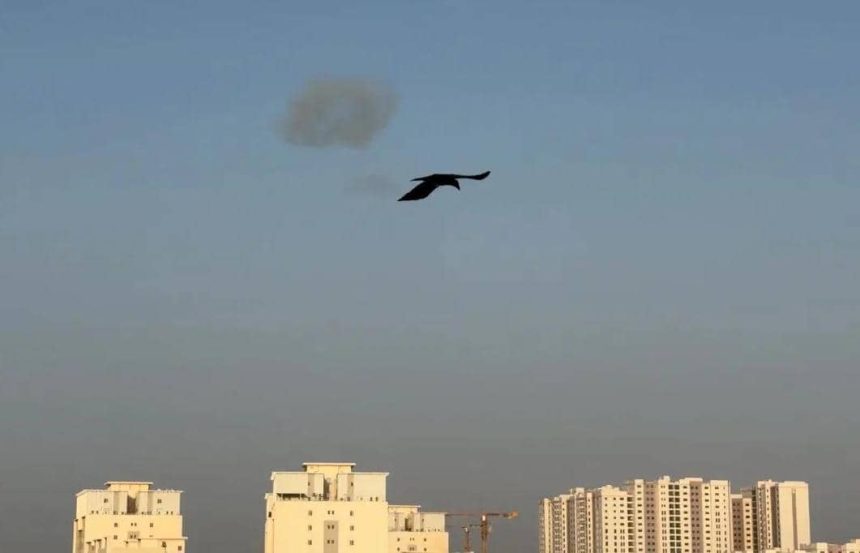
Iranian media reported that the country fired ballistic missiles at two US bases in Jordan. The Jordanian military said it intercepted 10 missiles launched from Iran, while three others fell in remote areas. Authorities reported no casualties or confirmed damage from the attack.
Missile and drone activity was also reported in Kuwait, with the country’s military saying it had responded to Iranian attacks.
In Bahrain, air raid sirens were heard early Wednesday as Iranian forces launched drones toward a US military installation in the Gulf state, a major American regional ally.
Iran’s Islamic Revolutionary Guard Corps also claimed responsibility for attacks on US positions in Iraq’s autonomous Kurdistan region. State media reported that missiles and drones struck American bases, damaging a maintenance facility, warehouses and military equipment.
The latest exchange followed US attacks on Iranian targets on Sunday, marking the first known American strikes against Iran in several weeks.
Iran subsequently launched attacks targeting US forces in Jordan and the UAE, while two commercial oil tankers were reportedly struck by unidentified projectiles.
Additional US strikes were reported on Tuesday, with Iranian state television reporting explosions in areas of southern Iran near the Strait of Hormuz and on an island in the Gulf.

Iranian state media also reported that four projectiles struck areas around Chabahar and Konarak, although it did not immediately provide details of the damage.
In Khuzestan province, seven people were reportedly killed and eight others wounded in a missile attack, according to Iran’s state news agency, IRNA.
Iran’s Red Crescent separately said shrapnel from a US missile killed four people, including a child, and injured more than 50 others in Kuhestak, in Hormozgan province.
The US military has not directly addressed the reported civilian casualties.
US Central Command spokesman Tim Hawkins said American forces do not target civilians, accusing Iran’s Revolutionary Guards of doing so.
US President Donald Trump described the latest American operation as a major military response to what he said was an Iranian attempt to place mines in the Strait of Hormuz and an earlier missile attack on a US base in Jordan.
Iranian Revolutionary Guards spokesman Hossein Mohebi warned Washington that it would regret the latest attacks, while another Iranian military spokesman, Ebrahim Zolfaghari, warned countries cooperating with the US that they could face broader and more destructive retaliation.
The two sides remain locked in a confrontation over the Strait of Hormuz, with Iran maintaining a blockade while the United States continues its counter-blockade of Iranian ports.

Washington said its forces targeted Iranian rocket launchers on Larak Island on Sunday in an attempt to prevent Tehran from placing mines in major shipping lanes through the strait.
The wider Middle East conflict began in late February with US and Israeli strikes on Iran that killed the country’s Supreme Leader, Ayatollah Ali Khamenei.
A fragile ceasefire between Washington and Tehran later collapsed following attacks on commercial vessels in the Strait of Hormuz, a vital global shipping route that previously carried about one-fifth of the world’s oil supplies.
Trump warned on Tuesday that Iran would face even more severe attacks if it continued retaliating against US operations.
The US president also questioned when Iranians would rise against their government, while saying he was not seeking to force Tehran into negotiations.
Meanwhile, Greek maritime risk management firm Marisks reported that two crude oil tankers were hit by unidentified projectiles late Monday.
The United Kingdom Maritime Trade Operations agency confirmed one of the incidents and said there were no reported casualties or environmental damage.
Despite the escalating military confrontation and diplomatic stalemate, Iranian President Masoud Pezeshkian said Tehran remained open to a negotiated settlement.
Pezeshkian said Iran would respond to any US initiative to revive an agreement aimed at ending the conflict, but warned that a return to a policy based on pressure and threats could undermine diplomatic efforts.