
RismadarVoice Reporters
September 2, 2026
The United Nations has acknowledged that the world is likely to exceed the critical 1.5°C global warming threshold but says urgent action could still limit the damage and eventually bring temperatures back below the agreed limit.
A new report by the United Nations Environment Programme (UNEP) warns that continued emissions from coal, oil and gas are pushing the planet beyond the temperature target established under the 2015 Paris climate agreement.
Rather than abandoning the 1.5°C goal, scientists and U.N. officials are now urging governments to prepare for a period of “overshoot” when global temperatures rise above the threshold before gradually declining.
U.N. Secretary-General António Guterres said humanity was moving beyond the temperature limit designed to prevent the most severe consequences of climate change.

The report proposes that countries first limit how high temperatures rise before eventually bringing them down through rapid reductions in greenhouse gas emissions and the removal of carbon dioxide from the atmosphere.
Climate scientist Richard Betts of the University of Exeter, one of the report’s authors, said the world would have to adapt to a warmer climate but still had opportunities to reduce the severity of future warming.
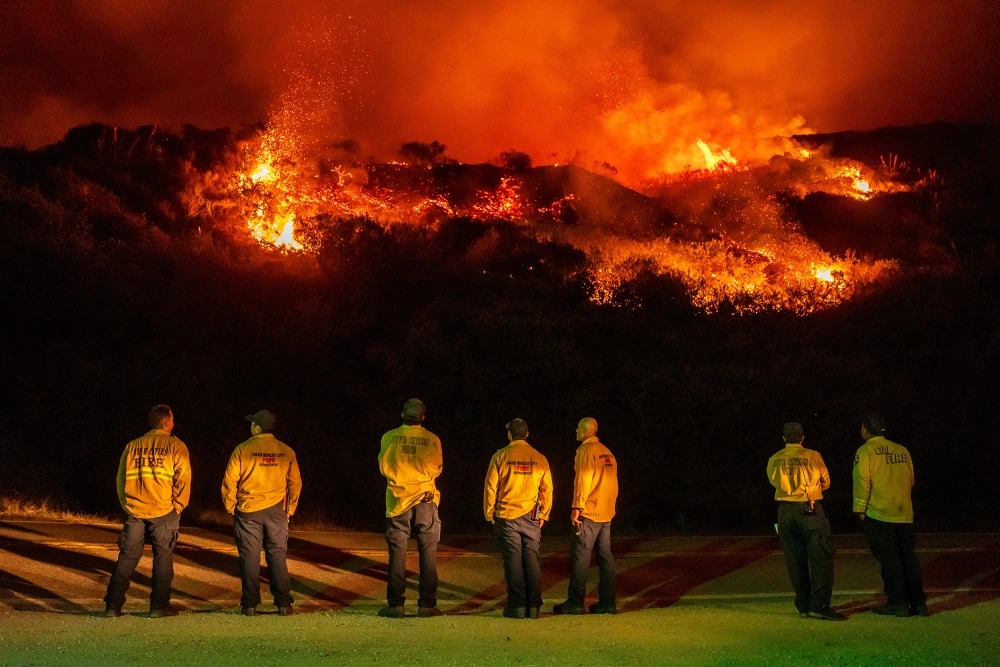
The 1.5°C target was established as a key international climate goal after scientists found that the impacts of warming become significantly more severe as temperatures approach 2°C above pre-industrial levels.
Global temperatures are currently estimated to be around 1.4°C above pre-industrial levels when measured using the long-term average required for assessing the Paris target.
The new UNEP report says the world is expected to cross the 1.5°C threshold within the next few years.
Under the most ambitious climate scenario, global warming could peak at about 1.8°C around the middle of the century before declining.
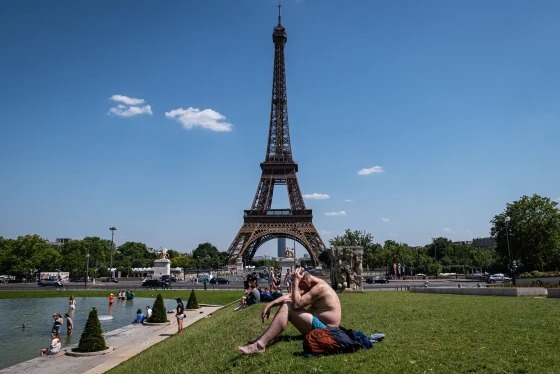
People cool off in the Warsaw Fountain in Paris during a heatwave
However, if governments continue with policies currently in place, warming could reach approximately 2.6°C above pre-industrial levels by 2100.
UNEP Executive Director Inger Andersen said the 1.5°C objective remains the goal, but the international community must now prepare to reach it from above rather than preventing the threshold from being crossed.
Climate scientists have stressed that crossing 1.5°C does not represent an immediate point of no return.
University of Victoria climate scientist Andrew Weaver said every fraction of a degree of warming that can be prevented would reduce the resulting damage.
Scientists involved in the report warned that the length and severity of the overshoot period will depend heavily on how quickly countries reduce emissions.

Report co-author Joeri Rogelj of Imperial College London said every five years of delay in cutting emissions could add at least another 0.1°C to the eventual peak temperature.
The report therefore calls for immediate action to keep the temperature overshoot as small and short as possible.
It noted that the world would be safer if temperatures remained above 1.5°C for as little time as possible rather than staying above the threshold permanently.
The U.N. report also warns that countries must prepare for increasingly severe climate impacts because some consequences can no longer be avoided.
During the period of elevated warming, scientists expect greater risks to food production, water supplies, human health and economies.
Poorer communities are expected to face some of the greatest challenges as extreme heat, flooding, droughts, rising sea levels and other climate-related hazards intensify.
The report also warns about potential climate tipping points that could trigger long-lasting or irreversible changes, including major losses of the Greenland and West Antarctic ice sheets, damage to the Amazon rainforest and disruption of Atlantic Ocean circulation.
Some regions could eventually become difficult or impossible to insure against climate-related risks, while others could become increasingly difficult to inhabit.
The final stage of the U.N. strategy involves removing carbon dioxide from the atmosphere and storing it.
While planting trees can absorb carbon, the report says reforestation alone would have only a limited effect on global temperatures, meaning additional carbon-removal technologies may be required.
However, some scientists remain sceptical about whether such technologies can be deployed at the necessary scale, given their cost, technical challenges and uncertainties.

Stanford University climate scientist Rob Jackson, who was not involved in the report, described the challenge as requiring the world not only to stop the growth of global emissions but eventually reverse the accumulated warming.
The report ultimately argues that crossing the 1.5°C threshold should not lead to resignation, but should instead strengthen the urgency for governments to reduce emissions, protect vulnerable communities and accelerate efforts to restore the planet’s temperature to safer levels.