RismadarVoice Reporters
October 17, 2026
The Federal Government has destroyed more than 19,000 illicit weapons since 2022 as part of intensified efforts to combat terrorism, banditry, arms trafficking and other forms of violent crime across Nigeria.
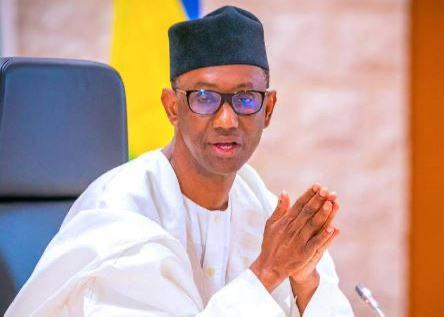
The National Security Adviser (NSA), Mallam Nuhu Ribadu, disclosed this on Saturday during a high-level security dialogue in Sokoto State, where government officials, security stakeholders and community representatives discussed measures to address persistent banditry and strengthen community resilience.
Ribadu said the government was combining military operations, intelligence gathering, border surveillance, arms control and community-based security initiatives to weaken criminal networks and restore stability to affected communities.

The NSA, represented by Barrister Zakariyya Mijinyawa, maintained that tackling insecurity required sustained collaboration between government institutions, security agencies, traditional authorities and local communities.
The dialogue, themed “Coping with Banditry in Sokoto State: A Multi-Stakeholder Dialogue for Prevention, Containment and Community Resilience,” was organised by the Sokoto Advancement Forum in partnership with the Centre for Peace Studies at Usmanu Danfodiyo University, Sokoto.
FG REPORTS MAJOR WEAPONS RECOVERY AND DESTRUCTION
Ribadu said the destruction of more than 19,000 illegal weapons since 2022 reflected the government’s efforts to reduce the availability of firearms used by criminal organisations.
He also cited operational figures from the National Centre for the Control of Small Arms and Light Weapons (NCCSALW), which indicated that security operations resulted in the recovery of 5,449 firearms and the destruction of 1,419 illicit weapons in September 2026.
The centre is headed by retired Deputy Inspector-General of Police Johnson Kokumo.
According to Ribadu, the continued recovery and destruction of illicit firearms are essential to reducing the capacity of armed groups to attack communities, threaten livelihoods and undermine national security.
He said the government would strengthen weapons tracing, intelligence coordination and measures to disrupt illegal arms supply networks.
“These figures demonstrate the importance of sustained weapons-control operations. The NCCSALW and relevant security agencies will continue to strengthen efforts to disrupt arms-trafficking networks, trace recovered weapons and prevent illicit firearms from reaching criminal groups,” Ribadu said.

He maintained that preventing the circulation of illegal firearms must remain a central part of Nigeria’s broader counterterrorism and anti-banditry strategy.
OPERATION FANSAN YAMMA CENTRAL TO NORTH-WEST SECURITY
The National Security Adviser identified Operation FANSAN YAMMA as a major component of the government’s coordinated military response to insecurity in the North-West.
He said the operation was designed to strengthen cooperation among security formations, intensify pressure on armed groups and prevent criminals from establishing safe havens.
Ribadu explained that military operations must be supported by effective intelligence gathering and the disruption of criminal supply routes.
He stressed that security agencies must continue targeting the operational capabilities of bandits and terrorist groups while protecting vulnerable communities.
According to him, sustained pressure is necessary to prevent armed groups from regrouping or exploiting weaknesses in security coverage.
He also highlighted the importance of cooperation between military personnel, law enforcement agencies and intelligence institutions in responding to emerging threats.
MILITARY ACTION ALONE CANNOT GUARANTEE PEACE
Despite the government’s emphasis on security operations, Ribadu warned that military victories and weapons seizures would not automatically translate into lasting peace.
He said communities recovered from armed groups required effective governance, functioning public institutions and sustained government presence to prevent a return to violence.
According to the NSA, security interventions must be accompanied by efforts to restore confidence among residents, rebuild essential services and support displaced families.
He explained that the absence of government institutions in vulnerable communities could create opportunities for criminal organisations to regain influence.
Ribadu therefore called for a comprehensive approach that addresses both immediate security threats and the underlying conditions that allow insecurity to persist.
He maintained that lasting peace would depend on the government’s ability to protect communities while restoring normal social and economic activities.
NSA CALLS FOR STRONGER BORDER SECURITY AND INTELLIGENCE
Addressing the security situation in Sokoto State, Ribadu called for intelligence-led operations to prevent bandits from exploiting forest corridors, remote settlements and border communities.
He identified improved border surveillance and intelligence-sharing as essential to disrupting the movement of armed groups and illicit weapons.
The NSA also called for stronger operational capacity for State Forest Guards and the Nigeria Security and Civil Defence Corps Agro-Rangers.
He said these security formations could play important roles in protecting agricultural communities, monitoring vulnerable areas and supporting broader security operations.
Ribadu emphasised the importance of cooperation with neighbouring countries in addressing cross-border criminal activities.
He noted that armed groups frequently exploit difficult terrain and gaps in security coordination, making intelligence-sharing and timely responses particularly important.
SABON BIRNI, ISA, TANGAZA AND GORONYO IDENTIFIED AS VULNERABLE AREAS
Ribadu drew attention to security challenges affecting communities in Sabon Birni, Isa, Tangaza and Goronyo local government areas of Sokoto State.
He called for stronger early-warning mechanisms to help authorities identify and respond to threats before attacks occur.
According to him, effective early-warning systems should connect local government officials, traditional rulers, community leaders and security personnel.
He explained that residents often possess valuable information about suspicious movements and emerging security threats.
However, he stressed that such information must be communicated through reliable channels and acted upon promptly.
The NSA urged security agencies to strengthen trust with communities so that residents could report credible threats without fear.
FG ADVANCES NATIONAL CRISIS MANAGEMENT FRAMEWORK
Ribadu disclosed that the Office of the National Security Adviser was promoting a coordinated approach to crisis prevention and response through the National Crisis Management Doctrine.
He said the framework was intended to improve preparedness and ensure that relevant government institutions and community structures work together.
The NSA explained that fragmented responses to security threats could weaken the effectiveness of government interventions.
He therefore called for greater coordination among federal, state and local institutions responsible for security, emergency response and community development.
According to him, a whole-of-government and whole-of-society approach would help strengthen resilience and improve the country’s ability to manage complex security challenges.

YOUTH EMPLOYMENT AND EDUCATION KEY TO PREVENTING RECRUITMENT
The National Security Adviser also identified unemployment, economic hardship, misinformation and limited educational opportunities as factors that could increase vulnerability to recruitment by criminal groups.
He urged government institutions and community organisations to develop programmes that provide young people with productive alternatives to criminal activity.
Ribadu said protecting livelihoods, supporting agriculture and expanding access to education were important elements of a sustainable security strategy.
He also emphasised the need to address misinformation that could fuel mistrust, division and instability in vulnerable communities.
According to him, improving economic opportunities would help reduce the conditions that criminal organisations exploit to recruit members and sustain their activities.
REINTEGRATION MUST NOT REPLACE JUSTICE
Ribadu warned that reconciliation and rehabilitation initiatives must not undermine accountability for crimes committed against communities.
He said peacebuilding programmes should protect the rights of victims and operate within the framework of the law.
“Reintegration must never replace justice or reward violence. National security frameworks can succeed only when communities help translate them into local action,” he said.
The NSA stressed that rehabilitation initiatives must include safeguards to prevent renewed violence.
He maintained that reconciliation would be more sustainable where affected communities have confidence that justice and accountability are being respected.
SOKOTO FORUM URGED TO DEVELOP PRACTICAL SECURITY PLAN
Ribadu commended the Sokoto Advancement Forum for its Blueprint for the Strategic Development of Sokoto State.
He urged participants at the dialogue to move beyond discussions and develop practical, measurable interventions capable of improving security conditions.
The NSA specifically called for a community security and early-warning plan outlining responsibilities, information-sharing procedures and cooperation between residents and security agencies.
He said the success of such initiatives would depend on sustained implementation, accountability and community participation.
“Let this dialogue mark a decisive step towards a safer Sokoto where communities live without fear, agriculture and commerce flourish, young people pursue productive lives, and public institutions protect every citizen,” Ribadu said.
GOVERNMENT REAFFIRMS COMMITMENT TO RESTORING SECURITY
The NSA maintained that restoring lasting peace to Sokoto and the wider North-West would require a combination of military pressure, intelligence-led policing, effective governance and economic development.
He said the government would continue strengthening cooperation among security institutions while encouraging communities to participate in preventing violence.
Ribadu emphasised that security could not be achieved through weapons recovery alone, but must also involve rebuilding public confidence, restoring livelihoods and addressing the conditions that allow criminal networks to operate.
He called for sustained commitment from all stakeholders, stressing that protecting lives and property remained a collective responsibility.
The Federal Government’s reported destruction of more than 19,000 illicit weapons represents one element of its wider security campaign, while the continuing threat of banditry highlights the need for effective implementation of the measures outlined at the Sokoto dialogue.