RismadarVoice Reporters, August 12, 2026
Iran has rejected US President Donald Trump’s claim that Washington has “total control” over the Strait of Hormuz, insisting that the strategic waterway will remain closed until the United States changes its conduct and agrees to Tehran’s demands.
Mohsen Rezaie, the newly appointed head of Iran’s Supreme National Security Council, reportedly made the position clear during a meeting with China’s ambassador to Tehran, Cong Peiwu.
“As long as America does not change its behaviour and does not accept Iran’s conditions, the Strait of Hormuz will not be opened,” Rezaie said, according to Iran’s semi-official Tasnim news agency.
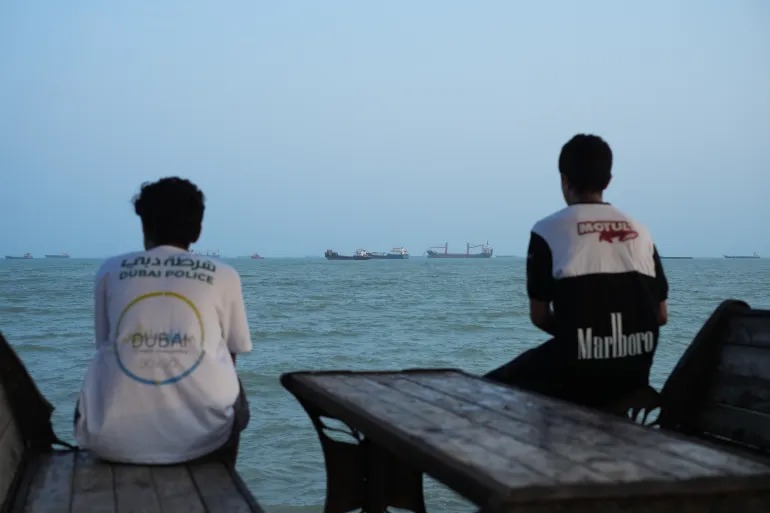
The Strait of Hormuz, a major global energy corridor through which about one-fifth of the world’s oil and natural gas normally passes, has become a major flashpoint in the ongoing US-Israel conflict with Iran.

Iran closed the waterway after US and Israeli attacks on the country began in late February.
Trump told reporters on Tuesday that the United States had complete control of the waterway.
“We totally control the Strait of Hormuz. We have control over it; nobody else, only us,” he said.
However, maritime activity in the area remains severely disrupted. The United Kingdom Maritime Trade Operations reported reduced shipping activity and continued attacks and harassment in and around the strait.
Iran has said it will not reopen the waterway unless Washington agrees to several conditions, including the lifting of sanctions, the release of frozen Iranian assets and compensation for attacks.
Tehran has also demanded an end to the US naval blockade of Iranian ports and a broader ceasefire covering Gaza and Lebanon.
Tensions escalated further after the US military fired two Hellfire missiles at the Panama-flagged cargo vessel Vela Nova in the Gulf of Oman.
US Central Command said the vessel had ignored repeated warnings and was attempting to violate a US blockade of Iranian ports.
The strikes disabled the vessel’s steering system. No casualties among the crew were reported.
The conflict has also spread to the Bab el-Mandeb Strait, another critical maritime route connecting the Red Sea with the Gulf of Aden.

Yemeni authorities said six people were killed in a Houthi attack on a cargo vessel on Tuesday. Four crew members aboard the Egyptian-owned Tihamah were reportedly killed, alongside two Yemeni rescuers who arrived at the scene.
Ten others were injured.
Houthi-affiliated media later reported that the vessel was carrying Saudi military equipment, although the group has not provided a detailed public account of the attack.
The disruptions have significantly reduced maritime traffic through both Hormuz and Bab el-Mandeb.
Data cited from Kpler showed that only eight vessels passed through the Strait of Hormuz on Tuesday, compared with a 10-day average of about 12 vessels. Before the conflict, around 130 ships reportedly transited the waterway each day.
Bab el-Mandeb is also strategically important, with approximately 11 per cent of global oil and 8 per cent of liquefied natural gas trade normally passing through the waterway.
The disruption to both routes has contributed to rising global energy prices and increased concerns over the security of international shipping.
Despite the escalating military rhetoric, diplomatic efforts to reopen Hormuz remain underway.
Iranian Foreign Minister Abbas Araghchi said last week that negotiations with Oman over the future management of the Strait of Hormuz and the establishment of new shipping lanes had made progress and were in their final stages.
Tehran maintains that it is not negotiating directly with Washington over the management of the strait but is instead working through Oman.
Qatar’s Foreign Ministry spokesman, Majed al-Ansari, said Tuesday that Doha had received positive signals from both Iran and Oman regarding the possible reopening of the waterway.
Pakistan has also intensified diplomatic efforts to revive negotiations between Iran and the United States.
Pakistani Interior Minister Mohsin Naqvi travelled to Tehran on Tuesday to meet Iranian officials as part of efforts to persuade Tehran to resume talks with Washington under an interim memorandum of understanding brokered by Pakistan and Qatar in June.
The agreement, which included provisions concerning the opening of Hormuz, is due to expire next week.
However, disagreements over who should control the waterway contributed to the collapse of the arrangement.
Naqvi’s visit was his sixth trip to Iran as part of Pakistan’s diplomatic efforts to end the conflict.
Analysts say the possibility of a broader peace agreement depends largely on whether Washington and Tehran view their latest demands as negotiating positions or firm red lines.