RismadarVoice Reporters
May 7, 2026
The United States on Thursday joined a growing international effort to trace passengers linked to a deadly hantavirus outbreak aboard the luxury expedition cruise ship Hondius, as health authorities race to contain potential infections across multiple countries.
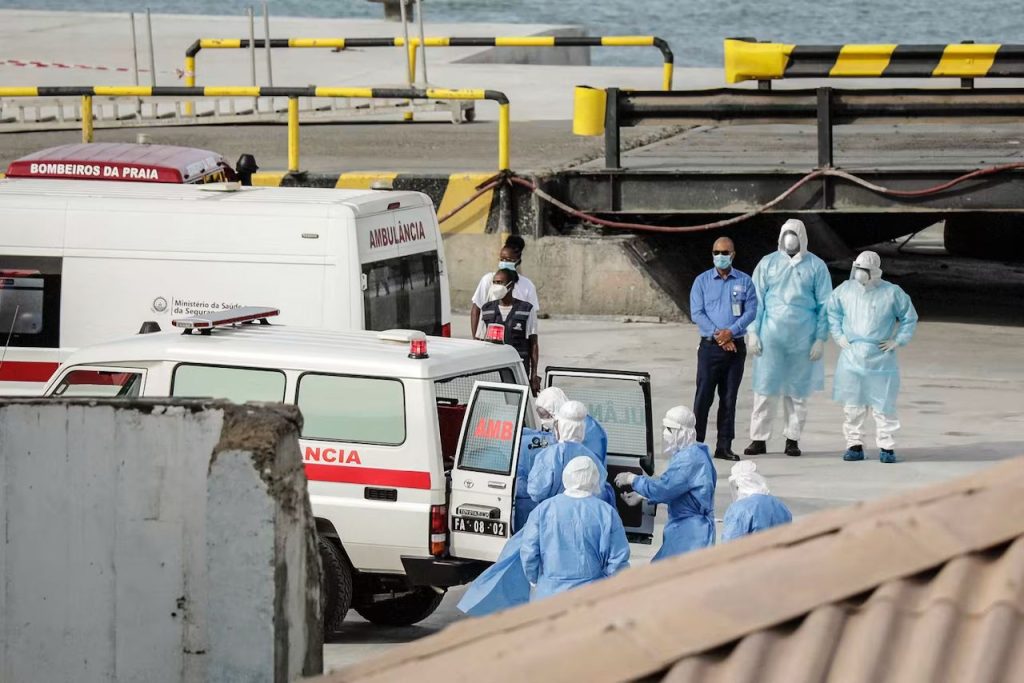
The outbreak has already claimed three lives and left at least five others suspected of being infected, prompting urgent monitoring by health agencies in Europe, Africa, and North America. Officials are also investigating a possible new case involving a woman who was not a passenger on the vessel.
Cruise operator Oceanwide Expeditions confirmed that 29 passengers disembarked from the ship on April 24 in St. Helena, a remote island in the South Atlantic, before full contact-tracing measures were in place. Among those passengers were six Americans.
Authorities in Arizona, Georgia, and California confirmed that some U.S. passengers had returned home but were not currently showing symptoms of the rare virus. The U.S. Centres for Disease Control and Prevention (CDC) said it was working alongside the State Department to monitor the situation closely.
“The Department of State is leading a coordinated, whole-of-government response including direct contact with passengers, diplomatic coordination, and engagement with domestic and international health authorities,” the CDC said in a statement, adding that the overall risk to the American public remains “extremely low.”
The Hondius has become the centre of a rare infectious disease emergency after a Dutch couple and a German national died following suspected hantavirus infections. A British passenger is currently receiving treatment in a South African hospital, while another suspected case is under investigation in Zurich, Switzerland.
Dutch health authorities also revealed Thursday that a flight attendant had been hospitalised and was undergoing testing for hantavirus. Officials did not disclose whether the crew member had shown symptoms or whether the case was connected to a KLM Royal Dutch Airlines flight that had carried a Dutch woman later confirmed to have contracted the virus.
KLM said the passenger was briefly aboard a Johannesburg-to-Amsterdam flight before being removed before takeoff. The airline declined to comment further, citing privacy regulations.
The World Health Organisation (WHO) confirmed earlier this week that the outbreak involves the Andes strain of hantavirus — one of the few variants known to spread between humans through close personal contact. Most hantavirus infections are traditionally linked to exposure to infected rodents or their droppings.
Despite concerns, global health officials emphasised that the virus is far less transmissible than airborne diseases such as COVID-19 or influenza.
Nearly 150 passengers and crew members remain aboard the Hondius, which is currently sailing north from Cape Verde toward Spain’s Canary Islands under strict isolation protocols. Spanish authorities expect the ship to arrive on Sunday, with medical evacuations planned for Monday if conditions remain stable.
Travel content creator Jake Rosmarin, who is still on board, said passengers were trying to remain calm despite uncertainty surrounding the outbreak.
“Everyone else onboard is doing well and remains in good spirits,” he said in a video posted on TikTok.
However, some passengers criticised the cruise operator for poor communication during the early stages of the outbreak. A travel vlogger aboard the vessel said passengers were “not well informed” after the first death occurred at sea.
The outbreak has drawn heightened attention because hantavirus infections are exceptionally rare aboard cruise ships. According to CDC data, only 890 confirmed cases were recorded in the United States between 1993 and 2023.
Argentine authorities have now launched an investigation in Ushuaia the southern port city where the Hondius began its voyage including a rodent-trapping operation and more than 2,500 diagnostic tests aimed at identifying the source of the outbreak.