RismadarVoice Reporters
June 10, 2026
India’s newly intensified crackdown on undocumented migrants in West Bengal has sparked concerns among rights groups and neighbouring Bangladesh, as authorities continue deportations targeting primarily Muslim migrants.
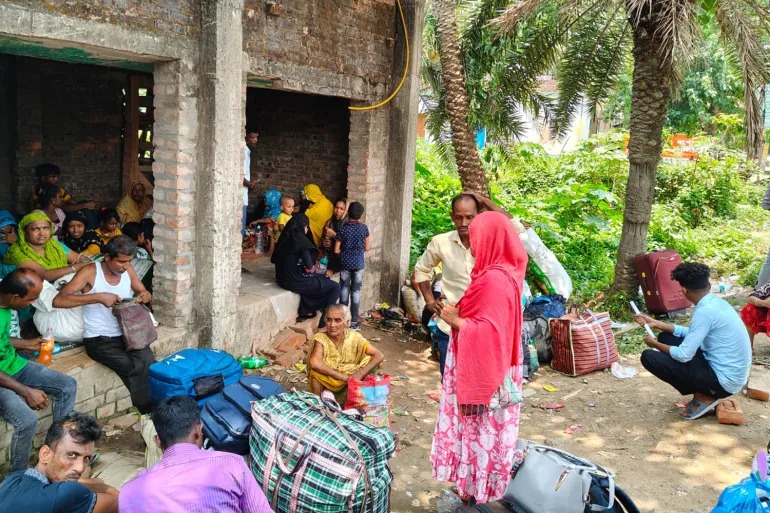
At a border checkpoint in Hakimpur village, dozens of Bangladeshi families await processing under the state’s new immigration enforcement campaign. Among them is a 38-year-old Raisul Islam, who arrived in India two years ago with his wife and children seeking medical treatment and improved economic opportunities.
Islam explained that after settling in Kolkata and finding work in construction, his family built a modest life. However, the recent government directive ordering the identification and deportation of undocumented migrants forced them to leave.

“We came hoping for a better future for our children,” Islam said. “But fear of harassment and uncertainty pushed us to surrender voluntarily.”
The crackdown follows the Bharatiya Janata Party’s (BJP) recent electoral victory in West Bengal. State authorities have introduced a “detect, delete and deport” initiative aimed at locating undocumented migrants and establishing detention centres before their removal from India.
Chief Minister Suvendu Adhikari has stated that the campaign primarily targets undocumented Muslim migrants from Bangladesh, while individuals from other religious communities may qualify for protections under existing citizenship laws.
Officials claim that thousands of undocumented migrants have already been deported. According to Adhikari, nearly 5,000 Bangladeshi nationals have been returned, while hundreds remain in detention centres awaiting processing.
Many migrants gathered at the border say poverty and limited opportunities in Bangladesh compelled them to cross into India through informal channels.
Mirazul Ghazi, who lived in Kolkata for five years with his wife and son, said the family worked in the construction sector and encountered few problems until the recent political change.
“Our landlord asked us to leave after the new government came into office,” Ghazi said. “We feared hostility and decided to return home.”
Authorities at several border checkpoints report receiving hundreds of migrants daily as deportation efforts continue.
The deportations have added strain to relations between New Delhi and Dhaka.
Bangladesh has urged India to follow established procedures for verifying the nationality of individuals before deportation. Foreign Affairs Adviser Shama Obaid recently confirmed that Bangladesh had sent multiple diplomatic communications to India regarding the issue.
Bangladesh’s border authorities also reported preventing several attempts to force migrants across the frontier without proper verification, prompting renewed discussions between border security agencies from both countries.
India’s Ministry of External Affairs maintains that all deportations are being conducted according to legal procedures. Officials insist that suspected foreign nationals are referred to Bangladeshi authorities for nationality verification before removal.
Human rights organisations have criticised the deportation campaign, warning that individuals may be denied due process.
Elaine Pearson, Asia Director at Human Rights Watch, expressed concern that detainees are not always receiving adequate legal representation.
She argued that proper legal safeguards are necessary to prevent Indian citizens from being mistakenly deported and described the forced removals as potentially unlawful.
Indian civil rights activist Teesta Setalvad also accused authorities of selectively targeting a particular community and failing to follow established guidelines for handling undocumented migrants.
According to Setalvad, there is growing concern that some individuals may be detained without sufficient evidence regarding their nationality or immigration status.
The issue has intensified political and religious debates in West Bengal, where Muslims make up more than a quarter of the state’s population.

Critics argue that the government’s focus on Muslim migrants reflects broader political narratives that have long linked illegal immigration with national security concerns. Supporters of the policy, however, contend that stricter border enforcement is necessary to address undocumented migration.
As deportations continue, many families remain uncertain about their future. For migrants like Raisul Islam, the experience has been marked by disappointment and hardship.
“We only wanted a chance to improve our lives,” he said before being transferred to a detention facility. “Instead, we are leaving with painful memories and an uncertain future.”
The situation continues to draw scrutiny from international observers as India and Bangladesh navigate the diplomatic and humanitarian implications of the ongoing deportation campaign.