

RismadarVoice Reporters
September 10, 2026
Hospitals and households in Gaza are struggling to maintain electricity supplies as shortages of fuel, engine oil and generator spare parts disrupt power generation, putting patients and vulnerable residents at increasing risk.
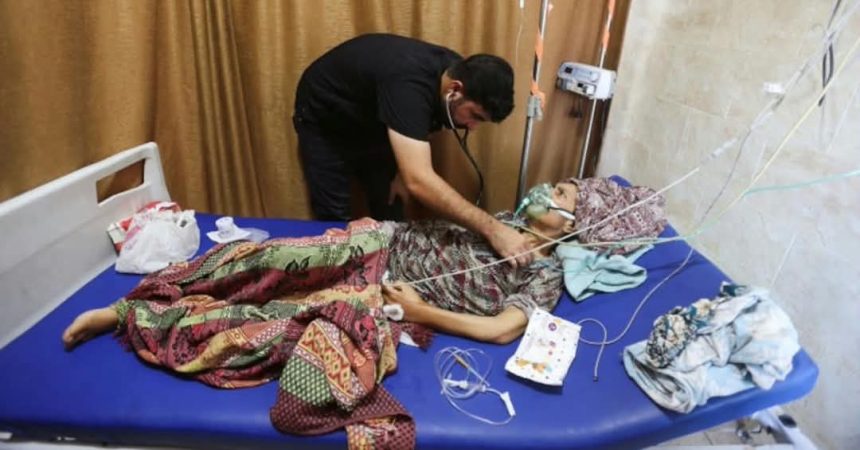
Medical workers at Nasser Hospital in Khan Younis, one of the territory’s largest functioning medical facilities, said repeated power cuts have forced the hospital to introduce a rationing system, with electricity rotated between different departments.
Doctors warned that the shortage of essential supplies needed to maintain generators could endanger patients relying on life-support equipment, ventilators and other medical devices.

Ahmed Al-Nabris, an internal medicine specialist at the hospital, said one of the facility’s four generators had stopped working, while two of the remaining units were under severe pressure due to prolonged use and limited maintenance supplies.
He said technicians had been forced to extend the period between engine oil changes from the recommended 250 operating hours to about 1,000 hours because of shortages.
Gaza has remained without regular grid electricity since the start of Israel’s military offensive following the October 7, 2023 Hamas attacks. Fuel and energy restrictions have continued despite a 2025 ceasefire agreement, contributing to a worsening humanitarian situation.
Humanitarian organisations have warned that restrictions affecting the entry of fuel-related supplies and spare parts are affecting hospitals, ambulances, water pumps and other essential services.
Medical charity Médecins Sans Frontières (MSF) said thousands of people face increased health risks because shortages of engine oil and maintenance equipment are affecting critical infrastructure.
Aid groups have reportedly turned to local markets for supplies, where residents say the price of engine oil has risen sharply compared with pre-war levels.

Israel’s Coordination of Government Activities in the Territories (COGAT) said a monitoring system, coordinated with international organisations, allows the entry of engine oil, generator spare parts, ambulances and medical equipment into Gaza while preventing supplies from reaching Hamas.
Beyond hospitals, residents say private and neighbourhood generators that provide limited electricity to homes have also been affected by rising costs of diesel, oil and spare parts.
Residents reported that the cost of electricity from private generators has increased significantly in recent months, leaving many families unable to afford regular power supplies.
Yasser Ashour, who operates electricity generators, said maintaining the service had become increasingly difficult as operational costs continued to rise despite growing demand from residents, including those with medical conditions.

Alaa Al-Hourani, a 65-year-old resident suffering from liver fibrosis and low oxygen levels, said the struggle to afford necessities had made paying for electricity increasingly difficult.
“It is suffocating and agonising, but there is nothing we can do,” he said, adding that many residents have been forced to cope with extreme heat and limited resources.