RismadarVoice Reporters
September 3, 2026
The European Union remains divided over proposed trade restrictions on goods produced in Israeli settlements in the occupied West Bank, despite growing concerns over settler violence and Israel’s continued settlement expansion.
The disagreement emerged during an informal meeting of EU foreign ministers hosted by Ireland in Wicklow, where member states discussed possible measures against products originating from settlements considered illegal under international law.
Ireland and Spain, backed by Belgium and the Netherlands, are pushing for bloc-wide restrictions on imports from Israeli settlements.

However, Germany, Austria, Czechia and Hungary are opposed to sanctions, arguing that such measures could damage diplomatic relations with Israel.
Ireland, which currently holds the rotating presidency of the EU Council, has taken a leading position on the issue. It became the first EU member to ban imports from Israeli settlements and has repeatedly criticised Israel’s settlement activities in the occupied West Bank.
The country also recognised a Palestinian state in 2024 and has called for a review of the EU-Israel Association Agreement, which has governed much of the bloc’s economic and trade relationship with Israel since 2000.
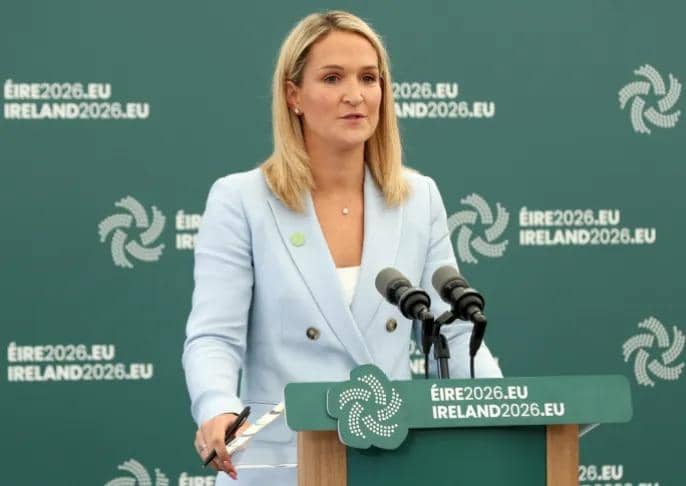
Irish Foreign Minister Helen McEntee said the EU should adopt a common position on the issue rather than allow individual countries to act separately.
“We should be moving collectively,” McEntee told reporters, stressing that the bloc could not claim to support international law while failing to apply the same principle to Israel’s settlement activities.
The EU is Israel’s largest trading partner, with bilateral trade in goods reaching almost $50 billion in 2025.
EU exports to Israel also increased from nearly $30 billion in 2023 to approximately $32 billion last year, highlighting the scale of the economic relationship between the two sides.
Irish Member of the European Parliament Lynn Boylan said Ireland had been the only country to raise the issue of Israeli settlements during the foreign ministers’ discussions.
EU foreign policy chief Kaja Kallas did not indicate that member states had reached a consensus on trade restrictions following the meeting.
The issue had also been debated at an earlier meeting in Brussels in July, when ministers considered several options, including an import licensing system, punitive tariffs and an outright ban on settlement products.
Kallas said at the time that an import ban had received the strongest support, but ministers failed to agree on a single course of action.

A further complication is whether trade restrictions of this nature would require unanimous approval from EU member states. While some trade decisions can be adopted through qualified majority voting, major political and policy decisions may require the backing of all member states.
The continuing disagreement comes amid heightened tensions in the occupied West Bank, where Palestinians have faced increasing attacks by Israeli settlers alongside military operations.
Protesters gathered near the venue of the Wicklow meeting, calling on the EU to take tougher action against Israel. Demonstrators held placards reading, “You need to boycott Israel now” and “Sanction Israel.”