



RismadarVoice Reporters
September 3, 2026
Brazilian authorities are intensifying efforts to curb the growing smuggling of weight-loss drugs from Paraguay as demand for popular medications continues to surge across the country.
More than 76,000 pens, vials and other products containing weight-loss drugs such as semaglutide and tirzepatide were seized along the Brazil-Paraguay border in the first six months of 2026.
The figure is almost three times the number of similar products confiscated throughout 2025, according to data from Brazil’s Federal Revenue Service.

The Friendship Bridge, which connects Brazil and Paraguay near the tourist destination of Iguazu Falls, has traditionally been a major route for the illegal movement of cigarettes, electronics and other goods.
Authorities, however, say weight-loss medications have increasingly become a more profitable commodity for smugglers as demand for GLP-1 drugs rises.
Federal tax auditor Flávio Bernardino de Carvalho said the medications now rank among the most valuable categories of contraband seized in the region covering the southern Brazilian states of Paraná and Santa Catarina, second only to mobile phones.
“They come on public buses, in cars, in trucks, with tourists. Every possible way,” Mr Carvalho said, adding that both organised criminal groups and individuals are involved in the trade.
Security experts say the growing illicit trade is being driven largely by the high value and small size of the medications.
While an authorised supply of Mounjaro, the only approved tirzepatide medication in Brazil, can cost more than 1,400 reais (about $280), a locally manufactured tirzepatide product in Paraguay can reportedly be purchased for about 340 reais ($68), according to Brazilian authorities.
Public security expert José Ricardo Bandeira said the economics of the trade were encouraging criminal groups that previously focused heavily on cigarette smuggling to explore pharmaceutical products.
Unlike cigarettes, which require large vehicles and extensive logistics, weight-loss injections can be concealed and transported in small quantities while generating substantial profits.
“With a few boxes of pens, you can make the same profit you would smuggling a truckload of cigarettes,” Mr Bandeira said.

Authorities also believe established smuggling networks are being used to move the drugs, with some criminal groups relying on routes and storage facilities previously associated with the trafficking of weapons, drugs and ammunition.
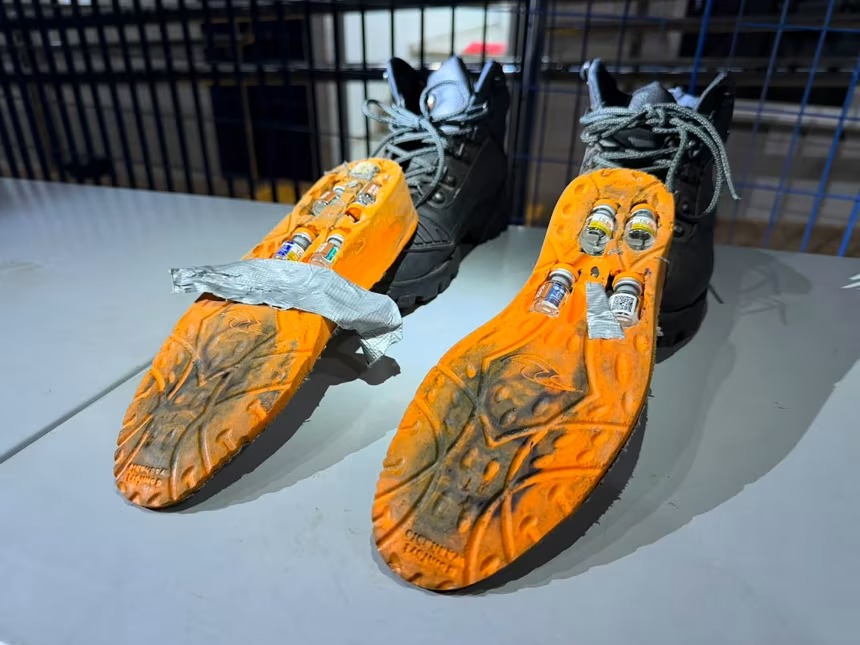
Brazilian customs officers have uncovered increasingly creative methods used to conceal the medications.
Weight-loss drugs have reportedly been found beneath the soles of shoes, inside shampoo containers, in massage-gel packages and hidden compartments in vehicles.
Some smugglers also use boats to transport consignments across the Paraná River, which forms part of the border between Brazil and Paraguay.
Beyond the legal implications, health professionals warn that illegally transported injectable drugs may pose serious risks because of inadequate storage and uncertain origins.

Dr Alexandre Hohl, a professor of endocrinology and metabolism at the Federal University of Santa Catarina, said consumers who obtain medicines outside legitimate pharmacies cannot be certain about how the products were manufactured, transported or stored.
GLP-1 medications such as semaglutide and tirzepatide are sensitive peptide-based drugs that require controlled conditions during transportation and storage.
Exposure to inappropriate temperatures can affect their stability and reduce their effectiveness, Dr Hohl said.
More seriously, he warned that some products sold illegally may be counterfeit or contain unknown substances and impurities.
Dr Hohl said he had treated patients who experienced unusual and potentially serious reactions after using weight-loss products obtained through unofficial channels.
In one case, a woman who purchased a product marketed as tirzepatide in Paraguay was admitted to intensive care after developing lactic acidosis, a potentially dangerous buildup of acid in the bloodstream.
Another patient who had initially used an authorised form of tirzepatide switched to a product purchased in Paraguay and subsequently developed nausea, vomiting and diarrhoea. His condition deteriorated after he continued using the product and increased his dosage.

Dr Hohl said symptoms such as persistent nausea, abdominal pain, headaches and skin reactions should not be ignored, particularly when the origin of a medicine cannot be verified.
The growing demand is not limited to physical border crossings.
A survey by Brazilian data and credit services company Serasa Experian found that online orders linked to GLP-1 medications increased by 149.3 per cent in the first half of 2026.
Orders rose from about 547,000 in the preceding six-month period to more than 1.36 million between January and June 2026. The transactions were estimated at more than 2.3 billion reais, equivalent to about $460 million.
Brazilian authorities are consequently working with their Paraguayan counterparts to strengthen monitoring of the cross-border trade.
Brazil’s health regulator, Anvisa, recently signed an agreement with Paraguay’s National Directorate of Health Surveillance, Dinavisa, aimed at improving oversight and cooperation along the border.
Health officials are also concerned that the illicit market could expand to experimental weight-loss drugs that have not yet received regulatory approval.
Dr Hohl said one of his patients reported using a product sold as retatrutide, an experimental medication being developed by Eli Lilly.
Retatrutide has not been approved by the United States Food and Drug Administration or any other regulatory authority and is currently restricted to participants in clinical trials sponsored by the pharmaceutical company.
Despite this, products marketed as retatrutide are reportedly already being sold in Paraguay.

Brazilian officials say advertisements for weight-loss drugs are widespread in Ciudad del Este, Paraguay’s second-largest city, where some medications can be obtained without the prescription required under Brazil’s regulated system.
Authorities are now also monitoring social media and online platforms, where sellers promote the drugs and users share information about obtaining and transporting them across the border.
For health professionals, the rapid expansion of the illegal market presents a growing public health challenge.
Dr Hohl urged consumers to exercise caution, warning that the ease of obtaining weight-loss drugs online does not guarantee their safety, authenticity or effectiveness.