RismadarVoice Reporters
July 29, 2026
The Economic and Financial Crimes Commission (EFCC) and the Nigerian Air Force (NAF) have renewed their commitment to closer inter-agency collaboration aimed at strengthening intelligence sharing, operational cooperation and the fight against economic and financial crimes across the country.
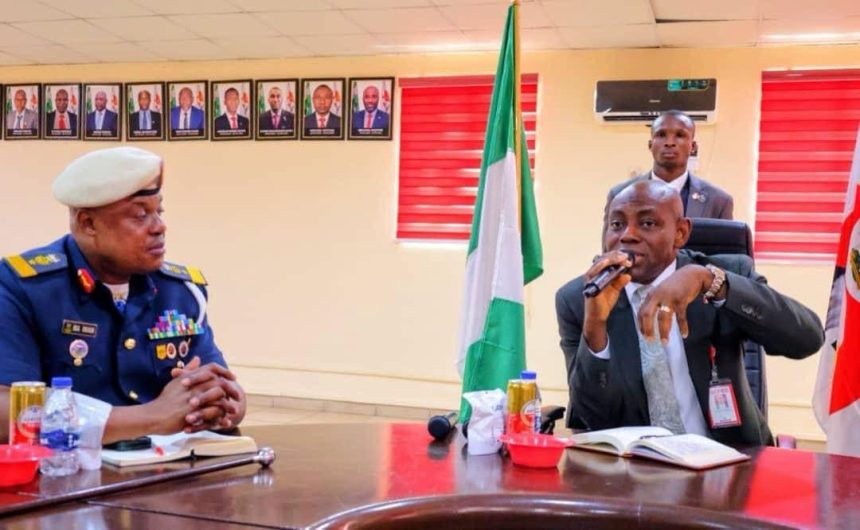
The renewed partnership was reaffirmed on Wednesday when the Commander of the 651 Base Services Group, Ikeja, Air Commodore M.A. Imam, paid a courtesy visit to the EFCC’s Lagos Zonal Directorate 1.
Speaking during the visit, Air Commodore Imam said effective national security requires strong collaboration among security and law enforcement agencies, noting that no institution could successfully discharge its responsibilities in isolation.

He described the engagement as an opportunity to consolidate the existing relationship between the Nigerian Air Force and the EFCC, particularly in specialised areas such as forensic investigation, money laundering and terrorism financing.
According to him, the Air Force was seeking to leverage the Commission’s expertise in financial crime investigations while strengthening cooperation on issues of mutual interest.
Responding, the Acting Zonal Director of EFCC Lagos Zonal Directorate 1, Assistant Commander of the EFCC (ACE I) Adebayo Adeniyi, welcomed the delegation and described the visit as a demonstration of the shared commitment of both organisations to national security.
Adeniyi noted that the Commission frequently handles investigations involving aircraft and aviation-related matters, making collaboration with the Nigerian Air Force critical to the success of such operations.

He stressed that intelligence sharing, technical support and sustained inter-agency cooperation would enhance the capacity of both institutions to combat financial crimes and other emerging security threats.
The Acting Zonal Director reaffirmed the EFCC’s readiness to work closely with the Nigerian Air Force in advancing coordinated security operations and protecting Nigeria’s economic and national security interests.