RismadarVoice Reporters
June 10, 2026
The Executive Chairman of the Economic and Financial Crimes Commission (EFCC), Ola Olukoyede, has warned Nigerians against vote buying and other forms of electoral financial inducement, describing them as serious threats to democratic governance ahead of the 2027 general elections.
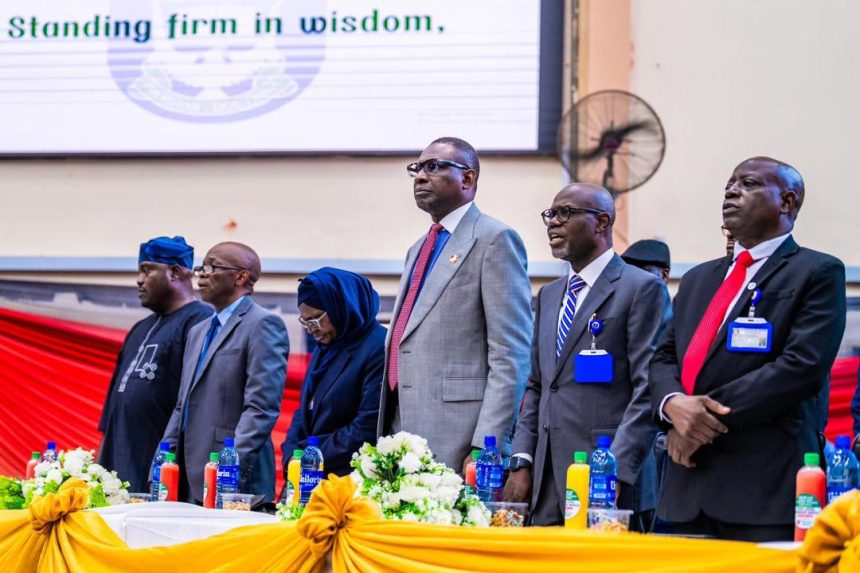
Olukoyede gave the warning on Wednesday, June 10, 2026, in Ilorin, Kwara State, while delivering the inaugural lecture of the High-Level Guest Speakers’ Series organised by the Centre for Peace and Strategic Studies (CPSS), University of Ilorin. The lecture was themed “Mobilising Critical Stakeholders for Setting the Agenda for Peaceful and Credible 2027 Elections in Nigeria.”
The EFCC chairman said the commission remained committed to tackling the monetisation of the electoral process, stressing that vote buying, vote selling, and related practices undermine democracy and weaken accountability in governance.

He warned that leaders who emerge through financial inducement often prioritise recovering the money spent during elections rather than serving the public interest.
“The EFCC is opposed to commercialisation of votes not only for the reason that it is a financial crime, but it also weakens the foundation for good governance by compromising the political recruitment process,” he said.
Olukoyede disclosed that the EFCC had recorded arrests, prosecutions, and convictions in electoral offences involving politicians, electoral officials, and citizens, adding that enforcement would be intensified ahead of the 2027 polls.
He also noted that electoral corruption had become more sophisticated, with perpetrators now adopting covert methods, coded communication, and off-site arrangements to influence voters.
According to him, vote buying is no longer limited to election-day transactions, but is increasingly carried out through discreet networks and indirect inducements.
“We are aware of all these antics and we are prepared to safeguard the integrity of our elections,” he said.
The EFCC boss called for stronger collaboration among stakeholders, strict enforcement of electoral laws, issue-based campaigns, responsible media reporting, and neutrality from security agencies as key measures to ensure credible elections.
He urged political parties to reject inflammatory rhetoric and vote buying, warning that divisive politics had historically contributed to electoral violence.

Olukoyede also challenged the media to intensify investigative reporting on electoral corruption, while calling on security agencies to remain professional and impartial throughout the electoral process.
Earlier, the Director of CPSS, G. A. Animasawun, said the lecture series was designed to provide a platform for practical solutions to threats facing Nigeria’s democracy ahead of the 2027 elections.
Vice-Chancellor of the University of Ilorin, Wahab Olasupo Egbewole (SAN), described electoral corruption as a national security threat and called for stronger institutional collaboration to address it.